Categories Op-Ed

The renormalisation of equal rights for Khwaja Siras

Muhammad Ahmed Hayat Tarar

In a significant step towards promoting inclusivity and equality, Pakistan witnessed the renormalisation of equal rights for the Khwaja Sira community in 2023. This progressive move marked a turning point in the country’s journey towards embracing diversity and ensuring that every citizen is treated with respect and dignity.

The term Khwaja Sira is used to refer to individuals who identify themselves as transgender, intersex, or eunuchs, in Pakistan. Historically, this community has faced marginalization and discrimination, leading to a lack of recognition and denial of basic rights. However, with the renormalisation of equal rights, Pakistan took a major stride towards rectifying these injustices. One of the key aspects of this renormalisation was the legal recognition of Khwaja Sira as a distinct gender identity. Previously, individuals belonging to this community were often forced to choose between male or female genders when it came to official documentation.
This posed numerous challenges as it did not accurately reflect their gender identity. With the new legislation, Khwaja Sira individuals could now identify as a third gender on their official documents, such as national ID cards and passports. This change not only acknowledged their identity but also enabled them to access various government services and benefits that were previously inaccessible to them.

The recognition of Khwaja Siras as a distinct gender was not just a symbolic gesture. It had practical implications for their daily lives. For instance, in the past, many Khwaja Sira individuals faced difficulties when seeking employment or accessing healthcare services. Employers and medical professionals often failed to understand their unique needs, leading to discrimination and exclusion. However, with the legal recognition of their gender identity, these individuals now had legal protection against such discrimination, and society at large became more aware of their rights and needs.

The renormalisation of equal rights for Khwaja Siras also extended to education. Prior to this change, Khwaja Sira individuals often faced discrimination and bullying in educational institutions. Many were forced to drop out of school due to the hostile environment. With the new legal framework in place, educational institutions were required to create a safe and inclusive environment for Khwaja Sira students. This not only encouraged more of them to pursue education but also allowed them to thrive academically without the fear of harassment.

In addition to education, healthcare services also witnessed a significant transformation. Khwaja Sira individuals had long struggled to access appropriate healthcare due to stigma and discrimination from medical professionals. With the recognition of their gender identity, healthcare providers were mandated to provide culturally sensitive and inclusive care. This change made it easier for Khwaja Sira individuals to seek medical attention when needed and improved their overall health and well-being.

The renormalisation of equal rights also paved the way for the Khwaja Sira community to actively participate in politics and public life. In the past, they were often excluded from political processes and decision-making, despite being an integral part of the society. With the legal recognition of their rights, Khwaja Sira individuals could now run for political office and participate in the democratic process, contributing to a more representative and diverse political landscape in Pakistan.
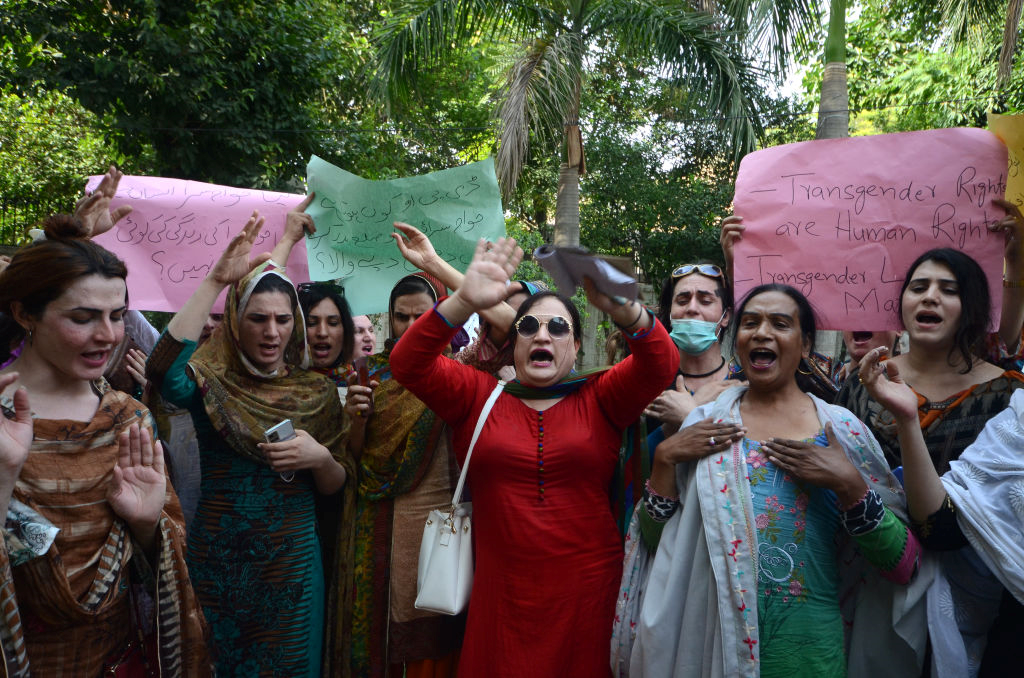
One of the most remarkable aspects of this transformative period was the increased awareness and acceptance of the Khwaja Sira community within Pakistani society. Through advocacy and education, misconceptions and prejudices that had long plagued the community began to dissipate. Families and communities started to understand and accept their Khwaja Sira members, fostering a more inclusive and compassionate society.
——-
The writer is a freelance columnist

Author

Avatar photo

Making law simple, clear, and useful for everyone.

More From Author

Leave a Reply

Your email address will not be published. Required fields are marked *

You May Also Like

Pakistan population crisis, population growth in Pakistan, overpopulation in Pakistan, population control Pakistan, family planning Pakistan, Pakistan demographic challenge, child labor in Pakistan, underage children Pakistan, poverty and population growth, population and unemployment Pakistan, social issues in Pakistan, human development Pakistan, quality vs quantity population, population pressure on resources, Pakistan education crisis, healthcare burden Pakistan, crime and population growth, extremism and population Pakistan, psychological impact of overpopulation, unproductive population Pakistan, weak Pakistani passport, global image of Pakistan, governance failure Pakistan, ruling elite and population control, vote bank politics Pakistan, BISP subsidies population policy, conditional state benefits Pakistan, two child policy Pakistan, population legislation Pakistan, women education Pakistan, children rights Pakistan, Islamic perspective on family planning, population policy examples China Bangladesh Iran, national interest and population control, sustainable development Pakistan, future generations Pakistan, Islamabad opinion column, Pakistan social reform, public policy Pakistan, population awareness Pakistan

Growing Population: Pakistan’s Silent but Greatest Crisis

Whenever the issue of population growth is discussed in Pakistan, one argument is immediately thrown…

Khudayar Mohla,Ahmer Bilal Soofi, US withdrawal from international organisations, Trump foreign policy, international law analysis, UN Charter violation, non-intervention principle, use of force doctrine, Department of War renaming, NATO crisis, Greenland annexation, Venezuela intervention, US unilateralism, Russia China joint declaration, multilateral institutions, global governance vacuum, China Russia influence, developing countries blocs, G77 influence, Organisation of Islamic Cooperation, international legal order, law of the sea convention, International Seabed Authority, International Criminal Court Rome Statute, US opposition to ICC, norm against war, civilisational norms, global peace and security, US foreign policy critique, international law commentary, BBC international law interview

An Opportunity for States

The withdrawal of the US from 66 international organisations has not been noticed enough given…

CDA Amendment Bill 2025, Capital Development Authority, Islamabad land acquisition, property compensation Pakistan, land resettlement Islamabad, urban development Islamabad, displaced communities Pakistan, land-sharing compensation, rehabilitation and resettlement, President Asif Ali Zardari, Prime Minister Shehbaz Sharif, Article 254 Constitution Pakistan, equitable urban growth, property rights Pakistan, distributive justice Islamabad, Khudayar Mohla

CDA Amendment Bill 2025: Can Islamabad’s Urban Growth Serve Its People?

Urban development in Pakistan’s capital is about more than buildings and roads – it mirrors…