
An independent and impartial judiciary is not an end in itself. It is a means to an end. The end is to protect and safeguard the fundamental rights of people. That end can only be achieved by an independent and impartial judiciary.
The means to an end must be protected as without a means, the end cannot be achieved. This is why an independent judiciary itself is a fundamental right (PLD 2010 SC 61 [60]). Superior courts are the guardians of fundamental rights and their independence must be safeguarded.
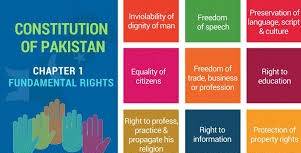
One of the fundamental rights is the right to a fair trial. Article 10-A of the Constitution of Pakistan states: “For the determination of his civil rights and obligations or in any criminal charge against him a person shall be entitled to a fair trial and due process.”
Article 10-A recognises but does not spell out the constituent elements of the right to a fair trial. The Supreme Court has, however, said that the Parliament intended to give it the same meaning as was universally recognised (PLD 2012 SC 553 [33]).
Article 14 of the UN International Covenant on Civil and Political Rights 1966 (ICCPR), a core human rights treaty which Pakistan has acceded to on 23 June 2010, recognises the right to a fair trial. One of its key elements is an independent and impartial judiciary: “In the determination of any criminal charge against him, or of his rights and obligations in a suit at law, everyone shall be entitled to a fair and public hearing by a competent, independent and impartial tribunal established by law.”
The ICCPR as well as the Supreme Court recognise an independent and impartial judiciary as a fundamental right (PLD 1999 SC 1126). Articles 199 and 184(3) of the Constitution confer jurisdiction on the High Courts and the Supreme Court respectively to protect fundamental rights by issuing mandatory, prohibition, etc orders.
Six Islamabad High Court (IHC) judges in their letter addressed to the Supreme Judicial Council raised concerns regarding interference by the Executive, especially its intelligence apparatus, undermining the independence of judiciary. This engages the fundamental right of people, i.e. the right to a fair trial. The Supreme Court is well within its right to take suo motu action as a fundamental right is involved and it is a matter of enormous public importance (PLD 2023 SC 32 [5]).
Under Article 203, High Courts are empowered to “supervise and control” all courts subordinate to them which includes their protection from the Executive (2023 SCMR 1955 [12]). According to Article 202, “subject to constitution and law”, High Courts may make rules to regulate the practice and procedure of High Courts and courts under their supervision. Articles 202 and 203 confer supervisory and procedural powers on the High Courts without ousting the jurisdiction of High Courts or the Supreme Court in relation to the protection of fundamental rights. The remedy under Article 202 was exhausted in this case.
The judges sought protection from the IHC, but their letter suggests that it was not effective. The IHC was either unable or unwilling to protect the judges. The Supreme Court has no administrative control over High Courts and courts under their supervision. Courts have the power to initiate contempt proceedings against real and legal persons but not “shadows”.
Going to the Executive for setting up an inquiry commission was a mistake but, in any event, it did not work either. In these circumstances, there is no alterative effective remedy except invoking the Supreme Court’s suo motu jurisdiction under Article 184(3).
The issues raised by the IHC judges are not limited territorially or temporally. Although these issues have become chilling and crippling in recent years, they have been plaguing the nation for decades, with incidents occurring across the country.
The jurisprudence of superior courts provides ample evidence of this. The most recent example is the case of Mr Zulfikar Ali Bhutto wherein it was held that he was denied a fair trial. In the prevailing culture of egregious human rights violations, impunity, the final guardian of fundamental rights must guard the guardians so that they can, in turn, guard the rights of people.
—
The writer is a Professor in Law at The University of Hull, UK and Barrister at Nexus Chambers, London