
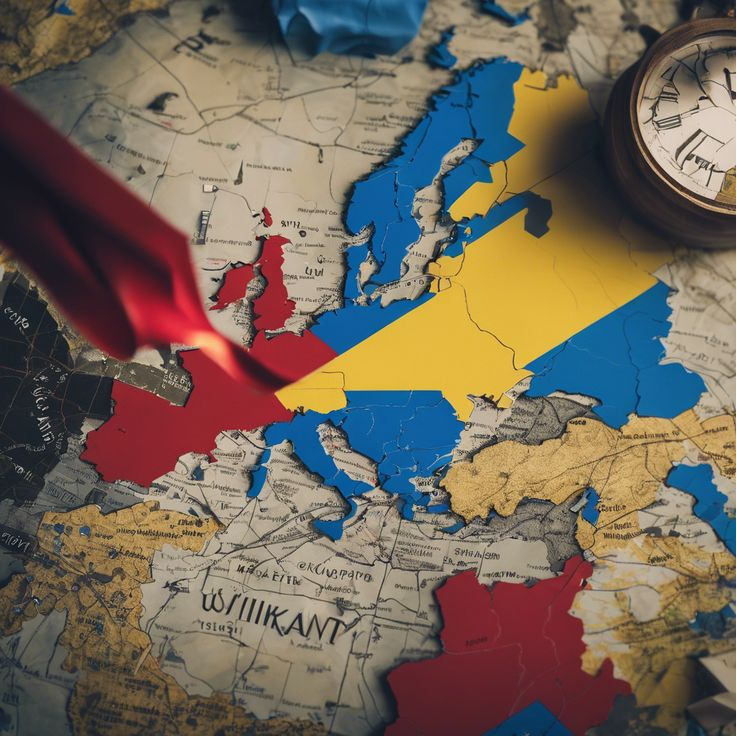
Ukraine’s war has been become the longest war since 1945. The war is primarily due to the process of NATO and EU enlargement coupled with USA’s strategy of using Ukraine and NATO enlargement as tools to harm and weaken Russia.
Russia and Ukraine are two largest countries in Europe. The neighbors were part of the 15 Soviet republics that made up the USSR in 1922 after Russian Revolution Collapse in 1991. On the contrary, NATO was made in April 1949 by US and European countries to counter USSR threats. The conflict about Ukraine has become an indirect war between Russia and USA. Dialogue efforts, peace pacts, ceasefires, and diplomatic forums have been pursued for several times. However, global powers and international organizations have a critical part to play: as mediators, as guarantors, and as influencers of what peace can look like.
Ukraine today is much far away to re-established its sovereignty internationally. This war has been exceeded by a number of other wars occurring in Asia and Africa. On 13 April, 2014, the protestors speaking against the Russians discriminatory measures were named as “terrorists” and as result of this military operation led a war in Ukraine and the army utilize bombers tanks. By February 2022, Russia invasion in Ukraine had led to 14,000 to 20,000 dead. The war has become a focal point of global politics as it affects the economic growth of other European countries. Meetings held between the President of countries USA, Russia and Ukraine arise the question why peace in Ukraine remains intangible?
Russia and Ukraine target each other with large scale drone attacks. The core conflict reflects historical, political and strategic dynamics including NATO and EU enlargement. Several dialogue meetings, ceasefires, peace building meetings have been brought but it ends only for short term. From bilateral talks to the intervene of western powers the conflict didn’t meet its end because dialogue and peace building in the Russia and Ukraine conflict is highly complex. British Prime Minister Keir Starmer and French President Emmanuel Macron also promised to find a lasting peace in Ukraine, pledging “unwavering support” for Zelensky.
Western countries have largely backed Ukraine through sanctions against Russia, military aid and diplomatic support. Their leverage lies in economic tools and in moral and legal frameworks pressuring Russia in international forum. Countries like Turkey, India, and others in the Global South have adopted more clear positions. Turkey has played a mediating role at times, helping broker deals such as prisoner exchanges or facilitating humanitarian corridors. Turkey’s dual relationships with Russia economically and with Ukraine diplomatically give it a unique space to propose or facilitate dialogue. Ukraine have been given aid of €52bn from the European Union institutions.
Russia’s role in dialogue has been complicated. For cross pacts to remain in existence, Russia needs to commit not only to dialogue but to transparent implementation withdrawal from occupied territories and respect for international norms. Without such commitments, any peace agreement risks being a temporary pause rather than a sustainable peace. Putin’s comments were a sharp reversal from those of Russia’s Deputy Foreign Minister Sergey said that “powerful momentum” for peace talks has been lost since August.
The international organization UN General Assembly condemns the invasion, underlining territorial integrity, displacement, hardships and calling for peaceful resolution. However, Russia’s status as a permanent member of the UN Security Council complicates matters. EU has played a very important role in supporting Ukraine. It helped by giving money for rebuilding, setting trade limits, applying sanctions and changing immigration rules. All these actions support the process of building peace. African countries also started to take part neutrally which makes them acceptable to both sides.
Beside on making peace agreements both sides doubt each other’s intention which make it impossible to implement. Many agreements don’t have strong rules to ensure security if one side believes the other are unwilling to fulfill it. Citizens of Ukraine want full control over their country and are not ready to accept major compromises. Powerful countries have their own interests, which do not always support peace. If the global powers and organizations like UN along with meetings keep an eye on implementing the peace agreements between the two countries it would end the war to the greater scale.
Peace in Ukraine remains elusive because Vladimir Putin frames the conflict not as a territorial dispute but as a civilizational struggle, making compromise nearly impossible. He portrays Ukraine as inseparable from Russia’s history and identity, citing his 2021 essay that called Russians and Ukrainians “one people.” Even Donald Trump’s push for a peace deal at his Alaska summit faltered because land swaps or ceasefires cannot resolve a war cast in existential terms. Similar to Xi Jinping linking China’s claim to Taiwan with a 5000- year heritage, or Narendra Modi presenting India as an ancient Hindu civilization reclaiming its rightful place. Similarly, Putin uses identity politics to harden his stance. Despite Trump’s desire to be remembered as a peacemaker, Moscow’s civilizational framing ensures that any settlement beyond Russia’s terms is politically untenable.
The war always costs the lives of many innocent civilians. The International Organizations as International Covenant on Civil and Political Rights (ICCPR) and International Covenant on Economics, Social and Cultural Rights (ICESCR) have to take part in this conflict ensuring the economic, social, cultural and political rights of the citizens of Ukraine. Every human being has right to live, to spend his life according to his own wish and their rights must be protected. War already have taken a lot of lives and for now the conflict should be done by meetings.