The international conference on Islamic Economics and Finance, held on 24th and 25th January at Minhaj-ul-Quran University, was far more than an academic gathering. It was a continuation of an intellectual and visionary journey that began decades ago.
Scholars from Malaysia, Australia, Iran, Bahrain, Brunei Darussalam, Qatar, Singapore, Saudi Arabia, and Türkiye presented their research papers and offered comprehensive, well-thought-out solutions to the economic challenges faced by Muslim countries today. The conference reflected not only academic maturity but also Minhaj-ul-Quran University’s emergence as a serious global center of research, dialogue, and thought leadership. My relationship with Minhaj-ul-Quran is deeply personal, emotional, and rooted in lived experience.
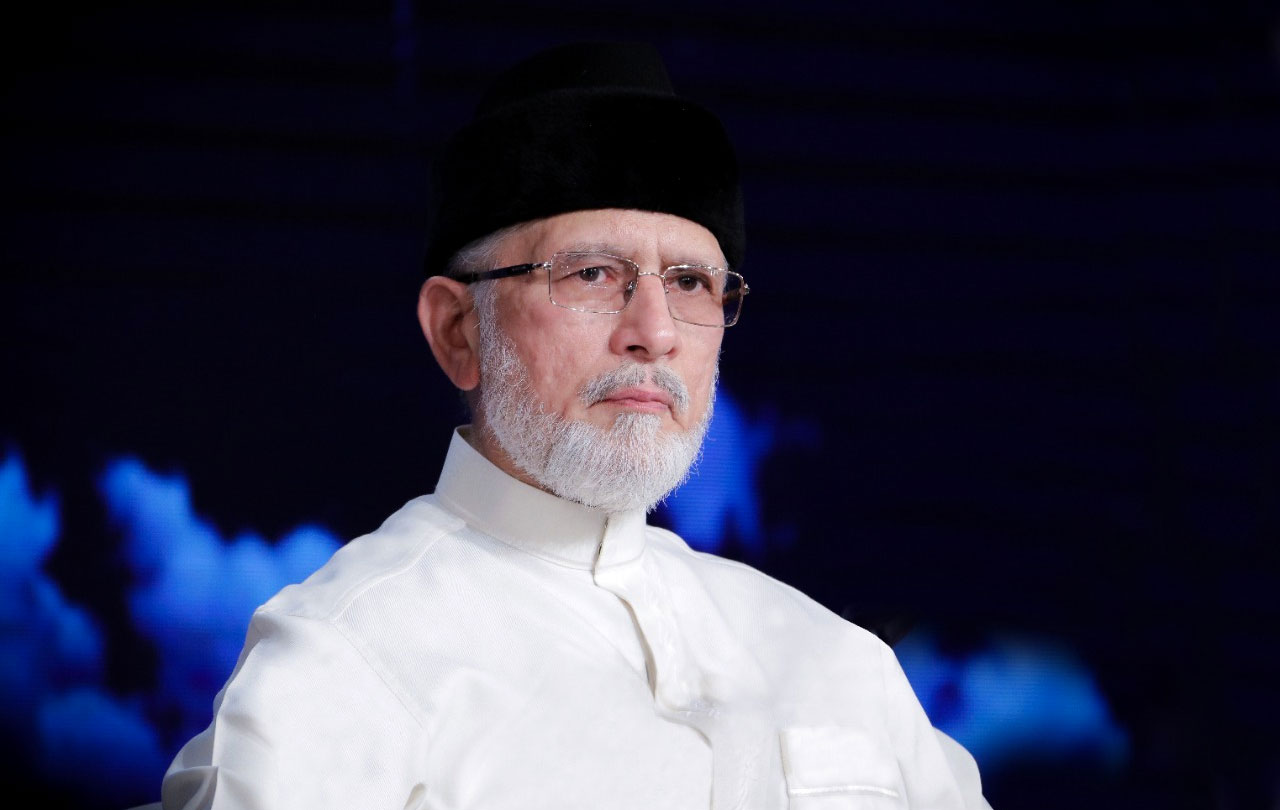
After completing my matriculation, I became a student of Dars-e-Nizami at Minhaj-ul-Quran Madrasa. That phase of my life remains one of the most formative and cherished periods I can recall. I have been fortunate enough to be among those students who directly learned from Professor Dr. Muhammad Tahir-ul-Qadri – a thinker of Islam, renowned Qur’anic exegete, scholar, and global intellectual figure – by sitting at his feet and absorbing knowledge firsthand. This was not merely an academic association; it was a holistic process of intellectual grooming, moral training, and character building.
Adding to this honor, Dr. Hassan Mohi-ud-Din Qadri, the elder son of Dr. Tahir-ul-Qadri, was my class fellow at Minhaj-ul-Quran. This close association allowed me to observe the institution from within – its discipline, ethos, vision, and sincerity. During the 1990s, Minhaj-ul-Quran held a distinctive and highly respected position among religious institutions worldwide, a stature that it proudly maintains today.
At that time, students securing high marks in matriculation considered admission to Minhaj-ul-Quran a matter of prestige and pride. Under the direct supervision and companionship of Dr. Tahir-ul-Qadri, discipline at Minhaj-ul-Quran was exemplary—arguably more structured and rigorous than even cadet colleges. Students were encouraged to become spiritually grounded, intellectually sharp, and morally upright. Regular prayers, night worship (Tahajjud), and a strong emphasis on ethical conduct were integral parts of student life. The faculty comprised exceptional scholars – many of them international—while students from various countries created a rich multicultural academic environment.
Alongside Urdu, students were trained practically in Arabic, Persian, and English, a revolutionary approach for religious institutions at the time. Dr. Tahir-ul-Qadri presented his vision far beyond traditional clerical boundaries. He consistently advocated inter-sect harmony, rejected extremism, and took a clear, courageous, and principled stance against terrorism – long before it became politically convenient to do so. He projected Islam as a religion of peace, knowledge, balance, and humanity on international platforms. His long-cherished dream of establishing an HEC-recognized chartered university eventually materialized in the form of Minhaj-ul-Quran University, which today is setting new benchmarks in education and research by integrating modern disciplines with Islamic thought. Unfortunately, Pakistan’s socio-political landscape has long been dominated by feudal and elitist mindsets.
Individuals rising from humble or middle-class backgrounds rarely receive the recognition they deserve. If dedication, sincerity, and service to the nation were the true benchmarks, Dr. Tahir-ul-Qadri’s contributions would unquestionably deserve to be written in golden letters. He is the author of thousands of books, a globally respected orator, and an intellectual whose lectures are delivered and heard at universities and institutions across the world.
Governments and international bodies accord him official protocol—an acknowledgment of his scholarly and moral stature. It is an undeniable truth that no human being is flawless. Every individual possesses strengths and weaknesses. However, merely because someone’s ideas or temperament do not align with ours does not render them wrong. Dr. Tahir-ul-Qadri is a forthright, sincere, and well-intentioned personality who genuinely seeks the betterment of Pakistan and the Muslim Ummah. Through Minhaj-ul-Quran’s various platforms, he has created employment opportunities for thousands, contributed significantly to social welfare, and presented a soft, intellectual image of Islam at the global level.
One of the greatest tragedies of our society is the rapid spread of propaganda and misinformation – often stripped of context—which unfortunately finds eager acceptance among the masses. Critics frequently emerge who have themselves contributed nothing meaningful to society. Even within the country’s power structures, there are elements that actively discourage self-made individuals.
Despite all this, Dr. Tahir-ul-Qadri has remained steadfast. His influence spans multiple domains—oratory, authorship, politics, social reform, religious scholarship, and Qur’anic exegesis—and in each field, he has delivered his best with consistency and commitment. The recently held international conference on Islamic Economics and Finance is a clear manifestation of this enduring vision. It demonstrates that Minhaj-ul-Quran University is not only preserving its illustrious legacy but is also shaping the future through research-driven dialogue and global academic engagement.
I extend my heartfelt congratulations to the university’s administration for organizing such a remarkable conference. What Dr. Tahir-ul-Qadri has built and delivered through this institution is nothing short of a quiet intellectual revolution. I pray that Allah Almighty grants exponential growth to the tree of knowledge and vision planted by Dr. Tahir-ul-Qadri, and blesses this living legend with good health, strength, and a long life – so that generations to come may continue to benefit from his wisdom, scholarship, and unwavering commitment to humanity. Ameen.
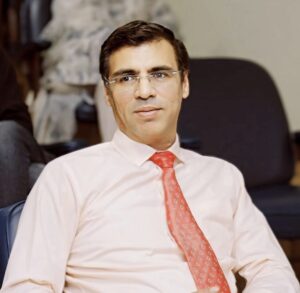
The writer, Masroor Ahmad is a PhD scholar in Media Studies at NUML, Islamabad, and a Grade-18 federal officer. With an MA from Punjab University and an MS from Bahria University, he serves as visiting faculty at Bahria and SZABIST. A seasoned freelance journalist and researcher, he has published hundreds of articles in English and Urdu, focusing on social issues, regional politics, and international relations. Known for his command of English and Arabic literature, he frequently employs satire as a tool for social reform.He can be reached at: masroortaurus@gmail.com