

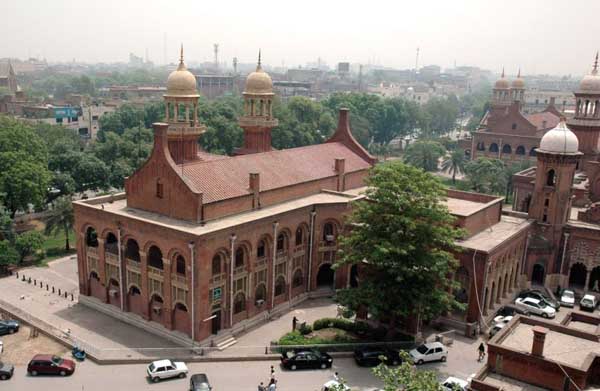
LAHORE: The Lahore High Court has held that the expressions ‘dismissed for non-prosecution’ and ‘consigned to record’ carry distinct legal consequences, ruling that the latter does not constitute a formal dismissal of a case.
Often when a case is dismissed for non-prosecution by the Court, it is followed by a direction to the Office to ‘consign the case file to record’; however, merely directing the Office to ‘consign the case file to record’ for the reason that no one tendered appearance on behalf of the plaintiff does not have the same effect.
Dismissal of a suit for non-prosecution and directing the file to be consigned to record amounts to a judicial determination under Order IX of the Civil Procedure Code (CPC), whereby the suit stands terminated for default of appearance. While the subsequent direction to archive the file is merely administrative, the underlying judicial dismissal concludes the litigation (lis) unless restoration is sought.
In a judgment authored by Justice Anwaar Hussain, the Court observed that where a file is consigned to the record without a formal order dismissing the case for non-prosecution, the legal effect is materially different. Consigning a file to the record room in such a manner often denotes an administrative action or an adjournment sine die (indefinitely) rather than a final adjudication on the merits. Because the Trial Court in this instance did not consciously exercise jurisdiction to terminate the proceedings in 2006, the matter remained undecided, though administratively shelved. Under these circumstances, the Court maintains the inherent power to revive the matter to ensure substantial justice, particularly when a case is non-suited on purely technical and administrative grounds.
The ruling announced in response to a plea by the residents of Mohallah Doburji Kakke-Zayyan against Chiragh Din, challenging the purchase of land allegedly reserved as a waqf graveyard.
The residents asserted that the property is sacred and inalienable, belonging to the community or the Almighty, rendering any private sale illegal. The litigation faced a decade-long impasse after the Trial Court consigned the file to the record on December 5, 2006, without a preceding judicial order dismissing it for non-prosecution. A later application for restoration was initially dismissed in 2015 as being time-barred, but this was subsequently overturned by an Appellate Court in 2017.
Justice Hussain dismissed the petitioner’s revision, emphasizing that the original 2006 order was neither a decree nor an order of dismissal within the meaning of the CPC. The High Court highlighted that because the dispute involves the status of a graveyard, the case cannot be brushed aside without recording and appraising evidence. By affirming the Appellate Court’s findings, the High Court concluded that the restoration was not barred by limitation because the proper course in such administrative shelving is to seek a revival of the consignment order, rather than a formal setting aside of a dismissal. The petition was dismissed, clearing the path for the suit to be decided on its actual merits.