
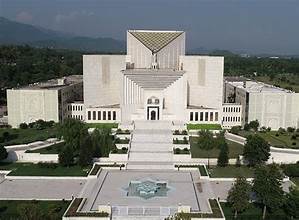
ISLAMABAD – A court that sits indefinitely on a complaint meant to deliver swift justice does not merely delay a verdict – it defeats the very law it is bound to enforce. Giving voice to this sobering reality, the Supreme Court has issued binding directions to trial courts across the country to decide complaints filed under the Illegal Dispossession Act, 2005 within the sixty-day statutory timeframe, flagging what it termed a systematic failure in the implementation of the law that has denied expeditious justice to litigants nationwide.
With the apex court having now spoken with unmistakable clarity, the burden shifts and it falls equally on the legal fraternity. Lawyers who appear before trial courts in these matters must match the Court’s resolve with their own professional honesty, ensuring their clients are not left waiting another decade while adjournments are sought, dates are wasted, and a law designed for swift relief is quietly strangled in procedure. A two-member bench comprising Justice Jamal Khan Mandokhail and Justice Malik Shahzad Ahmad Khan passed the order on 25 May 2026 while disposing of Criminal Petition No. 818 of 2026, filed by one Raja Khan against an order of the High Court of Sindh, Sukkur Bench. The petition arose from a complaint filed under sections 3 and 4 of the Illegal Dispossession Act, 2005 before the Additional Sessions Judge-III, Khairpur — a complaint that had remained pending for over ten years without adjudication. The verdict has already drawn rare public praise from within the legal community — notably from the winning counsel himself. Muhammad Umar Ijaz Gilani, the Advocate Supreme Court who appeared for the petitioner Raja Khan in the case, took to social media to share the judgment with colleagues arguing similar matters.
“I must also take a moment to recognize Justice Jamal Khan Mandokhel. It wasn’t such a big case; but as a judge with a vivid constitutional imagination, His Lordship seized the occasion to enunciate law and to contribute towards judicial reform. We need more, not fewer, people like him on the bench.” — Muhammad Umar Ijaz Gilani, ASC
The Court observed that section 5(2) of the Act expressly requires trial courts to proceed on a day-to-day basis and conclude cases within sixty days of taking cognizance, with any delay to be supported by sufficient recorded reasons. Noting that more than a decade had elapsed without the trial court recording any such reasons, the bench held that the inordinate delay constituted a clear violation of the Act and infringed the fundamental right to a fair trial and due process guaranteed under Article 10-A of the Constitution, as well as the principles of inexpensive and expeditious justice enshrined in Article 37(d).
Invoking its authority under Article 187 of the Constitution to issue directions necessary for doing complete justice, the Supreme Court directed all trial courts exercising jurisdiction under the Act to complete proceedings within the sixty-day period, maintain day-to-day order sheets, and refrain from granting routine adjournments. The Court further held that bare references to non-availability of witnesses or adjournments sought by counsel shall not constitute sufficient reasons for delay under section 5(2).
Critically, the Court directed that where an interim order is challenged before a higher forum, trial courts must continue proceedings unless a restraining order has been specifically passed – addressing a widespread practice of courts voluntarily suspending trials in the absence of any such restraint. The Member Inspection Teams of respective High Courts and Directors General of District Judiciary were directed to periodically monitor all pending cases under the Act, tracking filing dates, cognizance dates, and reasons for any delay beyond the statutory period. A copy of the order has been transmitted to the Registrars of all High Courts across Pakistan for information, necessary action, and strict compliance. The order has been approved for reporting.
————
Criminal Petition No. 818 of 2026 | Decided: 25 May 2026 | Bench: Justice Jamal Khan Mandokhail & Justice Malik Shahzad Ahmad Khan | Approved for Reporting