

Pakistan ranks last in the world on gender equality. But statistics like that can feel distant – until you watch someone you know refuse to walk to a parking lot alone. This is the story of two colleagues, two small everyday compromises, and what they reveal about a country that educates its daughters and then builds a world too hostile for them to use that education.
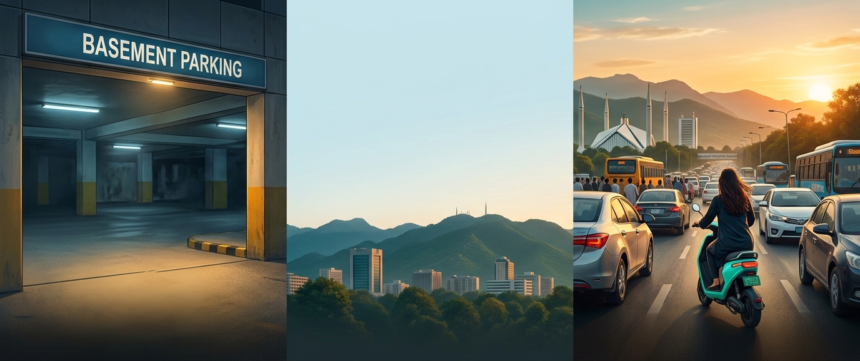
She had driven kilometres across Islamabad that morning, alone, without a second thought. Yet at the end of the day, as we headed toward the basement parking of the public institution where we were interning, she stopped. She needed a few minutes elsewhere and asked her colleagues to wait for her rather than go down alone. When I asked why she was holding everyone up, her answer was quiet and simple: the parking was in the basement, and she was a woman.
I have not been able to forget that moment. We were law students then, serving interning at a public institution in the federal capital. She knew her rights better than most people in that building; the harassment laws, the complaint procedures, the helplines. And still, she was afraid to walk to a parking lot by herself. It broke a comfortable assumption I had carried: that freedom of movement means empowerment.
She had the car, the licence, the education, the legal knowledge. What she did not have was the one thing men never think about, ‘the simple assumption of safety.’
A second colleague taught me the same lesson from another angle. She was thrilled to have bought an electric scooty; cab fares had been eating into her pocket, and now the whole city was open to her. And yet, she admitted, she deliberately rode during the busiest rush hours. Not for company, but because she feared that on an empty road, a man on a motorbike might pull up beside her and harass her. She was trading comfort for the imperfect safety of a crowd. Her freedom came with an asterisk.
These were not women from some far-off, neglected corner of the country. These were law students, in Islamabad, inside a public institution. If this is their fear, we should not be surprised at where Pakistan stands in the world. The latest Global Gender Gap Report placed us last among 148 countries. The global index on women, peace and security ranks us 169th out of 181. A 2018 UN Women safety audit of public transport in Lahore found that nine out of ten women commuters had faced harassment on buses. A 2019 World Bank survey in Peshawar found that most women never leave home unaccompanied, and barely one in ten works for pay.
The cost is not only personal; it is national. Only about a quarter of Pakistani women are in the labour force, among the lowest rates anywhere. Economists estimate that closing this gap could grow our economy by nearly a third. And the most painful number of all: among university graduates, nearly all men join the workforce, but barely half of the women do, and many of those who try cannot find work. We educate our daughters, then build a world so hostile that they cannot use that education.
We do have laws. The workplace harassment law of 2010, strengthened in 2022, now covers educational institutions and even highways. The Penal Code punishes harassment with prison and heavy fines. But laws sit on paper. The instinct questioning the woman instead of the crime is the real problem, and no law can fix it.
Here I must turn the mirror on my own gender. Watching my male colleagues, I noticed something strange: a kind of detachment. Many men simply do not know how to be around women who are not their relatives. They hesitate to ask a colleague of years how she is doing, whether she is well and whether she feels safe. They will fight fiercely to protect their own mothers, sisters and daughters, but that protective instinct stops at blood. The woman at the next desk is on her own.
This is the fruit of rigid segregation. When boys and girls grow up entirely apart, the other gender becomes an abstraction; something alien, not quite a fellow human being. And when men raised this way finally enter co-education universities or shared workplaces, too many of them treat women not as equals but as inferiors. This taboo must be broken, and broken quickly. Segregation does not protect women; it manufactures misunderstanding.
For those of us who look to faith for our moral compass, the answer is already there. In his Last Sermon, the Holy Prophet (peace be upon him) declared that an Arab has no superiority over a non-Arab, nor a white over a black, except by piety and good action. A literalist might point out that the sermon does not name every people on earth. That misses the point entirely. It lays down a universal principle: all human beings are equal, and the only superiority is spiritual that is nearness to God. If superiority cannot be claimed by race or tribe, it cannot be claimed by gender either. Our own history offers the proof: Hazrat Khadija (RA) was a leading merchant of Makkah who employed the Prophet himself. The first workplace in the life of the last Prophet was run by a woman.
So what do we do? Let boys and girls learn to work together from an early age, so the “other” becomes a colleague, not a stranger. Make harassment committees real, not paper formalities. Build safe spaces; lit parking lots, monitored transport, secure bus stops. And above all, men must take responsibility, not as guardians, but as allies. Ask the colleague how she is. Interrupt the joke. Do not wait for a woman of your own family to be harassed before you care that women are harassed.
I think again of my colleague, waiting for the others before going down to the basement. She should not have had to wait. The least we owe her is to walk down the stairs beside her and, better still, to build a country where she never fears the walk at all.
——
The author is a freelance writer – a law graduate from the School of Law, Quaid-i-Azam University, Islamabad, and may be reached at saifurrehman.office@gmail.com