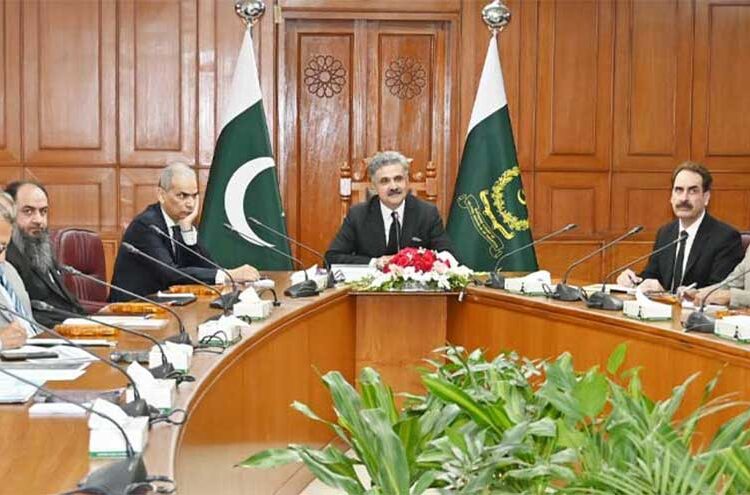
While addressing the roundtable ‘Bridging the Climate Gap: Mediation and Climate-Conscious Lawyering’ on Saturday, speakers emphasized the legal fraternity’s role in advancing climate action through proactive mediation and education.
One of the key speaker Justice Jawad Hassan of the Lahore High Court highlighted Pakistan’s pioneering role in climate litigation, referencing how Pakistani courts have shaped a credible climate jurisprudence recognized internationally.
Sustainable Development Policy Institute (SDPI) in collaboration with the Islamabad High Court Bar Association (IHCBA) in Islamabad arranged the roundtable in Islamabad.
“Pakistan is the first country to deliver judgments mandating climate mitigation and mediation,” expressed Justice Jawad Hassan, citing the 26th Constitutional Amendment’s acknowledgment of climate rights.
Justice Hassan stressed the need to enhance public awareness and sensitize legal fraternity to penalize any of the party failing to comply with the direction to undergo mediation for a peaceful and less adversarial dispensation of justice.
Opening the session, SDPI Executive Director Dr Abid Qaiyum Suleri highlighted SDPI’s long-standing commitment to public rights advocacy and its critical collaboration with Pakistan’s judiciary and legal fraternity.
He stressed the need for a robust nexus between bar and bench, and research think tanks to address the escalating challenges posed by climate change. “Natural calamities cannot be stopped, but with the right policies and practices, we can mitigate their worst impacts,” Dr Suleri noted saying in an era of rapid information flow and Artificial Intelligence, the judiciary’s role needs a timely redefinition.
Romina Khurshid Alam, Prime Minister’s Coordinator on Climate Change, emphasized the critical role of climate awareness and education for legal fraternity. She said: “Climate change knows no borders — it is a universal crisis which is impacting all nations, communities, and sectors. In this battle, the role of lawyers and the judiciary is pivotal.”
She further said educating legal professionals on climate science, environmental laws, and sustainable practices is the need of hour, if we are to build a future-ready justice system.
“Mediation must be recognized as a powerful tool in this regard and not as a secondary option but as a frontline method for resolving complex environmental disputes efficiently and equitably,” she maintained. She praised the efforts of organizations like International Bar Association (IBA) and SDPI for driving forward climate education and emphasized that Pakistan must take proactive steps to integrate climate-conscious mediation into its legal processes.
The event, moderated by Barrister Sarah Kazmi from the International Bar Council, brought together notable judges, legal experts, and policymakers.Speaking online from Australia, Emily Morrison from the International Bar Association (IBA) also called upon global legal practitioners to engage meaningfully with climate issues ahead of COP 30. “Lawyers environmental education is the key to combat the issue in courts,” she said.
The panel discussion, featuring experts like Dr Pulwasha Ayaz Khan, Omar Soomro, and Syed Bulent Sohail, shed light on regional challenges. Dr Khan pointed out the environmental vulnerabilities in Khyber Pakhtunkhwa, highlighting the urgent need for a coordinated national climate action plan. Omar Soomro, former Law Minister of Sindh, highlighted the importance of legislative reforms to mainstream mediation, particularly in complex environmental disputes.
Syed Bulent Sohail said that amid growing climate awareness, the bar councils must assume leadership roles, and the courses offered by global institutions like Oxford University can equip lawyers with essential climate knowledge.
Justice Sufiyan Rana and Judge Ghazan Mahmood from the England and Wales judiciary provided comparative insights, noting that while mediation is mandatory in the UK courts post-Woolf reforms, Pakistani courts are rapidly adapting, with over 15 significant judgments promoting mandatory mediation in the last year alone. Justice Rana emphasized that mediation not only reduces litigation burdens but also fosters communal harmony by blending indigenous practices with formal legal systems.
President of IHCBA Syed Wajid Ali Gillani lauded the discussions, saying: “We have opened the door for collaboration, and now its time to act as to how the legal profession can serve as a force for environmental justice.”