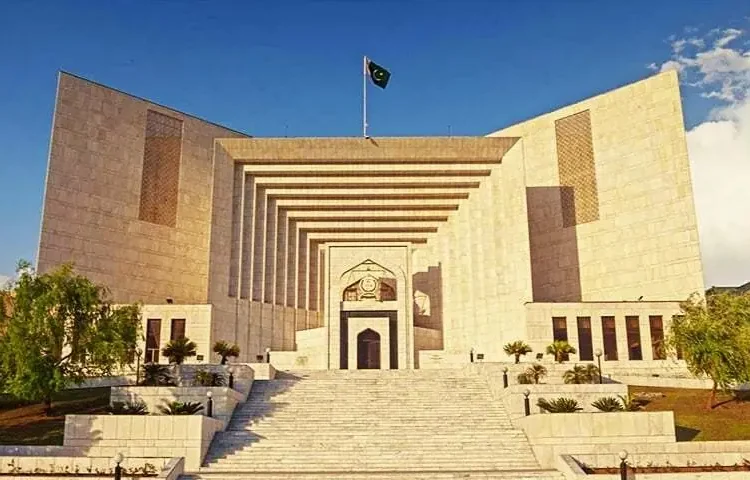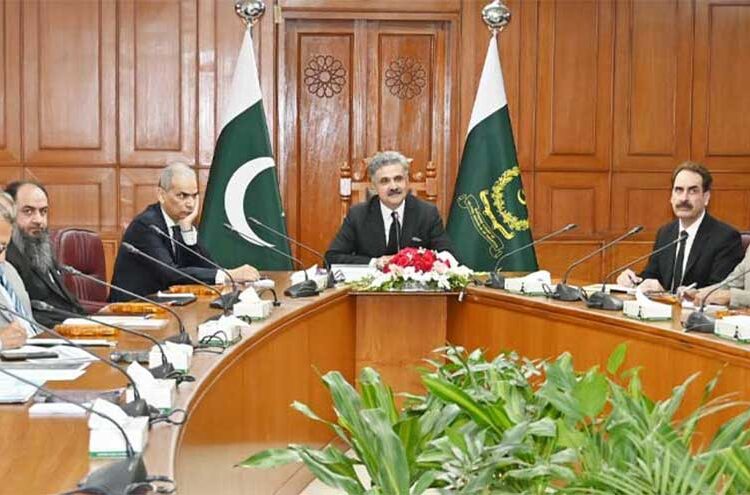
ISLAMABAD: While dismissing all pleas challenging legality of the Super Tax on high-income earners, the Federal Constitutional Court (FCC) on Tuesday validated Parliament’s authority to impose an additional levy on high-income earners through legislation.
The bench, presided over by Chief Justice Amin-ud-Din Khan, observed that the levy under Section 4C of the Income Tax Ordinance does not violate fundamental rights and falls within the federal government’s legislative competence to generate revenue.
Announcing a short order in the matter on Tuesday, FCC Chief Justice Amin-ud-Din Khan stated that a detailed judgment will be issued later. He also dismissed objections relating to the maintainability of the petitions, confirming that Parliament possesses the sovereign authority to levy taxes through primary legislation.
Dismissing all the pleas, the Court ruled that oil and gas sector companies should approach the relevant tax commissioner individually to obtain any exemptions. The Court also turned down High Court verdict through which the Super Tax was declared discriminatory, acceding the legislation legally valid. The court clarified that Sections 4B and 4C, which govern the imposition of the Super Tax, are fully in line with the law.
The FCC categorically said that mudarabah, mutual funds, or unit trust funds are exempted from the Super Tax. The Super Tax was first introduced in 2015 in Khyber-Pakhtunkhwa to fund the rehabilitation of terrorism-affected individuals. At that time, an additional 5% Super Tax was levied on those earning annual profits exceeding Rs300 million. All High Courts had upheld its implementation. In 2022, the Super Tax was applied to individuals earning over Rs150 million annually, with a maximum rate of 10 per cent. Various businesspersons, banks, and companies challenged the tax before concerned High Courts , making its retrospective application and the risk of double taxation in question.
The FCC has held as many as 17 hearings in the matter. The case was first heard in the Supreme Court in 2019 during the tenure of former Chief Justice Umar Ata Bandial. Following the 26th Constitutional Amendment, the case was transferred to a constitutional bench, which continued to hear proceedings. After the 27th Constitutional Amendment, the case was moved to the Federal Constitutional Court. Representatives appearing included the Revenue Department’s Hafiz Ihsan Khokhar, Karachi Commissioner’s Dr Shah Nawaz, and the Lahore Commissioner Asma Hamid. Khokar told the media that the verdict will bring Rs310 billion to the national kitty. “The Federal Constitutional Court has recognised Parliament’s authority to legislate,” he said, adding the High Courts had previously exceeded their powers. Khokhar also noted that the court confirmed there had been no discriminatory treatment through the Super Tax.
Super Tax
The Super Tax is an additional levy on high-earning individuals, companies, and industries, largely aimed at big corporations. In the 2022–23 federal budget, the government imposed up to 10% Super Tax on major sectors including cement, steel, sugar, oil and gas, fertiliser, banks, textiles and others, citing the need to raise extra revenue for economic stabilisation. Identical petitions were filed before the apex court by individuals and organisations challenging the Super Tax introduced by the PML-N government in 2015 to raise funds for Interlay Displaced Persons in result of Operation Zarb-e-Azb. Earlier last year, the top court questioned whether the federal government could distribute Super Tax revenue to provinces. Lawyers argued the levy, introduced in 2016 to fund displaced persons, have since been extended but no funds have been utilised for the stated purpose.