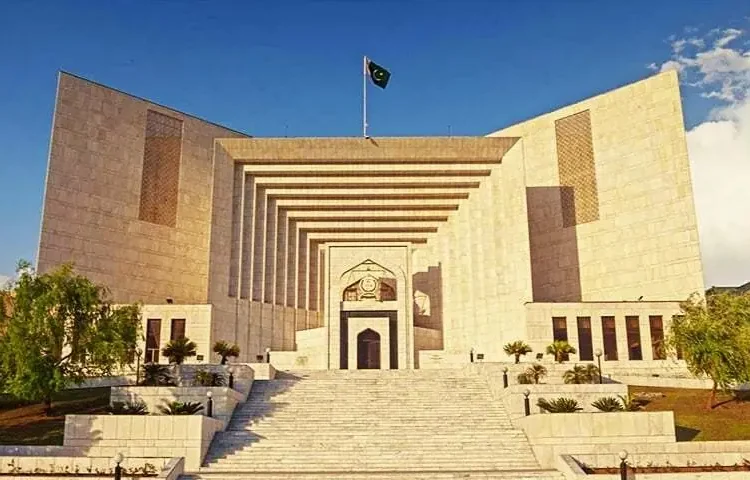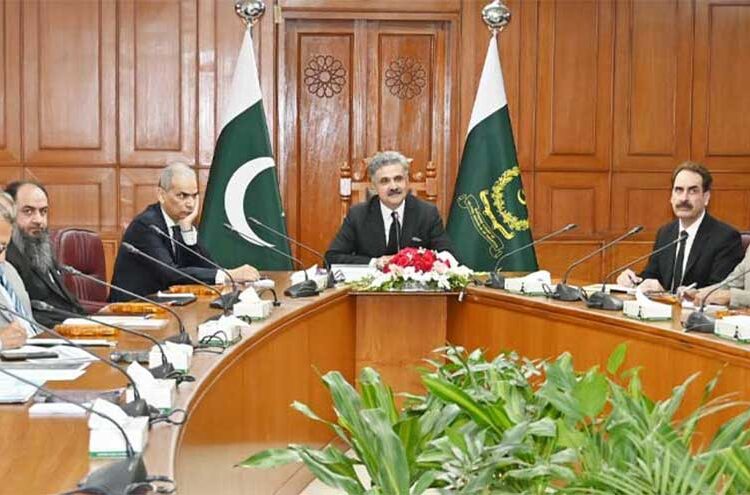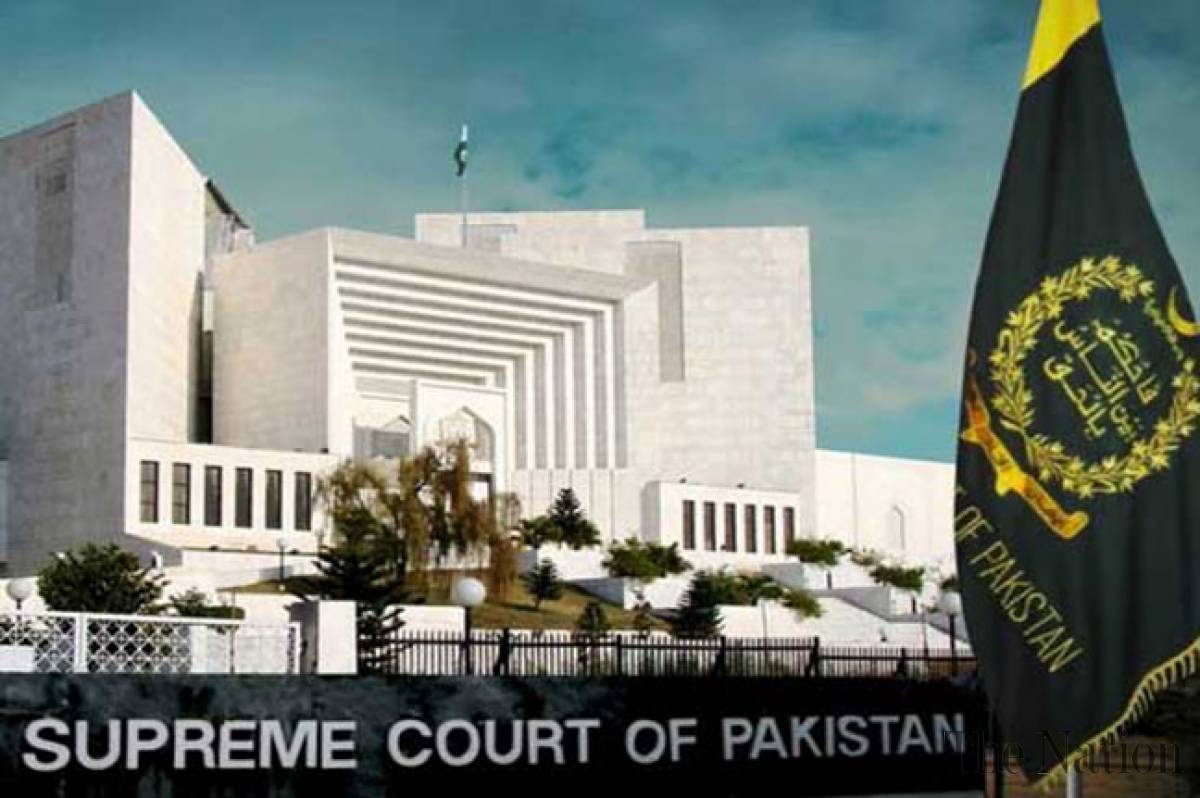
Issuing a five-page order in response to plea seeking general elections to all national and provincial assemblies simultaneously the Supreme Court Thursday agreed with deliberations process amongst senior Cabinet members of the government and their interaction with senior office bearer of the Pakistan Tehreek-e-Insaf (PTI) after Eid-ul-Fitr holidays in the matter.
Appearing before the 3-member bench led by the Chief Justice Umar Ata Bandial, comprising Justice Ijazul Ahsan and Justice Munib Akhtar, senior leadership of all the political parties except Jamiat Ulema-e-Islam Pakistan (JUIP) apprised the position of their parties on a political dialogue being held for settling a single date for holding general election to national assembly and four provincial assemblies.
Representing PPPP, senior advocate Supreme Court Farooq H. Naek submitted saying a process for conducting such dialogue has been initiated within the coalition partners of Pakistan Democratic Movement (PDM). He further said that it is agreed that heads of all political parties shall meet with the opposition parties to arrive at a consensus date for holding the general elections to the said assemblies simultaneously.
On behalf of the PML-N, Khawaja Saad Rafique endorsed the statement of Faroorq H. Naek and expressed willingness of his party to enter into negotiations with all political parties to arrive at a consensus date for holding of general election simultaneously.
Qamar Zaman Kaira, for PPPP; Engineer Sabir Hussain Kaimkhani for MQM(P); Tariq Bashir Cheema, PML(Q); Israr Ullah Tareen for BAP and Sardar Ayaz Sadiq duly instructed on behalf of BNP (Mengal) adopted stance of the Naek and Khawaja Saad Rafique.
“The PTI’s Vice President Makhdoom Shah Mahmood Hussain Qureshi assured the court that notwithstanding the misgivings of his party with the political environment and disposition, his party was willing to move forward within the framework of the Constitution of Islamic Republic of Pakistan, 1973 to negotiate on an agreed date for holding of General Elections of the National Assembly and four Provincial Assemblies simultaneously”, stated in the order.
However, Qureshi emphasised that the process of negotiations should not be open ended and not to be turned into a ploy for delaying elections, which is the apprehension of his party. He further submitted that such process should be regulated by a timeframe to ensure that the outcome is accomplished expeditiously, failing which the Court’s decision for General Elections for the Provincial Assembly of Punjab to be held on May 14 be complied.
On the occasion, Siraj-ul-Haq, Ameer Jamat-e-Islami also appeared before the bench saying, “Dialogue and consultation is not an option in public affairs but a duty as enunciated in the Holy Qurán”. He submitted that the 1973 Constitution forms the inalienable basis for our political structure through democratic government for which elections are indispensable.
According to him the election is not a matter concerning two political parties only but the will of the nation as a whole, adding the world is changing and Pakistan must resolve its own issues. He has further stated that for a political dialogue it is essential for all participants to be flexible about their respective positions and the approach of the parties should not be dictated by ego or pride. He suggested a timeframe under which two important events ought to be accounted for: firstly, the wheat harvesting season in May and secondly the occasion of Hajj. According to him General Elections could be held immediately thereafter.
The top court said in its order, Having heard the positive statements of political leadership of the country representing all major political parties with respect to the simultaneous holding of general elections of the national assembly and four provincial assemblies gives cause for optimism that they would agree to an election date sooner rather than later.
While citing its earlier order the court said the judgment relating to May 14 as general election in Punjab Assembly is in field which ruling is binding on all judicial and executive authorities. The bench said in its order , “We are cognizant that if political dialogue extends to address all grievances, then it is likely to be a lengthy process and the correct forum for that is the political arena and political institutions. However, we did not find any reservations to the negotiations being centred solely on a one-point agenda, namely, consensual fixation of a date for holding of general elections of the national assembly and four provincial assemblies which is a constitutional and legal question. It is important that such result is accomplished expeditiously because our judgment rendered in Constitution Petition No.5 of 2023 on 04.04.2023 has already fixed the date of elections to the Punjab Provincial Assembly as 14.05.2023. That judgment holds the field and, therefore, its ruling is binding on all judicial and executive authorities in the country under Article 189 and Article 190 of the Constitution”.
The Bench said in its order, “Therefore, the proposal that the first meeting of the representatives of all political parties be held today was appreciated and welcomed by the Court. The Court adjourned the matter till 4:00 pm. The Attorney General for Pakistan was directed to report the progress made in the matter today in Chambers”.
Later, the the Attorney General for Pakistan along with senior Advocate Supreme Court Farooq H. Naek met the Bench in Chambers and apprised them of deliberations amongst the senior Cabinet members of the Government and their interaction with a senior officer bearer of the PTI.
They submitted that a recess is being taken on account of Eid-ul-Fitr holidays because several political leaders and party heads have already left or leaving Islamabad for their hometowns to celebrate Eid-ul-Fitr. However, a meeting has been scheduled amongst the said leaders on 26.04.2023.
Later, the bench adjourned hearing of the matter till April 27.