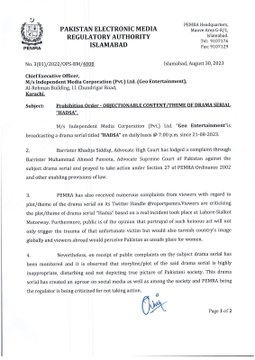
After a storm of criticism and public outcry, Pakistan Electronic Media Regulatory Authority (PEMRA) has imposed ban on dissemination and rebroadcast of TV drama serial Hadsa.
The subject of the notice itself read, “Objectionable content/theme of drama serial Hadsa.” Barrister Khadija Siddiqi, Advocate High Court, lodged a complaint through Barrister Muhammad Ahmed Pansota, Advocate Supreme Court of Pakistan, calling for action under Section 27 of the PEMRA Ordinance 2002.
The drama’s plot, seemingly based on the sensitive incident – a fact that has been denied by actor Hadiqa Kiani and showrunner Wajahat Rauf – triggered a surge of public discontent. Numerous viewers expressed their concerns on PEMRA’s official Twitter handle, highlighting the potential for the drama to exacerbate the trauma of the victim.
Responding to the public’s concerns, PEMRA undertook an evaluation of the drama serial. The regulatory authority observed that the storyline of Hadsa was “highly inappropriate, disturbing and not depicting true picture of Pakistani society”. The notice also read, “Furthermore, the public is of the opinion that portrayal of such heinous act will not only trigger the trauma of that unfortunate victim but would also tarnish the country’s image globally and viewers abroad would perceive Pakistan as an unsafe place for women.”
As per the notice issued by the regulatory body, “Broadcast/re-broadcast of drama serial Hadsa is hereby prohibited immediately under Section 27 of PEMRA Ordinance 2002 as amended by PEMRA (Amendment) Act 2007. The matter is further being referred to the Council of Complaints for appropriate recommendations to the Authority for final decision.”
A translation of a statement issued in Urdu by PEMRA read, “The ban on Hadsa highlights the authorities’ commitment to maintaining the quality of content and ensuring it resonates with the cultural and ethical values of Pakistan. This action also serves as a reminder to broadcasters to uphold the standards of content creation and to respect public sentiments.”
Furthermore, “The decision of the Complaints Council will shed further light on the drama serial’s fate, considering the guidelines set forth by the PEMRA Act and the PEMRA Code of Conduct. This incident underscores the regulatory body’s role in monitoring and safeguarding the media landscape in Pakistan, upholding content standards.”