Categories Courts

PHC issues notices to FBR and others in plea challenging vires of 7E ITO 2001

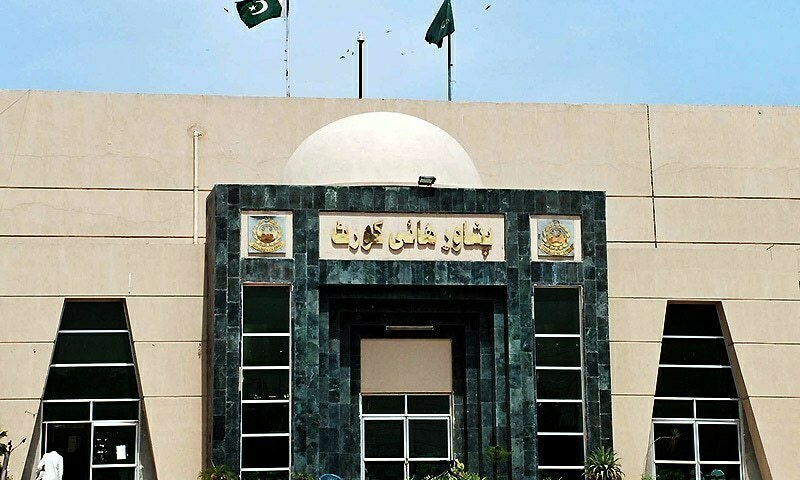
The Peshawar High Court has issued notices in a petition challenging the vires of Section 7E, Income Tax Ordinance, 2001, which imposes tax on Deemed rental income of property which is not rented.

The petition has been filed by Member of the Provincial Assembly Ahmed Kundi through counsels Barrister Umer Ijaz Gilani and Hamza Bangash. The petitioner, who is an activist for provincial rights has alleged that the said tax falls outside the competence of Federal Government.

Earlier this year, the Federal Finance Act, 2022 inserted Section 7E in the Income Tax Ordinance, 2001. The new law mandates that every property which is not in the use of the owner, will be “deemed” by the FBR as a bearing a rent equivalent to 5% of the total market value to the property. This “deemed rental income” would be taxed at a rate of 20%. In simple words, every property owner would have to pay a tax equivalent to 1% of the market value of his property to the federal government.

Appearing before the Divisional Bench of Justice Roohul Amin and Syed Arshad Ali, counsel for petitioner assert that property tax has remained a provincial subject under all the various constitutions of Pakistan. Counsel asserted that the even though tax levied under newly inserted Section 7E of the Income Tax Ordinance, 2001 has been cleverly disguised by the FBR as an “income tax”, it is not a tax on income. It is a property tax which only the province can levy. This is clear from entry 50 of the Federal Legislative List.

After hearing preliminary arguments of the Petitioner, the Court was pleased to issue notice to the Respondents and sought comments. The case will now be taken up after winter holidays on 19th January.

Author

More From Author

Leave a Reply

Your email address will not be published. Required fields are marked *

You May Also Like

FCC Super Tax verdict, Federal Constitutional Court Pakistan, Super Tax on high earners, Parliament taxing powers Pakistan, Section 4C Income Tax Ordinance, Super Tax legality Pakistan, Chief Justice Amin-ud-Din Khan, income tax law Pakistan, high income earners tax, oil and gas sector Super Tax, tax exemptions Pakistan, mudarabah Super Tax exemption, mutual funds tax exemption, unit trust funds Pakistan, retrospective taxation Pakistan, double taxation challenge, Supreme Court Super Tax case, High Courts Super Tax ruling, constitutional amendments Pakistan, 26th Constitutional Amendment, 27th Constitutional Amendment, revenue generation Pakistan, Rs310 billion revenue, Pakistan tax litigation, business community tax challenge, banks Super Tax Pakistan, corporate taxation Pakistan, federal budget Super Tax, economic stabilisation measures Pakistan, Operation Zarb-e-Azb levy, internally displaced persons fund, tax policy Pakistan, constitutional bench Pakistan, Khudayar Mohla

FCC Validates Parliament’s Legislative Competence To Levy Super Tax

ISLAMABAD: While dismissing all pleas challenging legality of the Super Tax on high-income earners, the…

Khudayar Mohla, Islamabad High Court, IHC, Islamabad Local Government elections, local government election petitions, Election Commission of Pakistan, ECP, presidential ordinance, Islamabad Capital Territory, ICT local government, Jamaat-e-Islami, JI, Mohammad Nasrullah Randhawa, Advocate Chaudhry Shoaib Ahmed, local bodies term, constitutional obligation, local government election delay, Islamabad LG polls, ICt Local Government Amendment Ordinance 2026, President Asif Ali Zardari, Articles 17, 32, 89, 140-A, election schedule withdrawal, court adjournment, bench unavailability, deferred hearing, joint petitions, Markazi Muslim League

IHC Adjourns Islamabad LG Election Pleas After Court Roster Cancelled

ISLAMABAD:  A scheduled hearing for the Islamabad Local Government (LG) election petitions was deferred Tuesday…

Khudayar Mohla, Section 4-C, Super Tax Pakistan, Income Tax Ordinance 2001, ITO 2001, Finance Act 2022–23, high-income taxpayers, Federal Board of Revenue, FBR Pakistan, Federal Constitutional Court, FCC Pakistan, government appeals, Hafiz Ahsaan Ahmad Khokhar, constitutional validity, judicial review Pakistan, taxation authority, double taxation, retrospective tax, separation of powers, Pakistan tax law, federal revenue

Levy of Super Tax Within Parliament’s Exclusive Taxing Power, Govt Lawyers Argue Before FCC

ISLAMABAD: A three-member bench of the Chief Justice Federal Constitutional Court Justice Amin-ud-Din Khan is…