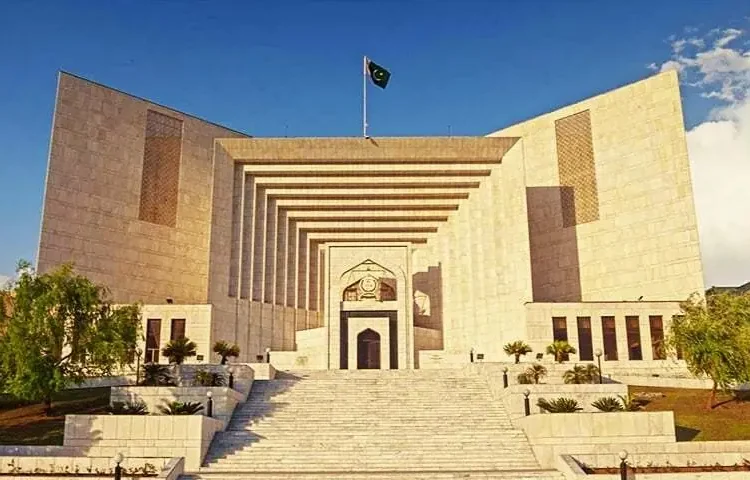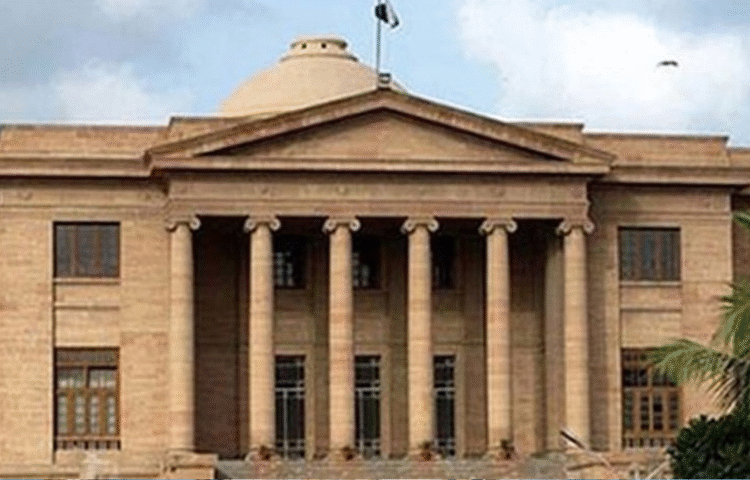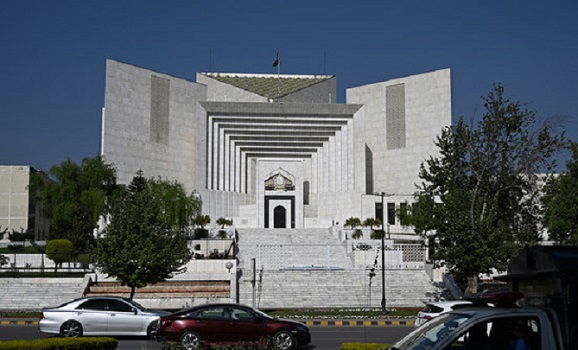
Announcing its reserved verdict on Monday the top court declared lifetime disqualification for lawmakers under Article 62(1)(f) of the Constitution null and void paving the way for Nawaz Sharif to run for the prime minister’s office for a fourth time.
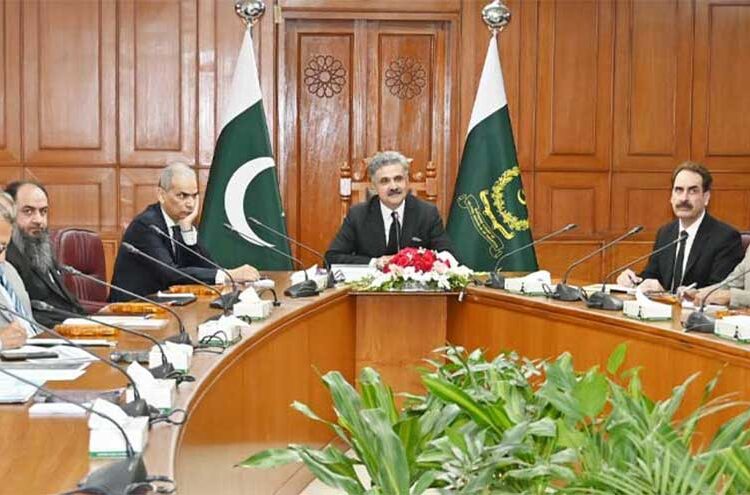
Chief Justice of Pakistan Justice Qazi Faez Isa led the bench of seven members comprising Justice Syed Mansoor Ali Shah, Justice Yahya Afridi, Justice Aminuddin Khan, Justice Jamal Khan Mandokhail, Justice Muhammad Ali Mazhar and Justice Musarrat Hilali which resumed hearing identical pleas urging the court to determine disqualification period of lawmakers.
Arab News reported saying Sharif‘s Pakistan Muslim League-Nawaz (PML-N) party is considered a frontrunner to win national elections, scheduled for February 8, with his arch-rival and former premier, Imran Khan, behind bars and barred from contesting elections for five years.
A seven-member bench of the apex court, led by Chief Justice Qazi Faez Isa, announced the verdict on Monday, overruling a previous 2018 decision that imposed lifetime bans on politicians convicted under certain provisions of the constitution. “The interpretation of Article 62(1)(f) of the Constitution in imposing a lifetime disqualification upon a person through an implied declaration of a court of civil jurisdiction while adjudicating upon some civil rights and obligations of the parties is beyond the scope of the said Article and amounts to reading into the Constitution,” the top court ruled in its written order.
“Such reading into the Constitution is also against the principle of harmonious interpretation of the provisions of the Constitution as it abridges the Fundamental Right of citizens to contest elections and vote for a candidate of their choice enshrined in Article 17 of the Constitution, in the absence of reasonable restrictions imposed by law.”
Article 62(1)(f) states that a person shall not be qualified to be elected or chosen as a member of Majlis-e-Shoora (Parliament) unless “he is sagacious, righteous, non-profligate, honest and ameen, there being no declaration to the contrary by a court of law.”
In April 2018, the Supreme Court had ruled that lawmakers disqualified under Article 62(1)(f) would be unable to contest elections for the rest of their lives. However, in June last year, the government passed the Elections (Amendment) Act, 2023 that limited the disqualification of a lawmaker to five years.
In its verdict on Monday, the top court also observed that the Elections (Amendment) Act, 2023 prescribed a period of five years for disqualification of lawmakers. “Section 232(2) added in the Elections Act, 2017, vide the Elections (Amendment) Act, 2023 promulgated on 26 June 2023, prescribes a period of five years for the disqualification incurred by any judgment, order or decree of any court in terms of Article 62(1)(f) of the Constitution and has also made such declaration subject to the due process of law,” the verdict read.
“This provision is already in field, and there remains no need to examine its validity and scope in the present case.” Sharif was found guilty of corrupt practices in 2017. While the latest case was filed by other disqualified politicians, the ruling enables the three-time former prime minister to contest the polls as more than five years have elapsed since his conviction.
On the other hand, Sharif’s arch-rival, Khan, would not be able to benefit from the ruling as it only scrapped lifetime bans, which means the cricketer-turned-politician remains disqualified until 2028. In a post on X, Sharif’s party described the court verdict as a “victory” of truth. “This isn’t just Nawaz Sharif’s victory,” the PML-N said. “This is a victory for truth and for Pakistan’s future!!”