

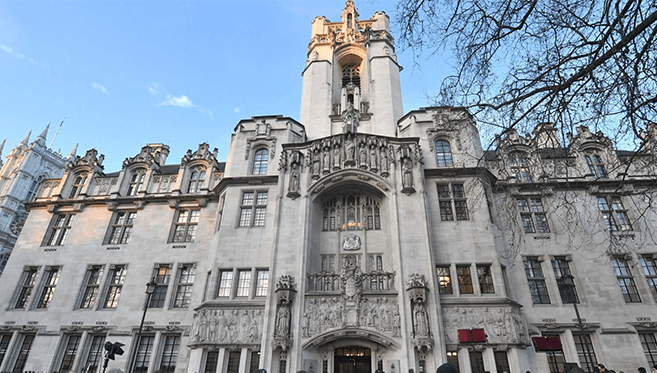
Supreme Court Tuesday announced its hallmark verdict that overturned what judges branded a ‘radical re-interpretation of case law concluding a long-running legal dispute between US-base contractor Triple Point Technology and PTT Public Company, over the former’s failure to complete a series of works for the state-owned Thai oil and gas firm, reported City A.M, a business-focused newspaper.
Having been contracted to provide software and software implementation services, Triple Point Technology quickly encountered difficulties and sought to terminate the contract having only completed part of the project.
In a ruling of January 2019, which challenged conventional understanding of contract law, the UK’s Court of Appeal held that the US-based company was not liable for damages for its failure to complete agreed works as the contract had been terminated prior to the completion of the works.
The verdict was overturned on Tuesday with Triple Point Technology instead ordered to pay $14.5m in damages, with judges restoring the accepted position that businesses are liable for liquidated damages, being those purely in respect of delayed completion) in the event they fail to complete works, up to the point the contract is terminated. Any other outcome, according to the presiding judges, would have essentially rewarded a business for its own default.
Experts predict that the ruling could unsettle many businesses, particularly in the construction sector, given the continued supply chain disruption caused by the pandemic.
“Following a year of uncertainty’, many contractors will have found themselves in a position similar to Triple Point Technology and will have hoped that termination would act as a get out of jail free card,” commented Bill Barton, construction specialist at the law firm Barton Legal.
“Today’s ruling dashes such hopes and makes clear that they remain liable for any failure to fulfil their contractual obligations,’ Barton told City A.M. this evening. “It might not be the summer weather causing the big contractors to sweat.”
In her summing up, Lady Arden noted the length and complexity of the contract, which ran to over one hundred pages, and the apparent misunderstanding of Triple Point Technology of a number of clauses, not least the concept of negligence.
“This reflects a broader trend”, said Barton. “It’s not at all uncommon for businesses, particularly in the construction sector, to sign incredibly complicated legal documents full of provisions they haven’t understood and in some cases haven’t even read.”
“The devil is always in the detail, and today’s verdict demonstrates that it’s easy to stumble onto a legal landmine buried within any contract, let alone one that is a hundred pages,” he concluded.