
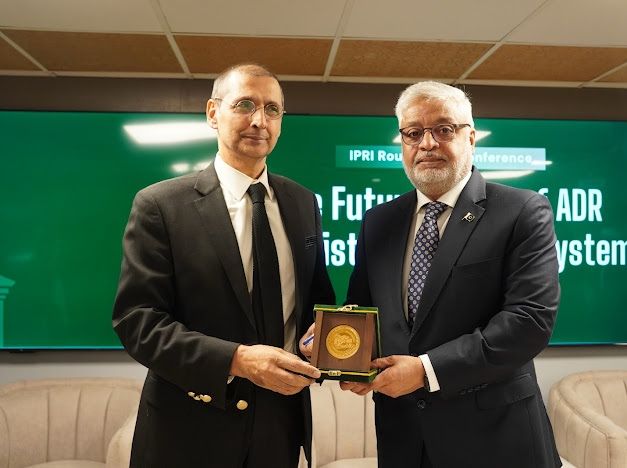
ISLAMABAD – Eminent jurists, legal practitioners, regulators and policy experts on Thursday underscored the critical importance of incorporating Alternative Dispute Resolution (ADR) mechanisms into Pakistan’s legal system, stressing that such measures save time and cost while ensuring meaningful and accessible justice for remedy-seekers.
The call comes against the backdrop of a staggering 2.26 million pending cases clogging Pakistani courts – a crisis that makes the search for faster and cost-effective alternatives to litigation more urgent than ever. Speakers expressed these views at a Roundtable Conference (RTC) organized by the Islamabad Policy Research Institute (IPRI) on the theme ‘The Future Scope of ADR in Pakistan’s Judicial System’, held at Jinnah Hall, IPRI. The conference brought together a distinguished panel of judges, former law secretaries, arbitration professionals, regulatory commissioners, and international practitioners to deliberate on strengthening the role of ADR in Pakistan’s legal framework.
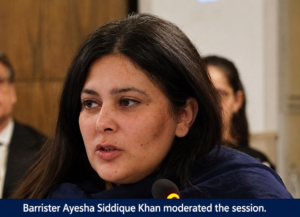
 The conference was opened by Lt. Gen. Majid Ehsan, HI(M) (Retd), President IPRI, who extended a warm welcome to speakers and participants. The session was moderated by Barrister Ayesha Siddique Khan, Chair International Law at IPRI and Fellow of the Chartered Institute of Arbitrators (CIArb), UK. As a distinguished arbitration practitioner and scholar, Barrister Ayesha steered the panel discussion with authority and precision, ensuring each speaker’s contribution was drawn out with analytical rigour befitting the gravity of the subject. Pakistan’s courts are burdened with over 2.26 million pending cases, placing enormous strain on judges, litigants and the broader justice system. Speakers were unanimous that ADR — through mediation, arbitration and conciliation – offers the most immediate and practical relief to this institutional crisis.
Hon. Mr. Justice Jawad Hassan, Judge of the Lahore High Court, delivered a compelling address underscoring the necessity of adopting ADR methods. He highlighted that ADR is essential not only for reducing the courts’ ever-growing caseload but also for fostering confidence among entrepreneurs, the business community, and the general public in the judicial system.
His Lordship stressed the importance of integrating ADR mechanisms — including mediation, conciliation, and arbitration – into the litigation process to help litigants avoid the prolonged and costly delays associated with conventional court proceedings. He also referenced recent judgments by himself and other superior court judges to illustrate the expanding potential of ADR within court-based litigation.Hon. Mr. Justice (R) Mujahid Mustaqeem Ahmed, Chairperson of PADRAA and former Judge of the Lahore High Court, brought institutional experience to the discussion, emphasising the structural reforms needed to embed ADR within Pakistan’s civil justice system.
 Dr. Muhammad Raheem Awan, Former Secretary of Law and Justice Commission of Pakistan, provided a policy perspective on legislative frameworks necessary to support and enforce ADR agreements, while Mr. Muzzafar Ahmed Mirza, Commissioner (Prosecution & Legal Affairs) at the Securities and Exchange Commission of Pakistan (SECP), highlighted the regulatory dimension and the role of ADR in resolving commercial and financial disputes. Barrister Mian Sheraz Javed (FCIArb), Fellow and Chair of the Chartered Institute of Arbitrators (CIArb) Pakistan, brought a multijurisdictional practitioner’s lens to the conference.
A civil engineer turned English Barrister, Barrister Javed has built a distinguished career resolving complex global disputes and empowering the next generation of ADR professionals in Pakistan and beyond. Barrister Raheel Ahmed (FCIArb), Member of the Executive Committee of CIArb Pakistan, and Mr. Yasir Amanat, Senior Program Specialist at the US State Department’s Bureau of INL at the US Embassy Islamabad, added international and capacity-building dimensions to the discourse. Ms. Aisha Rasool, Project Director at the International Mediation and Arbitration Center (IMAC), and speakers including advocate Supreme Court Hafiz Ahsaan Ahmad Khokhar, Shozab M. and Omer Soomro further enriched the discussion with practitioner and academic insights.
The roundtable concluded with a broad consensus that ADR mechanisms – mediation, arbitration, and conciliation — must be systematically integrated into Pakistan’s legal and judicial framework. Speakers agreed that such initiatives are vital for promoting efficient dispute resolution, reducing pressure on a court system carrying over 2.26 million pending cases, and restoring public confidence in the administration of justice.
The conference reflected the growing momentum behind ADR reform in Pakistan, with judicial, regulatory, academic and practitioner voices united in calling for legislative action, institutional capacity-building, and greater public awareness of ADR as a viable and efficient path to justice.