While responding to a plea of Pakistan Tehreek-i-Insaf, assailing amendments to country’s anti-graft law as violation of fundamental rights before Supreme Court on Thursday top anti-graft body ‘National Accountability Bureau’ (NAB) submitted details of plea bargaining it concluded in the last 21 years.
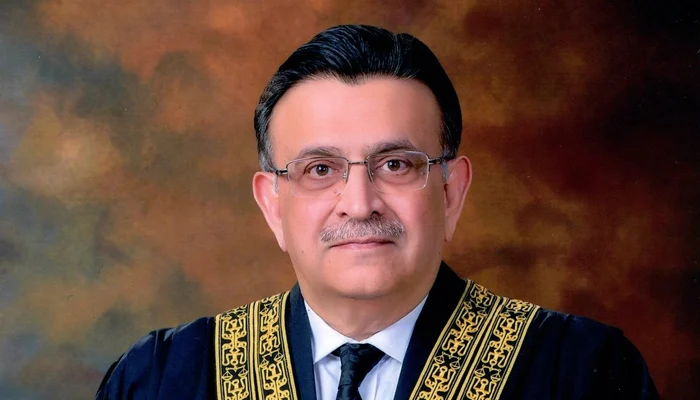
A three-judge bench, comprising Chief Justice of Pakistan Umar Ata Bandial, Justice Ijazul Ahsan, and Justice Syed Mansoor Ali Shah, was hearing the plea petition filed by the PTI chief, wherein he had argued that the amendments to the accountability law were in violation of fundamental rights.
Responding to a query of the Chief Justice Bandial during hearing of the matter, the NAB prosecutor submitted following the amendments, a total of 280 cases had been withdrawn and a committee would review them.
Senior Advocate Supreme Court Khawaja Haris who is the counsel for the PTI’s chairman Imran Khan apprised the bench that as per the amendments, plea bargaining would absolve the culprit of both their crime and punishment.
To this, Justice Ahsan inquired if the cancellation of the plea-bargaining ends the crime along with the punishment, adding plea bargaining was a confession of a crime in which the court approved the return of money. “How can the punishment given by the court be abolished by legislation?” the judge observed, he further noted that even the president could forgive the culprit on an appeal for mercy but that did not mean the crime had not been committed.
Justice Syed Mansoor Ali Shah inquired that if plea bargaining ended, how could the crime continue saying in a murder case, both the sentence and the court’s decision were terminated after the consent. Justice Shah further observed if the crime of a murderer could be expunged, why not that of someone accused of committing corruption?
Justice Ahsan remarked if the corruption was less than Rs500 million, the case would also end with plea bargaining, adding that corruption worth Rs490 million was fine, but if it exceeded that figure, it was wrong.
Khawaja Haris argued that along with the cabinet and other forums, special assistants had also been exempted as per the amendments. Apart from this, the changes would also be applied to foreign assets. The counsel for PTI chairman claimed that the changes in the accountability law were aimed at protecting those involved in corruption.
To which the Chief Justice Bandial inquired whether or not a common person, who had benefited from the amnesty scheme, could also come on the NAB radar. “Our society is such that businessmen have to pay bribes in many places. Will they be punished even for doing business?”
Responding to the CJP query, Advocate Khawaja Haris submitted those who facilitated money laundering of public officials would certainly come under the NAB radar. Justice Shah inquired whether the amendments to the NAB law were not made in the light of court decisions. To which Imran Khan’s counsel submitted amendments had been made by misinterpreting the court decisions. Adding the name and amount of money involved in the amnesty scheme could not be disclosed to anyone.
Justice Shah inquired whether or not the lawyer was terming that the amnesty scheme was also fraudulent. “Turning black money into white through the amnesty scheme has been going on for a long time,”.
To which Khawaja Haris plainly submitted he was not saying that, adding the issue of corruption money is different – It is written in the law not to say or ask anything to those who declare money through the amnesty scheme.
Justice Ahsan observed that billions of rupees were withdrawn from the accounts of rickshaw drivers and other such low-income people using fake accounts saying as per the new law, the accountability courts and the NAB would be helpless in such cases.
The CJP observed according to media reports, these amendments were initiated by the previous government (Federal Law Minister Dr Farogh Naseem), however, he added that the “credit” for drafting these amendments in just two months went to the incumbent law minister.
Another senior lawyer of the Supreme Court Makhdoom Ali Khan contended that some credit also goes to the previous government, which itself was involved in the whole process and then challenged it.
Later, the top court adjourned hearing of the case till Monday for want of time.