
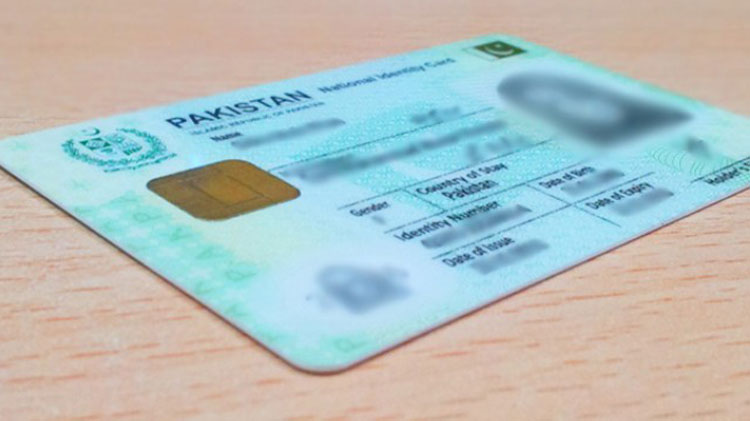
ISLAMABAD: The Senate Standing Committee on Interior on Thursday passed a government bill allowing the National Database and Registration Authority (Nadra) to provisionally impound computerised national identity cards (CNICs) of individuals, including suspected illegal aliens, for up to two months.
The National Database and Registration Authority (Amendment) Bill, 2026 was approved after a detailed briefing by officials, who said the proposed changes were aimed at aligning Nadra’s legal framework with evolving national security requirements. According to the statement of Objects and Reasons, the “CNIC is a critical national security instrument”, and its “misuse threatens Pakistan’s internal security, destabilises the economy, and undermines the country’s international standing”.
It added that Nadra currently faced constraints in provisionally impounding CNICs pending verification due to the absence of explicit statutory cover, which limited its ability to act swiftly. It further stated that the authority also encountered difficulties in blocking CNICs of individuals involved in criminal activity who evaded proceedings despite being given an opportunity to be heard. It also said the amendments were narrowly tailored, time-bound and anchored in due process, including written notice, an opportunity to respond and defined timelines, to balance state security with citizens’ procedural rights, Dawn reported.
The Senate panel was told that Nadra served as the central repository of Pakistan’s citizen database and officially recognised as a critical national infrastructure. Its core responsibilities involve registering citizens and issuing CNICs, which are essential for accessing both public and private services. Nadra officials said the changes were meant to address operational challenges, particularly in dealing with individuals willfully evading legal proceedings or law enforcement directions. “The amendments are designed to be narrowly tailored and strictly time-bound to prevent the exercise of unfettered power,” an official said. Explaining key procedural safeguard, he said a due process would be followed and action would require a written notice and a formal opportunity for the individual to reply.
He added that maximum durations for administrative actions would outlined to protect citizens’ procedural rights. The meeting was told that the primary goal of these changes was to prevent absconders and offenders from utilising a valid CNIC to access essential services including banking and monetary services while evading justice. SIM card registration and network access will be restricted and access to government services, travel, mobility, and other services requiring a CNIC will also be limited as a consequence. The committee also received a briefing on the mechanism for blocking CNICs of criminals.
The minister of state for interior told the panel that under the existing framework, CNICs could not blocked immediately and required court orders. Members raised concerns that some Afghan nationals allegedly still possessed Pakistani CNICs, while some Pakistani citizens had reportedly had their CNICs blocked on suspicion of being Afghan nationals. The committee chairman directed the authorities to examine the issue thoroughly and resolve it at the earliest.
Nacta efforts
During the meeting, officials of the National Counter Terrorism Authority (Nacta) said the body had, over the past two years, shifted from passive monitoring to a proactive, intelligence-led approach to counter extremist ideologies. They said a specialised wing carried out continuous analysis of extremist content, including magazines, videos and social media, to identify vulnerabilities and produce counter-narratives through targeted articles, videos and lectures distributed via public channels and discreet “masked” platforms. Since November 2025, a multi-tiered system integrating 180 stakeholders has been implemented under the national prevention plan. Nacta has engaged 32 civil society organisations and launched educational initiatives in schools and universities to promote resilience among youth and constitutional values.
Officials added that the authority had countered secessionist narratives of banned militant groups by highlighting federalism and democratic safeguards, and by publishing evidence-based material portraying Balochistan’s socio-cultural diversity and development. The committee also considered and unanimously approved the Pakistan Penal Code (Amendment) Bill, 2026, in the absence of any objection from the interior ministry.