
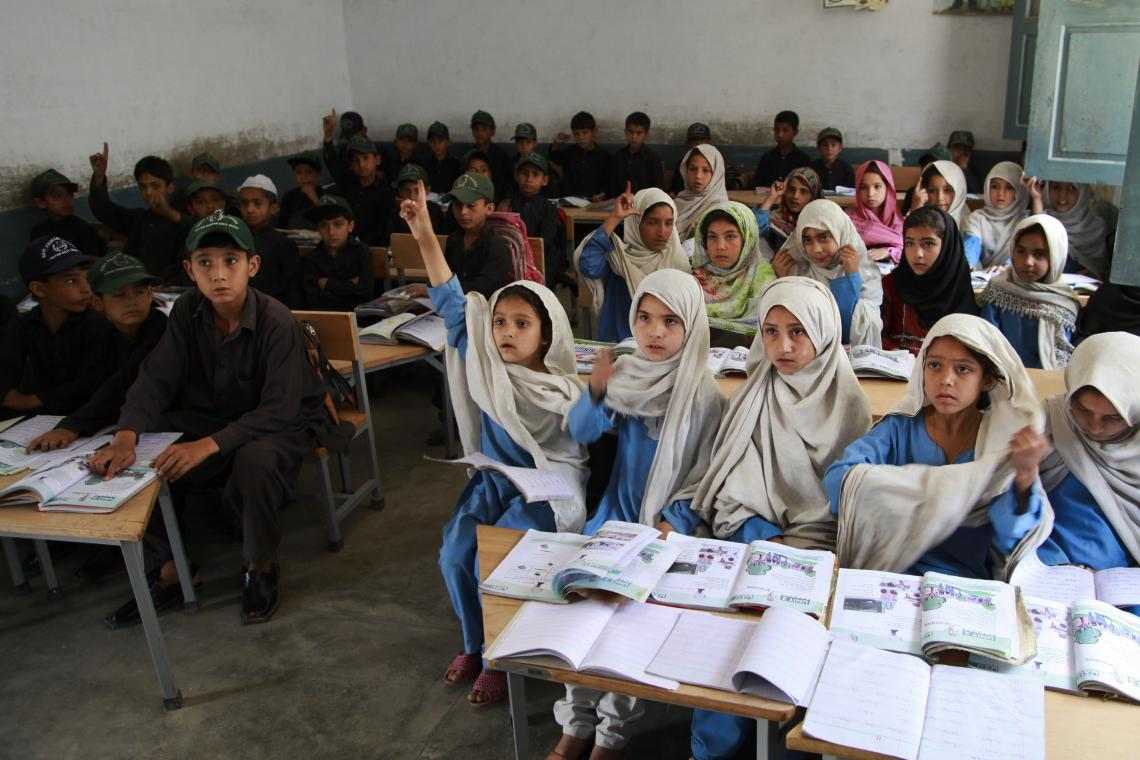
People at the helm of affairs in ICT-PEIRA failed to implement ‘Free and Compulsory Education Act, 2012’ in true letter and spirit in federal government schools since pronouncement of the law as their lackluster performance has deprived thousands of underprivileged children education in Islamabad Capital Territory.
Advocate High Court Shahbaz Shah has invoked jurisdiction of the Islamabad High Court for implementation of the Act in its real form as he filed a plea seeking the court directives to federal government and Islamabad Capital Territory – Private Educational Institutions Regulatory Authority (ICT-PEIRA) in the matter. The petitioner also sought a competent monitoring committee to oversee the enforcement of the provisions of the law in order to ensure School Management Committees (SMCs) active role to force parents to send children to school.
Shah further requested the SMCs should take measures in cases of non-compliance. After brief hearing of the case, the Chief Justice IHC Justice Aamer Farooq issued notices to all the respondents directing them to file report pertaining to para-wise comments within a fortnight. Filing report in the matter, the ICT-PEIRA seems to mislead the court saying upon the approval and official notification of the updated Rules, the enforcement of the 10 percent ratio for free education will be reinforced. It is pertinent to mention that the plea filed on behalf of Advocate High Court Saadullah the petitioner urged the court directives to the federal government to provide free and compulsory education to all children of the age of five to sixteen years in schools situated in jurisdiction of the ICT. Talking to TLTP, Advocate Shahbaz Shah said that the ICT-PEIRA has admitted in its report saying Private Education Institutions (PEIs) in Islamabad are mandated to offer free education to 10 percent of their student body, focusing on enrolling disadvantaged children from the local community.
There is ongoing effort to reissue several rules pertaining to the PEIs specially addressing the concerns of marginalized and under privileged children in society. Upon the approval and official notification of the updated rules the enforcement of 10 percent ratio for free education will be re-enforced. He said that the PEIRA Act empowers the Authority to take severe action against private schools under the existing legal framework upon failure to offer education to 10 percent underprivileged children in their schools in federal capital. He claimed the PEIRA officials are making lame excuses to avoid their duties in implementing Section 6 (i) of the PEIRA Rules 2012. According to Section 6 (i) of the PEIRA Rules 2012 the institution shall abide by the “Act, Rules and Regulation, made thereunder and right to free and compulsory education and the Rules and Regulations made thereunder”.
Section 8 of the Act specifies, “When an institution has seized to fulfill the conditions of registration under these rules, the Authority shall withdraw registration of that institution”. Shahbaz Shah pointed out nothing has been updated in Section 6 (i) and Section 8 of the PEIRA Rules in proposed Rules 2023 saying the same content of the Section 6 (i) and Section 8 of the PEIRA Rules 2012. form the PEIRA Rules 2012. The Act provides that “every child, regardless of sex, nationality or race shall have a fundamental right to free and compulsory education in a neighbourhood school.” This includes all children including those with special educational needs between 5 to 16 years of age. Advocate Shahbaz Shah has contended that despite the notification of the Act in 2015, no action has been taken thereunder and the law remains unimplemented. Advocate Shah apprised the bench that under Section 9 of the Act preschool education is to be provided which is not being done in any government-controlled school in the ICT.
Advocate Shahbaz Shah further contended that under Section 10 of the Act, it is the responsibility of the private schools to allocate 10 percent seats for the disadvantaged class of the society for admission which again is not being done. Submitting para-wise response in the matter before IHC the ICT-PEIRA said, “Addressing the substantial number of disadvantaged children in Pakistan particularly in the ICT, has posed an enduring challenge to the nation’s education sector”.