


Categories Courts

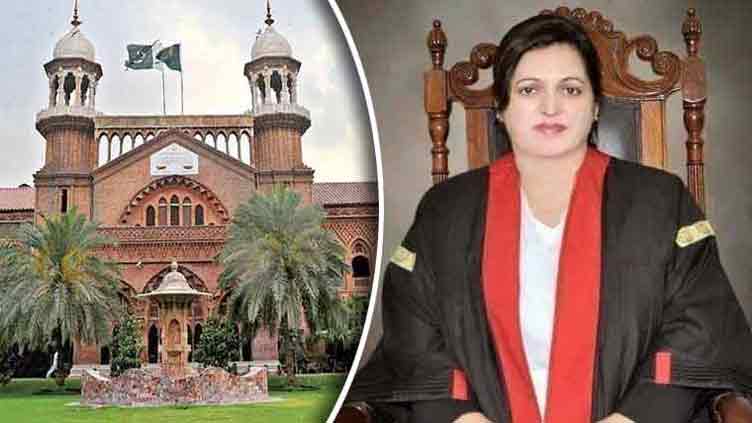
LHC to get first woman Chief Justice Aalia Neelum

For the first time in history, a woman judge – Justice Aalia Neelum – has been nominated for the top slot of  provianal High Court who will become first woman Chief Justice of the Lahore High Court. 

Media reported Tuesday that the Supreme Judicial Council (SJC) unanimously approved her name in a meeting chaired by Chief Justice of Pakistan Qazi Faez Isa. The council also considered the names of Justice Shujaat Ali Khan and Justice Baqar Najafi for this post.

She would replace Justice Malik Shahzad Ahmad Khan who has been elevated to the Supreme Court of Pakistan.

Who is Justice Aalia Neelum? 

Justice Neelum, who was third on the seniority list of the high court, was born in 1966. She secured law degree from the Punjab University Law College in 1995 and holds several other legal diplomas.

She began her legal career in 1996 as lawyer and was awarded license for High Court in 1998 and the Supreme Court in 2008. She practiced in various fields, including constitutional, civil, criminal, and anti-terrorism law.

In 2013, Justice Neelum was appointed an ad-hoc judge of the Lahore High Court and became a permanent judge in 2015. She also established standard operating procedures (SOPs) for recording evidence via video link.

Author

Shirin Ebadi,Kiana Rahman, Ali, Oslo, Editor, Kurdish woman Mahsa Jina Amini, Human Rights Activist Narges Mohammadi, Nobel Prize Committee, Woman, Life, Freedom, Nobel Peace Prize Award 2023

Ashi Asif is an Advocate of the High Court and has been associated with TLTP News Wire Service as a correspondent since 2020. She has covered major international events, including the Nobel Peace Prize Ceremony in Norway in 2022, and continues her global journalistic engagement with coverage of the Nobel Peace Prize Ceremony 2025 in Oslo. She can be reached at ashi@lawtoday.com.pk

More From Author

Leave a Reply

Your email address will not be published. Required fields are marked *

You May Also Like

FCC Super Tax verdict, Federal Constitutional Court Pakistan, Super Tax on high earners, Parliament taxing powers Pakistan, Section 4C Income Tax Ordinance, Super Tax legality Pakistan, Chief Justice Amin-ud-Din Khan, income tax law Pakistan, high income earners tax, oil and gas sector Super Tax, tax exemptions Pakistan, mudarabah Super Tax exemption, mutual funds tax exemption, unit trust funds Pakistan, retrospective taxation Pakistan, double taxation challenge, Supreme Court Super Tax case, High Courts Super Tax ruling, constitutional amendments Pakistan, 26th Constitutional Amendment, 27th Constitutional Amendment, revenue generation Pakistan, Rs310 billion revenue, Pakistan tax litigation, business community tax challenge, banks Super Tax Pakistan, corporate taxation Pakistan, federal budget Super Tax, economic stabilisation measures Pakistan, Operation Zarb-e-Azb levy, internally displaced persons fund, tax policy Pakistan, constitutional bench Pakistan, Khudayar Mohla

FCC Validates Parliament’s Legislative Competence To Levy Super Tax

ISLAMABAD: While dismissing all pleas challenging legality of the Super Tax on high-income earners, the…

Khudayar Mohla, Islamabad High Court, IHC, Islamabad Local Government elections, local government election petitions, Election Commission of Pakistan, ECP, presidential ordinance, Islamabad Capital Territory, ICT local government, Jamaat-e-Islami, JI, Mohammad Nasrullah Randhawa, Advocate Chaudhry Shoaib Ahmed, local bodies term, constitutional obligation, local government election delay, Islamabad LG polls, ICt Local Government Amendment Ordinance 2026, President Asif Ali Zardari, Articles 17, 32, 89, 140-A, election schedule withdrawal, court adjournment, bench unavailability, deferred hearing, joint petitions, Markazi Muslim League

IHC Adjourns Islamabad LG Election Pleas After Court Roster Cancelled

ISLAMABAD:  A scheduled hearing for the Islamabad Local Government (LG) election petitions was deferred Tuesday…

Khudayar Mohla, Section 4-C, Super Tax Pakistan, Income Tax Ordinance 2001, ITO 2001, Finance Act 2022–23, high-income taxpayers, Federal Board of Revenue, FBR Pakistan, Federal Constitutional Court, FCC Pakistan, government appeals, Hafiz Ahsaan Ahmad Khokhar, constitutional validity, judicial review Pakistan, taxation authority, double taxation, retrospective tax, separation of powers, Pakistan tax law, federal revenue

Levy of Super Tax Within Parliament’s Exclusive Taxing Power, Govt Lawyers Argue Before FCC

ISLAMABAD: A three-member bench of the Chief Justice Federal Constitutional Court Justice Amin-ud-Din Khan is…