

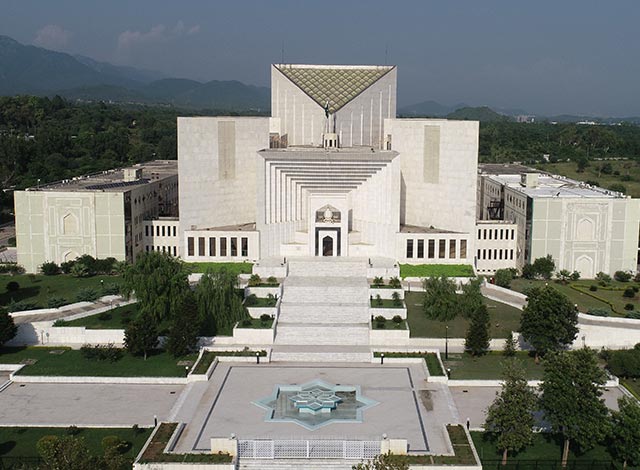
ISLAMABAD: While taking steps for institutional reform aimed at streamlining the delivery of justice, top court has officially issued a comprehensive set of Standard Operating Procedures (SOPs) for the fixation of cases.
Chief Justice of Yahya Afridi approved the new policy to establish an efficient, transparent, and timely mechanism for bringing matters before the bench, ensuring that the process is governed by institutional priorities rather than discretionary choices .
A central pillar of the new SOPs is the aggressive prioritization of the oldest pending litigation. The directives mandate that at least 40% of cases in every Final Cause List must consist of the oldest matters, specifically those filed up to the year 2018. In instances where this threshold cannot be met due to a lack of available old cases, the policy allows for a progressive inclusion of cases from subsequent two-year blocks to fulfill the required quota. This move is expected to provide long-awaited relief to litigants whose cases have remained unresolved for years.
The policy also categorizes specific urgent matters that must be fixed for hearing within the same week of filing, or at the latest, the following week. For civil litigants, this expedited track includes family cases, time-barred petitions, review petitions, and matters arising from interim or remand orders. On the criminal side, the court has prioritized bail applications, cases involving prisoners over 80 years of age, and original petitions filed due to the non-compliance of previous court orders.
To facilitate legal practitioners from further provinces, the Supreme Court has introduced a dedicated schedule for Sindh and Balochistan. Cases filed by advocates from these provinces will preferably be fixed on Wednesdays, Thursdays, and Fridays. The IT Directorate has been tasked with developing an automated allocation mechanism to ensure these provincial cases are seamlessly integrated into the weekly and monthly cause lists.
Furthermore, the judiciary is moving toward a digital-first approach with the development of an Automated Case Fixation System. This algorithmic system is designed to minimize discretionary delays and prioritize cases based on their category, age, and specific court directions. Under the new rules, the weekly Final Cause List will ideally be published every Wednesday, and once issued, the court will no longer entertain any adjournment applications, ensuring that scheduled hearings proceed without disruption.