

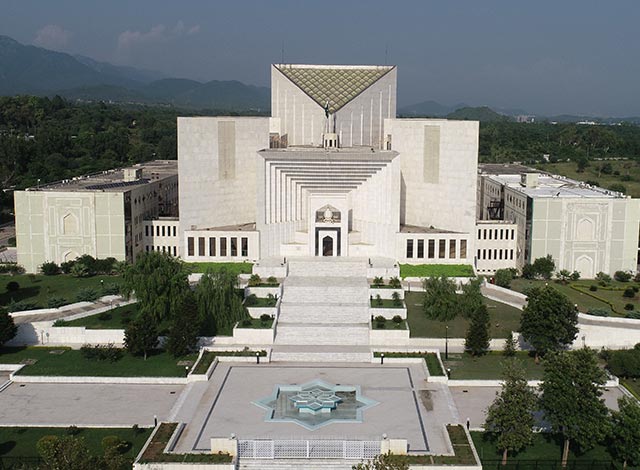
ISLAMABAD: In a transformative shift toward a more accessible and citizen-centric legal framework, the Supreme Court of Pakistan has successfully integrated cutting-edge technology into its judicial processes, marking a decisive end to geographical and logistical barriers in the pursuit of justice.
The apex court has operationalized a seamless, multi-location hearing system that allows benches, counsel, and litigants to participate in proceedings simultaneously from across the country. This digital leap was recently demonstrated during a landmark hearing where the Bench convened at the Principal Seat in Islamabad while legal counsel joined from Quetta, Hyderabad, and Karachi, ensuring uninterrupted proceedings and equal participation for all parties involved.
The court’s new technological agility was further highlighted by its ability to adapt to sudden changes in bench composition. Earlier this week, the Hon’ble Chief Justice of Pakistan presided over proceedings from the capital, while Justice Ayesha A. Malik joined the Bench virtually from Lahore, maintaining judicial efficiency without compromise. This transition was solidified during a full day’s docket where the Bench sat in Islamabad while parties and counsel appeared entirely from Quetta, showcasing a fully functional, technology-enabled judicial ecosystem that effectively bridges the vast distances of Pakistan.
A significant component of this reform is the move away from the traditional reliance on physical paper books toward a paperless environment. The use of fully digitized case files during hearings has eliminated the time-consuming need to retrieve physical records from various Branch Registries, substantially enhancing the speed and transparency of the judicial process. To ensure secure and precise record management, all case files have been digitized and barcoded for accurate tracking.
Complementing these courtroom changes is a broader digitization ecosystem designed to simplify the legal journey for citizens. This includes the introduction of digital case filing to reduce procedural delays, the electronic transmission of court orders for swift delivery, and the operationalization of digital payment systems to streamline administrative costs for litigants. Furthermore, the institutionalization of video-link hearings is expected to significantly reduce travel expenses and logistical constraints for those residing in far-flung areas.
These comprehensive reform initiatives, overseen by the Public Relations Office of the Supreme Court, represent a paradigm shift from conventional practices to a dynamic, technology-driven model. By prioritizing transparency and accessibility, the Supreme Court is redefining the delivery of justice in Pakistan, making the legal system more inclusive and responsive to the needs of every citizen, regardless of their location.