
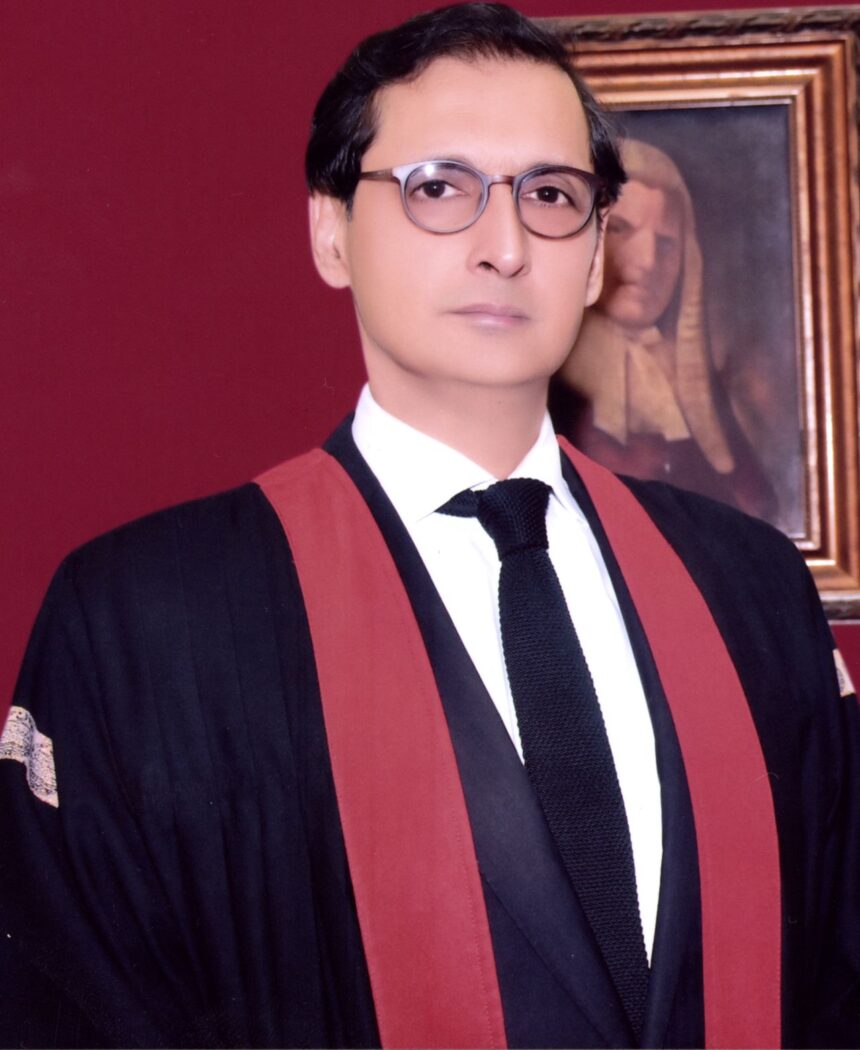
RAWALPINDI – In a courtroom moment that has captured the imagination of Pakistan’s legal fraternity, Justice Jawad Hassan of the Lahore High Court’s Rawalpindi Bench did what no statute prescribes and no procedure manual anticipates – he asked two feuding family members to simply embrace, and they did.
The remarkable scene unfolded during routine proceedings at the Rawalpindi Bench when a counsel informed the court that his client – a young man — had not only been verbally abused but physically confronted by his uncle, who was in control of disputed property. Rather than confining himself to the strict adversarial framework of the proceedings, Justice Jawad Hassan turned to the parties and offered words that cut through the legal formality of the moment.
“Jis ke paas ikhtiyar ya taqat ho, usay jhukna chahiye,” the judge remarked – those who hold power or authority must be the first to bow. He then urged both parties to show a big heart and resolve the matter. What followed left at least one witness in the courtroom visibly moved: the judge looked at the two men and said, simply, “Jappi dalo” – and they hugged, right there before the rostrum.
The moment was witnessed and subsequently recounted by advocate Boo Ali Khan, who had arrived at Justice Jawad Hassan’s court that day with his own matter listed for hearing. Mr Khan, who had spent the previous evening preparing a brief on mandatory mediation for a senior member of Pakistan’s legal establishment, described the scene as an instance of mediation in its most instinctive and human form. “It was an emotional moment, at least for me,” Mr Khan wrote, adding that he felt fortunate to witness what he described as a first step towards mandatory mediation that seemed genuinely effective. He noted that while the ultimate outcome — whether the parties would reach a formal amicable settlement — remained uncertain, seeing them leave the rostrum with smiles on their faces gave him reason for cautious optimism.
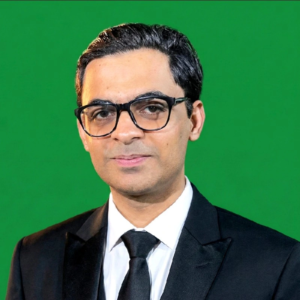
Boo Ali Khan, who describes himself as passionate about alternative dispute resolution, acknowledged that he had earlier smirked at his own brief, momentarily entertaining doubts about whether mandatory mediation could truly take root in what he termed a pro-litigation society. Justice Jawad Hassan’s intervention, he said, appeared to answer that question – at least for one day, in one courtroom.
Justice Jawad Hassan has earned a reputation within the legal community as a judge who treats mediation not as a procedural formality but as a genuine instrument of justice. His approach reflects a growing judicial philosophy gaining ground in Pakistan – one that seeks to address not merely the legal dimension of a dispute but its human and social consequences.
“To me, it felt as though justice was being done not only for the parties but also for society and the legal system,” Mr Khan observed. “And this time, justice also seemed to be done.” The episode carries particular resonance at a time when Pakistan’s superior courts, bar councils and legal reform bodies are engaged in serious debate over the institutionalisation of mediation. With over 2.26 million cases pending across the country’s courts, voices from the bench, the bar and civil society have increasingly converged on the view that the adversarial model alone cannot deliver timely justice – and that the path forward lies in embedding a mediation culture within the system, one courtroom at a time.
Justice Jawad Hassan, it appears, is already there.
——
A note on sourcing: This story is drawn from an eyewitness account shared publicly by advocate Boo Ali Khan on LinkedIn . Quotes are attributed to him as the source. Direct quotes attributed to Justice Jawad Hassan are as reported by Mr Khan