
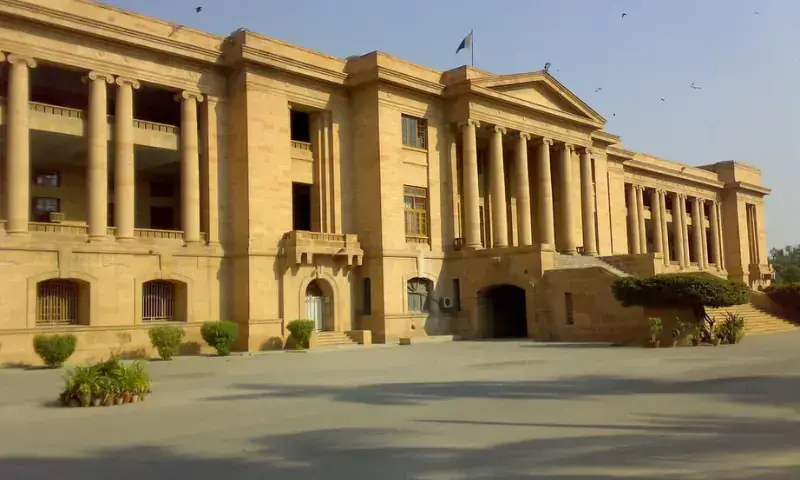
KARACHI: The Sindh High Court has set aside a Federal Board of Revenue (FBR) notice that posted tax officers at the premises of oil marketing company Taj Gasoline Limited. It ruled that monitoring under the sales tax and federal excise laws cannot continue unless the purpose and grounds are disclosed.
A division bench of Justice Yousuf Ali Sayeed and Justice Adnan Iqbal Chaudhry allowed two petitions filed by the company and issued directives that the officers be withdrawn forthwith. Justice Yousuf Ali Sayeed is the author judge of the 10-page verdict.
The FBR first posted Inland Revenue officers at the company’s premises by a notice dated 2 July 2026, to monitor production, supplies and stock position until 2 August. The posting was extended by notices dated 31 July and 1 September, and again by a fourth notice dated 1 October 2026, which ran until 2 November. The notices were issued under Section 40B of the Sales Tax Act, 1990 and Section 45(2) of the Federal Excise Act, 2005.
Counsel for the petitioner, Qazi Umair Ali, argued that the company had cooperated fully. It furnished daily reports, gave the FBR team online access to its accounting software and handed over physical records. Despite more than three months of monitoring, he said, no discrepancy had been pointed out and no report finalised. He also argued that the notices disclosed no purpose, and that the company’s primary business, supplying petroleum products, is exempt from sales tax.
Counsel for the FBR, Syed Ahsan Ali Shah, said Section 40B is a monitoring provision, not a charging one, so exemption does not bar its use against a registered person. He said scrutiny in June 2026 showed the company’s carried-forward input tax had grown from Rs128.222 million in March 2022 to Rs519,322,891 in June 2026, even though its main supplies are exempt. He added that the company also sells taxable lubricants and that there were indicators of false input tax claims.
The bench said these concerns, if backed by material, could be a lawful purpose, and it expressed no view on the merits of the allegations. However, none of them appeared in any of the four notices, which merely repeated the wording of the statute. The court held that stating the power being exercised is not the same as stating the purpose for which it is exercised.
Relying on the Supreme Court’s judgment in Commissioner Inland Revenue v. Pakistan Beverages Limited (2018 SCMR 1544) and its own earlier ruling in H.M. Motors v. Federation of Pakistan, the bench said the department’s comments cannot fill gaps in the notices. It added that a reason sitting on the departmental file, but withheld from the taxpayer, is no answer. It also held that the same reasoning applies to Section 45(2) of the Federal Excise Act, and that the FBR’s reliance on Shah Traders was misplaced because that case concerns the class of persons to whom the power applies, not the need for a purpose.
The court held that the notices amounted to an abuse of statutory power, set aside the notice of 1 October 2026 and ordered the officers withdrawn.
As per the verdict the FBR remains free to issue a fresh order if legitimate grounds exist. Any such order must specify the purpose of the monitoring, its duration, the applicable conditions and restrictions, and the reasons for any extension.