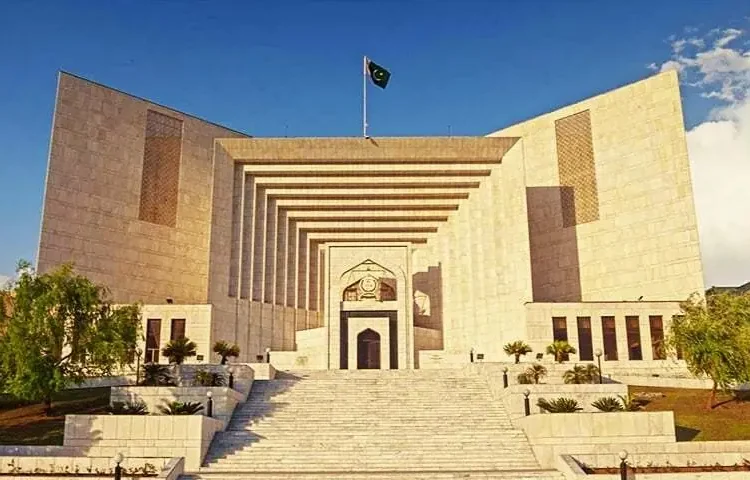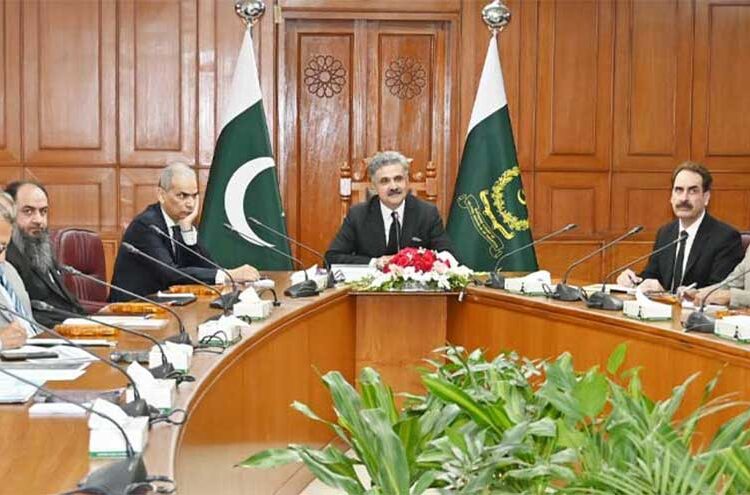
ISLAMABAD: The top court ruled on Thursday that procedural delays caused by administrative inefficiencies of those at the helm of government-run departments cannot justify failing to ensure timely promotions for public officers.
“Safeguarding an employee’s right to be considered for promotion in a timely manner is a right,” observed Justice Ayesha A. Malik, adding that the government departments cannot take shelter behind their inefficiencies and inactions by relying on Section 8(3) of the Punjab Civil Servants Act 1974, as they are responsible for ensuring timely promotions. The observation came in an appeal of Fakhar Majeed before the Supreme Court, which a three-judge bench comprising Justice Ayesha A. Malik, Justice Muhammad Hashim Khan Kakar, and Justice Ishtiaq Ibrahim had taken up against a February 16, 2024, order of the Punjab Service Tribunal, which had dismissed his plea.
The Supreme Court, however, ordered the Punjab Irrigation Department to grant promotion to the employee from 2012 and held the department responsible for an “unjustified”, “negligent”, and “inefficient” delay in processing his promotion for over a decade. The petitioner stated that he was entitled to a proforma promotion, effective January 18, 2010, as the vacancy for the post of draftsman (BPS-14) became available on that date.
Court says civil servants should not suffer due to procedural delays, inaction of government departments
The department, on the other hand, pleaded that in terms of Section 8 of the Act, the employee did not have any right to seek proforma promotion from the date of vacancy, rather promotion was to be granted with immediate effect. Petitioner Fakhar Majeed was appointed on Oct 30, 1999, and later promoted to the post of draftsman on current charge basis three times in BPS-10 through letters dated Dec 11, 2008, June 2, 2010, and Nov 12, 2011, for a period not exceeding one year under Rule 10(b) of the Punjab Civil Servants (Appointment & Condition of Services) Rules 1974 or till the arrival of regular incumbent whichever is earlier.
A Departmental Promotion Committee (DPC) was convened in 2012, but his case was not considered. This became the subject matter of a dispute between the parties. The employee was ultimately recommended for promotion to the post of draftsman by the DPC held on May 4, 2019, and thereafter promoted through an office order of May 7, 2019. The petitioner claimed that he was not treated fairly and was denied the lawful right of being considered for promotion in 2012. The issue, therefore, is the petitioner’s request for regular promotion to the post of draftsman (BPS-14) with effect from Jan 18, 2010.
Authored by Justice Malik, the seven-page judgement observed that it must be remembered that promotion in public service was not a gratuitous benefit, rather it was tied to merit, performance and operational needs of the state. Once an employee satisfies the prescribed eligibility criteria, a corresponding duty devolves on the competent authority to consider the case, failing which a reasonable timeframe must be documented, Justice Malik observed.
By relying on Section 8(3) of the Act, the department actually tried to nullify the delay, its mismanagement and inefficiency. Fairness, transparency and timeliness in promotion matters are critical to keep employees efficient and motivated, the judgement emphasised. It said that a delay, failure to convene DPC, or prolonged reliance on current charge or acting arrangements cannot be used to defeat the right of an eligible civil servant to timely consideration for promotion, and that a civil servant cannot be made to suffer for omissions, inefficiency or inaction. The Supreme Court ruled that the tribunal failed to appreciate the fact that the employee was unjustifiably deprived of the promotion, and set aside the tribunal’s order with a direction that the petitioner be deemed promoted with effect from Jan 21, 2012.