Categories Courts

A person cannot evict parents from house : LHC

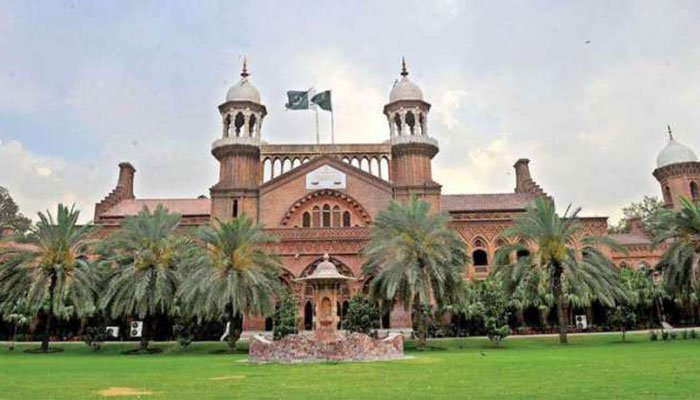
Recently over a father’s plea for directives to take action against son who expelled him from home, the Lahore High Court (LHC) ruled those evicting their parents form house will face a year jail with fine under  the Parents Protection Ordinance (PPO) 2021.

Single member bench of the LHC comprising Justice Ali Baqar Najafi noted in a verdict in response to a petition in the matter saying, “A person, no matter a tenant or a house owner, cannot evict parents, and eviction will be an offence,”. 

“Parents could expel their children from their home any time. An offspring must leave the house within seven days in such a case; otherwise he/she will have to face one-month jail term,” the bench said.

Mian Muhammad Akram, the father of one Ali Ikram had launched a complained before deputy commissioner that his son had expelled him from house. He urged the deputy commissioner to take action against his son Ali Ikram. The concerned deputy commissioner aske the father to file a complaint in the court of relevant jurisdiction. However, the LHC set aside decisions of the deputy commissioner and the appellate court in the matter. Through its verdict, the LHC’s bench issued directives to the deputy commissioner to abide by the provisions of the relevant law act.

It is pertinent to mention that President Dr Arif Alvi had promulgated an ordinance during this May to protect parents from being forcibly evicted by the children as the Parents Protection Ordinance (PPO) 2021 renders the act punishable by jail term or fine or both. The PPO 2021 is aimed to protect the citizens against forceful eviction by their children.

The children must leave the house of their parents within 30 days of the written notice issued by the parents and failing to do so might land them in jail for 30 days or a fine on them or both. The deputy commissioner of any district now has the power to move against the children upon complaint by parents.

Under the PPO 2021 children – who own the property or have rented the space themselves – are restricted to force out their parents of the house, as per the ordinance. Also, children will be held responsible for not obeying the instructions of their parents if they want their children out of the house that the parents own or have rented.

The children must leave the house of their parents within 30 days of the written notice issued by the parents and failing to do so might land them in jail for 30 days or slap a fine on them or both. The deputy commissioner of any district now has the power to move against the children upon complaint by parents. The action against such children whose parents have made formal complaints falling under the ambit of this ordinance will require no warrant. However, both parents and the children will have the right to appeal.


Author

Shirin Ebadi,Kiana Rahman, Ali, Oslo, Editor, Kurdish woman Mahsa Jina Amini, Human Rights Activist Narges Mohammadi, Nobel Prize Committee, Woman, Life, Freedom, Nobel Peace Prize Award 2023

Ashi Asif is an Advocate of the High Court and has been associated with TLTP News Wire Service as a correspondent since 2020. She has covered major international events, including the Nobel Peace Prize Ceremony in Norway in 2022, and continues her global journalistic engagement with coverage of the Nobel Peace Prize Ceremony 2025 in Oslo. She can be reached at ashi@lawtoday.com.pk

More From Author

You May Also Like

FCC Super Tax verdict, Federal Constitutional Court Pakistan, Super Tax on high earners, Parliament taxing powers Pakistan, Section 4C Income Tax Ordinance, Super Tax legality Pakistan, Chief Justice Amin-ud-Din Khan, income tax law Pakistan, high income earners tax, oil and gas sector Super Tax, tax exemptions Pakistan, mudarabah Super Tax exemption, mutual funds tax exemption, unit trust funds Pakistan, retrospective taxation Pakistan, double taxation challenge, Supreme Court Super Tax case, High Courts Super Tax ruling, constitutional amendments Pakistan, 26th Constitutional Amendment, 27th Constitutional Amendment, revenue generation Pakistan, Rs310 billion revenue, Pakistan tax litigation, business community tax challenge, banks Super Tax Pakistan, corporate taxation Pakistan, federal budget Super Tax, economic stabilisation measures Pakistan, Operation Zarb-e-Azb levy, internally displaced persons fund, tax policy Pakistan, constitutional bench Pakistan, Khudayar Mohla

FCC Validates Parliament’s Legislative Competence To Levy Super Tax

ISLAMABAD: While dismissing all pleas challenging legality of the Super Tax on high-income earners, the…

Khudayar Mohla, Islamabad High Court, IHC, Islamabad Local Government elections, local government election petitions, Election Commission of Pakistan, ECP, presidential ordinance, Islamabad Capital Territory, ICT local government, Jamaat-e-Islami, JI, Mohammad Nasrullah Randhawa, Advocate Chaudhry Shoaib Ahmed, local bodies term, constitutional obligation, local government election delay, Islamabad LG polls, ICt Local Government Amendment Ordinance 2026, President Asif Ali Zardari, Articles 17, 32, 89, 140-A, election schedule withdrawal, court adjournment, bench unavailability, deferred hearing, joint petitions, Markazi Muslim League

IHC Adjourns Islamabad LG Election Pleas After Court Roster Cancelled

ISLAMABAD:  A scheduled hearing for the Islamabad Local Government (LG) election petitions was deferred Tuesday…

Khudayar Mohla, Section 4-C, Super Tax Pakistan, Income Tax Ordinance 2001, ITO 2001, Finance Act 2022–23, high-income taxpayers, Federal Board of Revenue, FBR Pakistan, Federal Constitutional Court, FCC Pakistan, government appeals, Hafiz Ahsaan Ahmad Khokhar, constitutional validity, judicial review Pakistan, taxation authority, double taxation, retrospective tax, separation of powers, Pakistan tax law, federal revenue

Levy of Super Tax Within Parliament’s Exclusive Taxing Power, Govt Lawyers Argue Before FCC

ISLAMABAD: A three-member bench of the Chief Justice Federal Constitutional Court Justice Amin-ud-Din Khan is…