
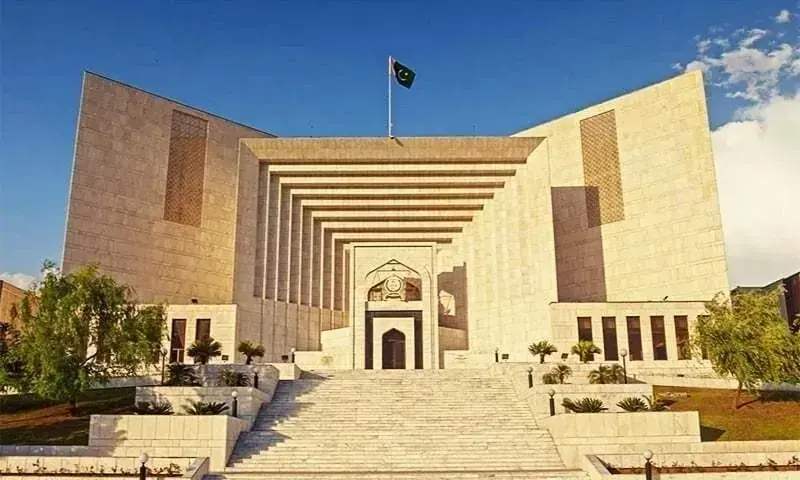
ISLAMABAD: Supreme Court on Tuesday restored the seniority of a group of Khyber Pakhtunkhwa government employees who had been regularized under the Khyber Pakhtunkhwa Employees Regularization of Service Act, 2018, ruling that an administrative delay in publishing their regularization notification in the official Gazette could not be held against them.
Justice Muhammad Ali Mazhar was heading a two-member bench allowed identical pleas of Sahibzada Hassan Ali and other employees against the Government of Khyber Pakhtunkhwa and private respondents, setting aside a consolidated judgment of the Khyber Pakhtunkhwa Service Tribunal, Peshawar in September 12, 2025.
The dispute arose after the petitioners, initially appointed against project posts in 2016, were regularized with effect from March 7, 2018 — the date the Act of 2018 came into force through notifications issued on August 28 and October 17, 2018.
However, due to what the Court described as the “lackadaisical attitude” of departmental staff and the Government Printing Press, these notifications were not published in the official Gazette until August 21, 2024, though they still carried retrospective effect from 2018.
When the KP government issued a Final Seniority List in March 2024 placing the petitioners above other employees appointed later in 2018, the latter group challenged it before the Service Tribunal, arguing that under Section 5(iv) of the Act, regularization is deemed to take effect only upon Gazette publication. The Tribunal agreed and set aside the seniority list, prompting the employees to approach the Supreme Court.
Writing the judgment, Justice Mazhar held that the requirement of Gazette publication under the Act is directory rather than mandatory, since the parent statute does not declare that non-publication renders regularization void. The Court noted that the petitioners were not new entrants but had already been performing their duties before the Act came into force, and that the delayed notification still fixed their regularization date as 2018, not 2024.
Invoking the maxim Actus Curiae Neminem Gravabit that no one should suffer because of an act of the court or, by extension, the state – the bench observed that employees cannot be made “victims or scapegoats” for bureaucratic delays over which they had no control.
The Court relied on a long line of precedents, including Chief Commissioner, Karachi v. Jamil Ahmed (PLD 1961 SC 145), Saghir Ahmed v. Province of Punjab (PLD 2004 SC 261), and Bahadur Khan v. Federation of Pakistan (2017 SCMR 2066), all holding that Gazette-publication requirements are generally directory and that a statutory instrument should not be invalidated merely because a public functionary failed to publish it promptly. It distinguished cases involving notifications that impose new liabilities or penalties, noting that regularization under the 2018 Act was a beneficial measure that created no new burden and therefore delayed publication caused no prejudice to anyone.
Converting the civil petitions into appeals, the Supreme Court allowed them, set aside the Tribunal’s judgment, and restored the petitioners’ seniority to its original position as reflected in the seniority lists issued between 2019 and 2023.
—-
Case: Sahibzada Hassan Ali and others v. Government of Khyber Pakhtunkhwa and others, Civil Petitions No. 5091-5093/2025 and 986-P to 988-P/2025, decided on May 19, 2026.