

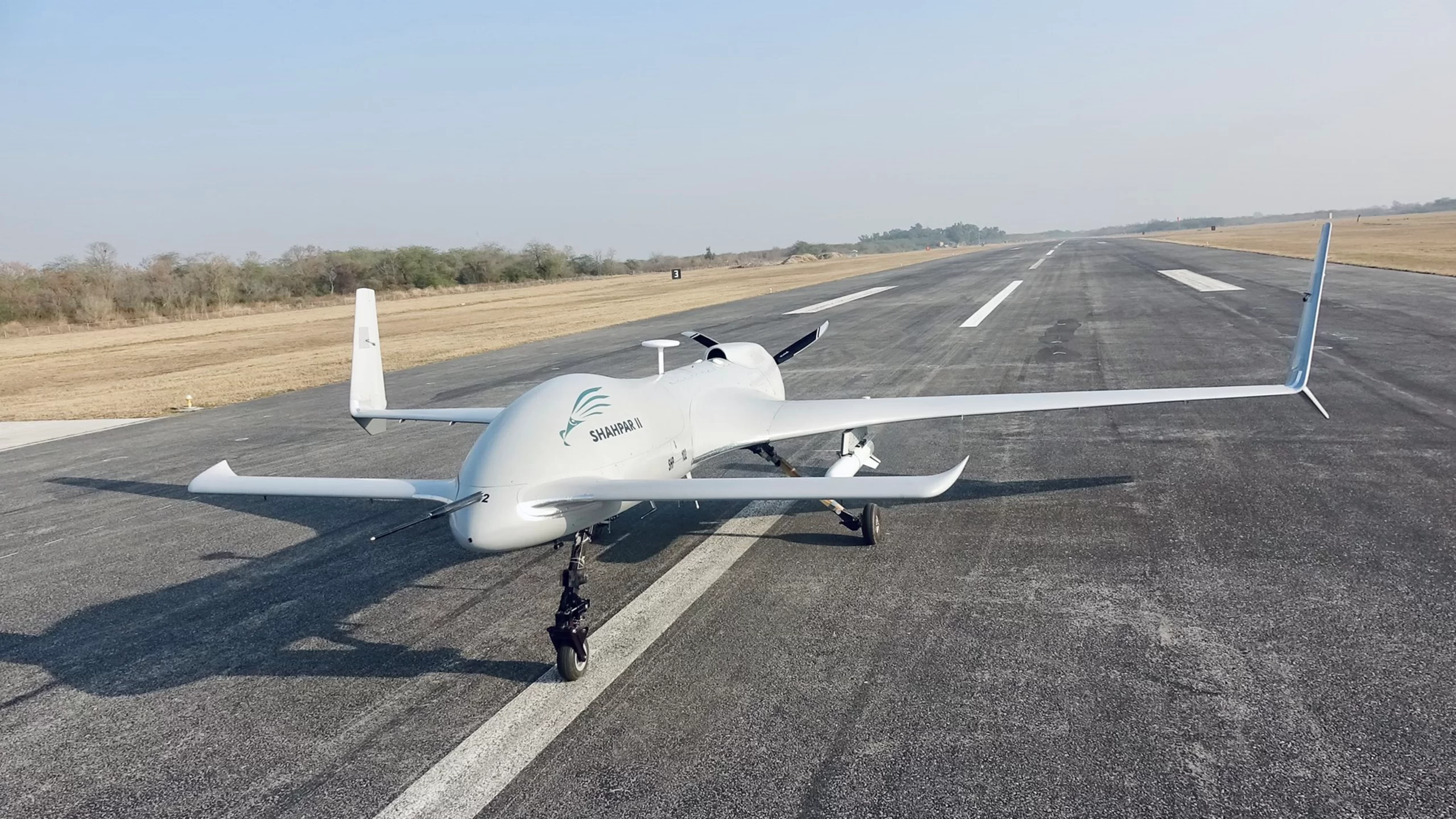
The Indian attack on mainland Pakistan last month has given rise to a new discourse in the geopolitical scenario of the region: will drones now decide the future of warfare in South Asia?
A drift from the conventional techniques of warfare both rivals was observed under the swarms of drones crossing the borders from both sides. This anomaly of securitization of the region has its basis in the technological revolution in military affairs across the globe. Last month’s nationalistic jingoism requires a deeper dive into how drones can shape the security dynamics of the region.
One thing is there for sure and is here to stay, drone warfare is the visage of modern combat. Drones have not only posed an existential threat to legacy systems but endangered the deployment of traditional weapons by attacking literally all sorts of targets. Such that almost 70% of the casualties in the Russia-Ukraine war are the result of drone warfare.
Interestingly, the pace at which the ecosystem of drone warfare evolves is bordering on a metamorphosis. The technologies and deployment techniques that are used become obsolete within 6 months, the warrant of which has been observed in the case of Ukraine and Russian, both of which are involved in a drone arms race with countermeasures being produced at an effective speed.
Ukraine is a particular role model in this case. They have spearheaded an advanced military research and development model that is adapted to drone warfare. It has taken form of a ‘startup ecosystem’, where private enterprises are manufacturing drones within weeks with targets of drone productions reaching approximately 4 million drones.
Critics in the western military establishment have strongly criticized that lagging of US and NATO in drone warfare capacity. The main criticism stems from the fact that the drone industry west lacks the competitiveness required to compete against Russia (apart from the Ukrainian drones) and China. The Chinese strategic dominance in this regard is particularly noteworthy because it maintains a strong supply chain of electronic supply for drone industry in Russia. Two of the drones used by Pakistan against India: The Wing Loong II and CH-4 are Chinese made focused on cost effectiveness and low endurance.
However, the intriguing debate in modern times is not the use of drones as a primary warfare medium but the integration of artificial intelligence into the capacities of the weapon’s performance. AI driven autonomous drones would have the capability to improvise and attack the target whether human or non-human with complete autonomy.
Still, AI will not completely replace human agency in warfare, an aspect that is often overstated, but it would significantly transform human-machine interaction in the battlefield. Rather it gives birth to a ‘distributed agency’, in which the process of decision making is neither human nor machine driven but lies in a hybrid mode that obscures the boundaries between the two.
Although the military establishments and policymakers stress upon the development of AI in an ethical and responsible manner, the ‘Responsible AI’ framework tends to be fundamentally ambiguous and structurally fragile. In a post-structural context, it serves the purpose of a ‘floating signifier’- rhetorically strong but lacks any action at all. However, international efforts like the REAIM summit in The Hague, try to define a structure that can address the ethical and legal nuances of the hybrid form of human-AI agency.
The security dilemma in South Asia is now deeply exacerbated. Provided the fact that the Israeli made Herons and Harops used in the conflict last month have provided Pakistan to advance its structural capacities in drone warfare. The strategic mistrust was a long coming with both sides developing their unmanned aerial weaponry, but it was never tested, particularly reaching civilian areas. The fears of escalation in future are now paramount and cannot be overlooked despite the ongoing ceasefire.
What is of utmost significance is the reach of these drones in civilian populated areas and the ability to execute. For instance, in Gaza, the use of advanced AI algorithms under the names of ‘The Gospel’ and ‘Lavender’, have the technical ability to improvise and execute targets in real time.
Pakistan is not behind in this drones’ race. The Turkish made ‘Bayraktar TB2’, used against Indian aggression last month have been noteworthy in aerial combat. In fact, the country’s strategic alliance with Turkiye is coming in handy because of its high capacity to develop drones. Such that the first ever autonomous attack by a drone was executed by Turkish Kargu-II.
There is a reasonable inference to judge the shift in the security landscape of south Asia. Pakistan as usual has been tremendously effective given its past record to strategically balance the security dilemma in the region and it looks like it is going to follow the same path.