
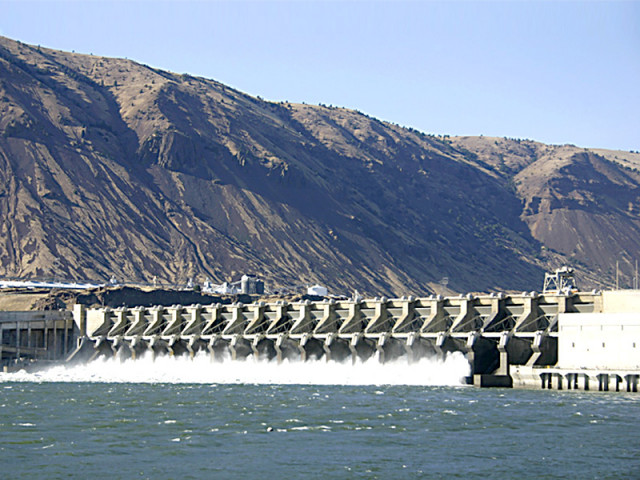
ISLAMABAD: While announcing a 22-page verdict in response to identical pleas on Monday, the Federal Constitutional Court set aside Sindh High Court judgments concerning the multi-billion-rupee Nai Gaj Dam, a lifeline for the water-scarce Kachho region of Sindh, directing WAPDA and the contractor to resume construction under the original contract, arbitral award, and MoU, and barring lower courts from entertaining fresh litigation until completion of the dam.
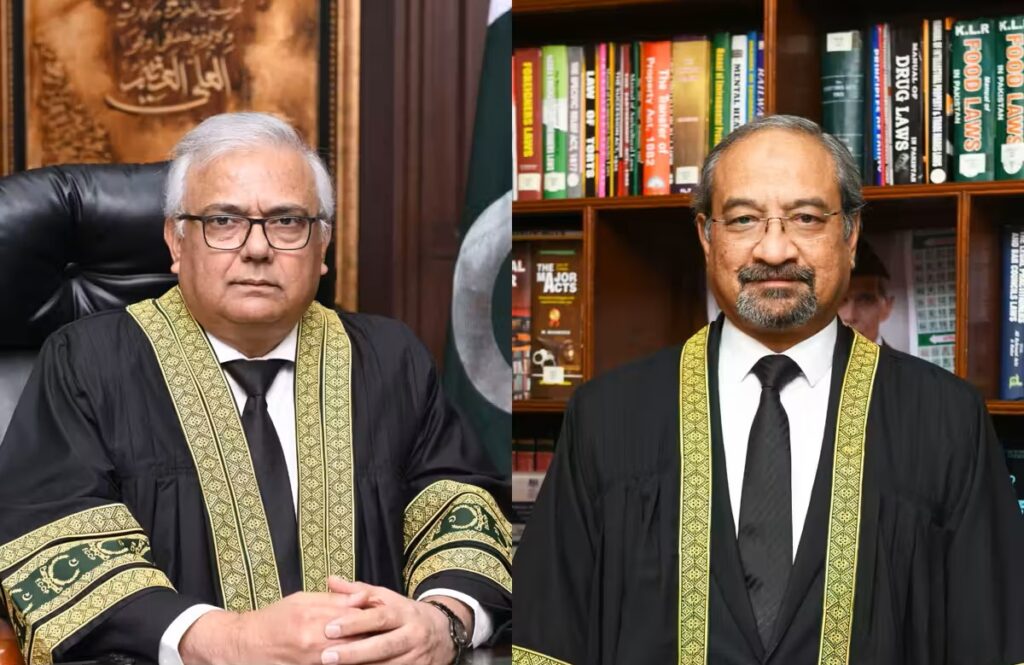
A two-member bench heard the case. Chief Justice Amin-ud-Din Khan and Justice Ali Baqar Najafi decided Constitution Petition No. 64/2018 along with connected civil petitions for leave to appeal. The Court held that the Sindh High Court had exceeded its jurisdiction under Article 199 of the Constitution. It ruled that the High Court had entertained what was, in substance, a contractual dispute already settled through arbitration.
WAPDA had filed the petitions against NEIE-SMADB-LILLEY-RMS, the contractor engaged for the dam’s construction. WAPDA challenged three High Court orders – October 6, 2023, and May 27 and June 13, 2025. Those orders had restored the contractor’s entitlement to price escalation. They had also restrained the National Accountability Bureau (NAB) from proceeding against the contractor over allegedly forged bank guarantees.
The Court traced the project’s history in detail. It noted that the Nai Gaj Dam aims to provide irrigation to the Kachho and Kohistan plains. The project will also augment water supply to Manchar Lake. It will generate roughly 4.2 MW of hydroelectric power. It will bring nearly 28,800 acres of land under cultivation. WAPDA had awarded the contract in 2011. The bid amount exceeded Rs. 38 billion. The project ran into trouble in 2018. WAPDA discovered that one of the contractor’s two performance guarantees was forged. The Bank of Punjab confirmed it had never issued that guarantee.
Once the project is completed it will generate roughly 4.2 MW of hydroelectric power in addition to bring nearly 28,800 acres of land under cultivation
WAPDA terminated the contract and referred the matter to NAB. This step triggered years of litigation and arbitration. The parties later revived the contract through a 2021 MoU. That MoU froze price escalation at 2018 levels.
The Court examined the arbitral award dated February 19, 2021. It noted that the award had become Rule of the Court. It had also converted into a decree the same year. The Court found that the award and the subsequent MoU had already crystallized the rights and obligations of both parties. It ruled that the High Court could not indirectly modify a final decree through its constitutional writ jurisdiction.
The bench also addressed the Pakistan Engineering Council’s escalation guidelines. It held that the 2023 guidelines could not apply retrospectively to a contract executed in 2011. It found that arbitration had already settled the matter. The Court further ruled that the High Court had erred in quashing the NAB inquiry. It noted that the High Court had not recorded findings. It had also failed to hear NAB as a necessary party.
The Court criticized the impugned judgment sharply. It called the judgment “non-speaking and unreasoned.” It found that the High Court had failed to address jurisdictional objections. It had also failed to examine the applicable contractual and statutory framework before granting relief to the contractor.
The Court expressed displeasure over repeated litigation. It noted that the delays had pushed the project years beyond its original 2015 completion target. The Court then adopted what it called a “pragmatic course.” It directed WAPDA to decide, within fifteen days of a request from the contractor, whether to resume work under the original contract terms. It barred any additional price escalation or compensation. It also barred any court intervention in the matter until the dam’s completion, except through the contract’s own dispute resolution mechanism.
Finally, the Court converted WAPDA’s petitions into appeals. It allowed the appeals. It set aside the impugned High Court judgment and orders.