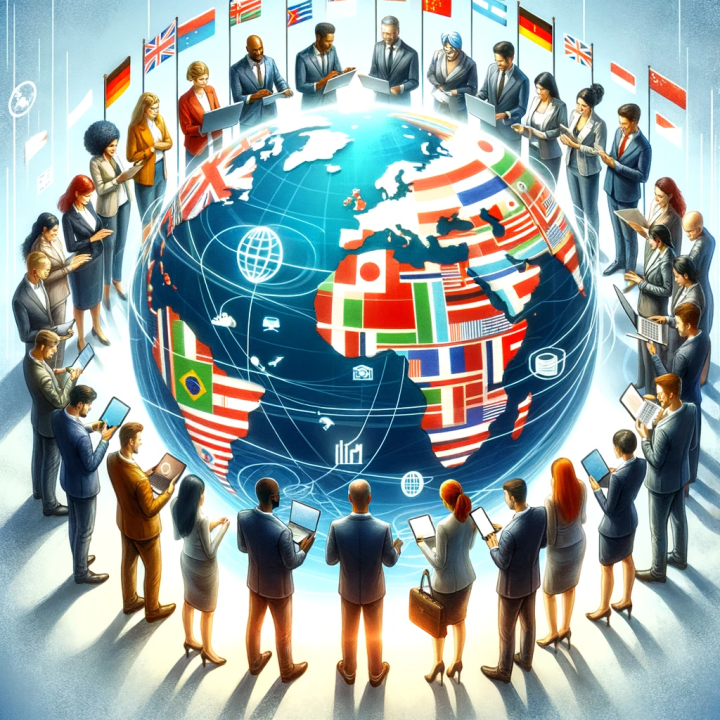

Globalization, the intricate web of interconnected economies, cultures, and societies, has significantly shaped the modern world. As nations and regions have become more entwined, the effects of globalization have rippled across borders, bringing both opportunities and challenges.
Pakistan, a developing country with a relatively low carbon footprint, is no exception. Despite contributing minimally to global carbon emissions, Pakistan finds itself grappling with the multifaceted impacts of globalization. This article explores how globalization affects Pakistan, highlighting the paradox of its low carbon footprint juxtaposed with significant environmental and socio-economic challenges.
Globalization has woven Pakistan into the fabric of the global economy. The country’s integration into international markets has opened avenues for trade, foreign investment, and technological advancements. However, this integration has also exposed Pakistan to the vulnerabilities associated with global economic fluctuations and environmental challenges.
On one hand, globalization has driven economic growth in Pakistan by increasing access to international markets. The country’s textile and garment industry, for instance, has thrived due to its ability to export goods to global markets. Additionally, foreign direct investment (FDI) has played a crucial role in modernizing various sectors, including telecommunications, energy, and infrastructure. This influx of capital and technology has contributed to job creation and improved living standards for many Pakistanis.
On the other hand, the globalization of trade and investment has also made Pakistan susceptible to external shocks. Global economic downturns, such as the 2008 financial crisis, have had ripple effects on Pakistan’s economy, leading to slower growth, increased unemployment, and reduced investment. Moreover, the country’s reliance on exports makes it vulnerable to fluctuations in global demand and competition from other low-cost producers.
One of the most pressing issues of our time is climate change, and globalization has played a significant role in exacerbating environmental degradation. However, Pakistan presents an interesting paradox in this context. The country has one of the lowest per capita carbon footprints in the world, yet it is disproportionately affected by the adverse impacts of climate change.
Pakistan’s low carbon footprint can be attributed to several factors. First, the country’s industrial base is relatively underdeveloped compared to other emerging economies, resulting in lower greenhouse gas emissions. Second, a significant portion of Pakistan’s energy comes from hydroelectric sources, which are cleaner compared to fossil fuels. Lastly, the country’s per capita income remains low, limiting the consumption of goods and services that contribute to carbon emissions.
Despite these factors, Pakistan is highly vulnerable to the impacts of climate change. The country experiences extreme weather events with increasing frequency, including floods, droughts, and heatwaves. These events have devastating effects on agriculture, which is the backbone of Pakistan’s economy and employs a large portion of its population. The floods of 2010, for instance, affected over 20 million people and caused damages estimated at $10 billion. Similarly, heatwaves have become more common, leading to health crises and reduced agricultural productivity.
Globalization has exacerbated these environmental challenges in several ways. The expansion of global trade has increased the demand for Pakistan’s agricultural products, leading to overexploitation of natural resources. For instance, the intensive cultivation of crops like cotton, rice, and sugarcane for export markets has led to water scarcity, soil degradation, and loss of biodiversity. Moreover, the construction of infrastructure projects, often funded by foreign investment, has led to deforestation and habitat destruction, further contributing to environmental degradation.
While globalization has brought economic opportunities to Pakistan, it has also widened the gap between the rich and the poor. The benefits of globalization have not been evenly distributed, leading to increased income inequality and social tensions.
In urban areas, the influx of foreign investment and the growth of export-oriented industries have created new job opportunities and improved access to goods and services. However, these benefits have largely been concentrated in major cities like Karachi, Lahore, and Islamabad, leaving rural areas behind. The rural population, which constitutes a significant portion of Pakistan’s workforce, has not benefited equally from globalization. Many rural communities still lack access to basic services such as healthcare, education, and clean water.
Moreover, the globalization of media and communication has exposed Pakistanis to global cultural norms and lifestyles, creating a cultural divide between urban and rural populations. This divide has led to social tensions and a sense of alienation among those who feel left out of the benefits of globalization. The influx of foreign cultural influences has also led to a gradual erosion of traditional values and practices, further exacerbating social tensions.
Despite the challenges posed by globalization, Pakistan has the opportunity to harness its benefits while mitigating its adverse effects. To achieve this, the country must adopt a multi-pronged approach that includes sustainable development, economic diversification, and social inclusion.
First, Pakistan needs to prioritize sustainable development by balancing economic growth with environmental protection. This can be achieved by promoting renewable energy sources, improving resource efficiency, and adopting environmentally friendly agricultural practices. The government must also strengthen its capacity to respond to climate change by investing in disaster preparedness and resilience-building measures.
Second, economic diversification is crucial to reducing Pakistan’s vulnerability to external shocks. The country should focus on developing high-value industries such as information technology, pharmaceuticals, and tourism, which have the potential to generate employment and reduce dependency on traditional sectors like agriculture and textiles.
Third, social inclusion is key to ensuring that the benefits of globalization are shared equitably across all segments of society. This requires investing in education, healthcare, and social services, particularly in rural areas. The government must also address income inequality by implementing progressive taxation policies and social safety nets that protect the most vulnerable populations.
Globalization has undeniably impacted Pakistan in profound ways, bringing both opportunities and challenges. While the country has made strides in integrating into the global economy, it must address the environmental and socio-economic challenges that have emerged as a result. With a low carbon footprint, Pakistan stands at a unique juncture where it can advocate for global climate justice while simultaneously striving for sustainable development at home. By adopting a balanced approach to globalization, Pakistan can navigate the complexities of the modern world and build a more resilient and equitable future for its people.
—
The wirter is a freelance columnist