Whenever the issue of population growth is discussed in Pakistan, one argument is immediately thrown in as justification: “Everyone who comes into the world brings their own sustenance with them.” On the surface, this statement—wrapped in religious sentiment—sounds comforting. But the bitter realities of practical life appear to contradict it. If every child truly brought their sustenance along, we would not see underage children on roads, in markets, hotels, workshops, and homes facing labor, violence, abuse, and humiliation.
Sustenance is not just food; it also includes education, healthcare, protection, upbringing, and a dignified life. Today in Pakistan, having children is no longer merely an emotional or religious matter; in many places, it has become a business. The more children, the more “hands,” and thus more income—whether through begging, child labor, or even involvement in crime.
The question is not whether a child is being born; the real question is whether the parents or the state have the capacity, intention, and resources to turn that child into a responsible citizen. Will this child receive quality education? Will their physical and mental health be taken care of? Will they be given moral training and civic awareness? Or will they simply become another individual who is deprived themselves and a burden on society? These are the fundamental questions we are collectively avoiding. In developed countries, population is evaluated not just by numbers but by quality. That is why in countries like Japan, Germany, South Korea, and across Europe, even a single murder, suicide, or accidental death becomes national news. Human life is valued there because the population is balanced, educated, and organized within the state system. In contrast, in Pakistan, dozens of deaths occur daily without even making the news. The abundance of human life has reduced its perceived value. When a population becomes purposeless and unproductive, the arrival or departure of an individual no longer seems to matter. Many countries around the world have taken the population issue seriously and implemented practical measures. China enforced a “one-child policy” for decades, which had both positive and negative effects, but it clearly demonstrated that the state can play a decisive role in controlling population growth. Bangladesh, once in a worse demographic situation than Pakistan, has significantly reduced its population growth rate through effective family planning, women’s education, and awareness campaigns. Iran, despite being a religious society, successfully linked family planning with national interest.
These examples make it clear that population control is neither un-Islamic nor unnatural; rather, it is a wise state policy. Pakistan’s problem is not just a growing population, but an untrained, unskilled, and unproductive population. This is one reason why the Pakistani passport ranks among the weakest in the world. Abroad, Pakistanis are often viewed with suspicion, largely due to ignorance, irresponsible behavior, and a lack of social training. These issues do not arise in a vacuum; they are the result of uncontrolled population growth that receives neither proper upbringing at home nor guidance at the state level.
Population pressure in Pakistan has fueled psychological issues, crime, unemployment, extremism, and social unrest. The burden of a growing population on limited resources is pushing people toward despair, anger, and a sense of deprivation. Despite this, the ruling classes are unwilling to take the issue seriously. One reason is that this uneducated and unaware population conveniently serves as a vote bank, cheap labor, and fuel for displays of power. Thus, the alliance between ignorance and population growth has become beneficial for those in power. In my opinion, mere sermons, advice, and awareness campaigns are no longer sufficient.
The government should limit or condition access to state benefits – such as free education, healthcare, and subsidies under programs like BISP – for families with more than two or three children, and enact clear legislation in this regard. At the same time, family planning should be promoted on scientific grounds while respecting religious sensitivities, women’s education should be prioritized, and children’s rights must be strictly enforced. We must accept that nations are built not by numbers, but by character, knowledge, and awareness. A purposeless crowd can never guarantee progress. If Pakistan still fails to take this silent yet deadly population crisis seriously, future generations will not forgive us. The time to decide is now: do we want more people, or better people?

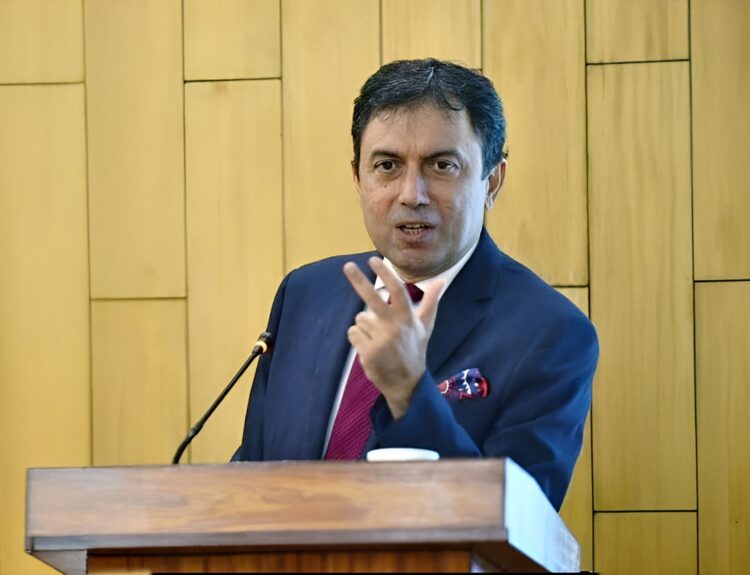
The writer, Masroor Ahmad is a PhD scholar in Media Studies at NUML, Islamabad, and a Grade-18 federal officer. With an MA from Punjab University and an MS from Bahria University, he serves as visiting faculty at Bahria and SZABIST. A seasoned freelance journalist and researcher, he has published hundreds of articles in English and Urdu, focusing on social issues, regional politics, and international relations. Known for his command of English and Arabic literature, he frequently employs satire as a tool for social reform.He can be reached at: masroortaurus@gmail.com