

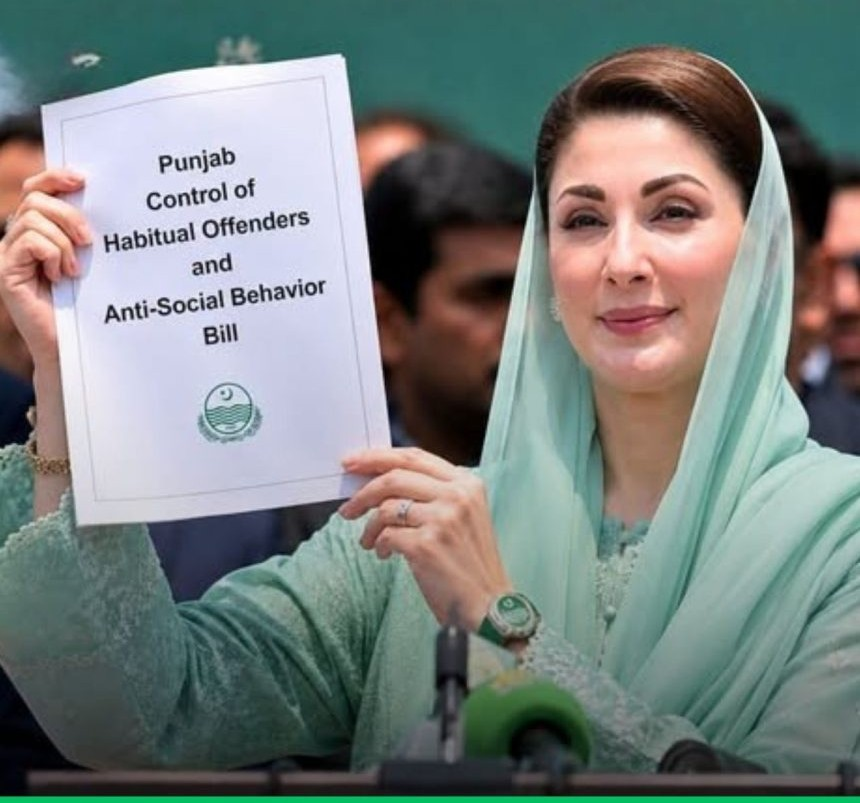
LAHORE: At a round table organised by the Human Rights Commission of Pakistan (HRCP) to debate the proposed Punjab Control of Habitual Offenders and Anti-Social Behaviour Bill 2026, civil society activists, lawyers and journalists observed that the bill would have a corrosive impact on human rights protections if enacted.
HRCP Punjab vice-chair Raja Ashraf observed that the space for debate in legislative bodies had shrunk. According to human rights lawyer Asad Jamal, the primary intent of the bill was to enable the state to legally disregard civil liberties through the use of vague terms such as ‘habitual offender’ and ‘anti-social behaviour.’ He also expressed concern over Section 5 of the bill, under which the provincial government could empower an intelligence committee arbitrarily and without accountability to register cases against a perceived ‘habitual offender’.
Lawyer Ali Javed Darugar warned that the bill was effectively an upgrade of colonial laws such as the Criminal Tribes Act and Habitual Offenders Act 1918, designed to control sections of society. He argued that devolution and state accountability were the only way to escape what had become a vicious cycle.
Academic Adnan Sattar remarked that the bill had taken repressive legality to an extreme. He appealed to civil society to adopt a more pragmatic approach to campaigning against such regressive laws.
PTI MPA Sheikh Imtiaz maintained that the bill contravenes at least 14 articles of the Constitution, including the right to a fair trial and the right to freedom of movement. He also alleged that lawmakers were often denied access to the contents of bills before they were tabled for discussion.
HRCP treasurer Husain Naqi proposed that HRCP should convene a civil society-led meeting with members of the Punjab Assembly and lobby with them to persuade other assembly members to withdraw the bill entirely.
Voicepk.net reported saying the recent bill introduced in the Punjab Assembly proposes giving authorities broader powers against individuals classified as habitual offenders or involved in anti-social activities.
If passed, the legislation could allow the seizure of mobile phones, freezing of bank accounts, biometric data collection, electronic ankle monitoring, and other preventive measures. The proposal has sparked debate over crime prevention and civil liberties.
The controversial piece of legislation was quietly passed through the Punjab Assembly’s standing committee, with the Speaker later saying he was unaware that it had even been introduced in the House.
The Punjab Control of Habitual Offenders and Anti-Social Behaviour Bill, 2026, surfaced during a Punjab Assembly session on Sunday, June 28, convened to discuss the supplementary budget, when PTI MPA Rana Aftab Ahmad Khan raised the matter on the floor. Speaker Malik Muhammad Ahmad Khan appeared visibly surprised.
“Has it been laid?” he asked in response.
The bill had in fact been introduced in the House on June 8 during the Speaker’s absence. He later said the assembly secretariat would face strict action, saying he had been kept in the dark.