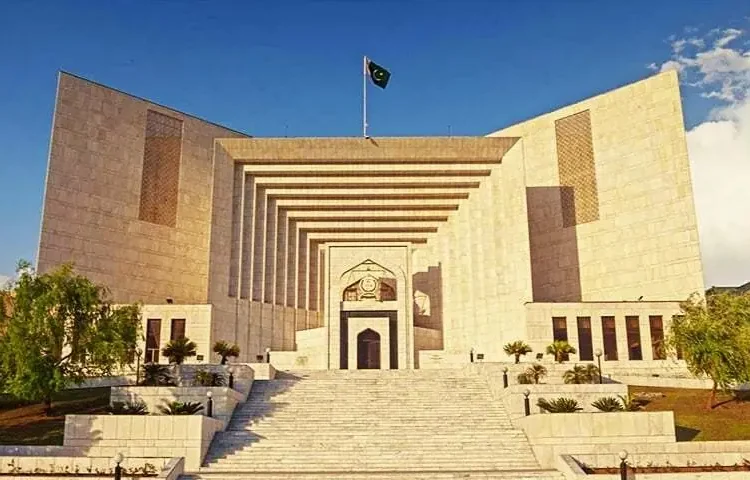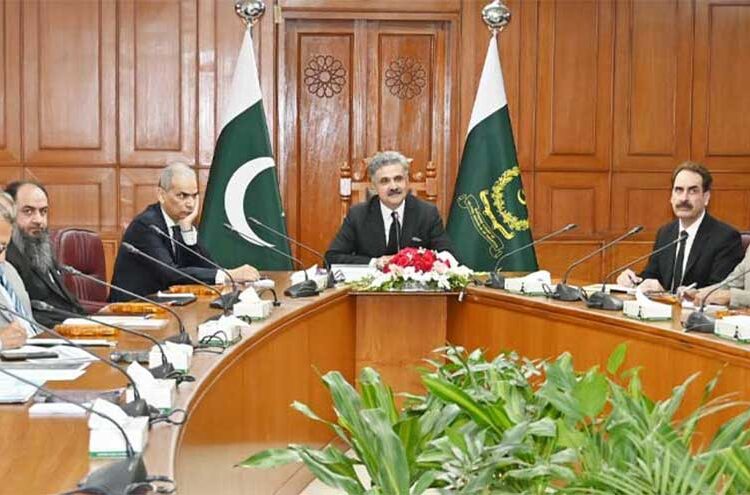
The Islamabad High Court on Monday sought government’s response on a plea of Advocate Usama Khawar Ghumman urging court’s directives for Centre to frame Rules under The Prevention of Electronic Crime Act 2016 so that Pakistan Telecommunication Authority may avoid exercising its power arbitrarily while imposing ban on social media.
Making Federation of Pakistan, Ministry of Information Technology and Telecommunication, Pakistan Telecommunication Authority (PTA) as respondents on behalf of his client, Advocate Usama Khawar Ghumman sought court’s directives for government to make Rules under PECA 2016 claiming in absence of the Rules the Authority was exercising its power arbitrarily.
Earlier, top telecommunication regulator in the country PTA had imposed ban on Chinese video-sharing site TikTok but in consequence of a petition in IHC the ban was lifted.
Appearing before a single-member bench of the Chief Justice Islamabad High Court Justice Athar Minallah on Monday in the matter Advocate Usama Khawar Ghumman contended that PTA’s response is disproportionate to the alleged violation of PECA 2016 saying when restrictions have to be imposed on fundamental rights, it is a principle of constitutional law and jurisprudence that the curbs have to be least restrictive and they must be proportionate.

He urged the court to issue directives to PTA to frame Rules under PECA 2016 for structuring discretion of the Authority alleging the PTA has been exercising powers under the Act in arbitrary and unstructured manner claiming the Authority is neither competent nor empowered to put onerous restriction on the fundamental rights of citizens in the name of vague and imprecise terms like indecency and immorality. Advocate Usama Khawar Ghumman further pleaded that the PTA cannot shut down an entire platform like TikTok on the grounds that a few indecent videos have been uploaded on internet sites.
During the course of proceedings, the Chief Justice remarked that in the times of coronavirus pandemic TikTok is a source of entertainment and income for the people belonging to lower strata in the country. The Chief Justice further observed that imposition of ban on social media sites does not happen anywhere in the planet as the world is moving forward but PTA intended to reverse the progress. “Our morality should be so strong, that it is not [adversely] affected by anything”, said the Chief Justice.
While citing to a recent gang rape incident that happened on a motorway, the judge said if the government adopts this mentality then it should also close down the motorway. Addressing the Deputy Attorney General Syed Tayyab Shah the Court said, “You cannot impose a ban on things like this in democracies,”.
Usama Khawar Ghumman alleged that the PTA has misused its authority under the PECA 2016 in a number of cases in absence of Rules of the law to which Chief Justice observed the Authority could not take decisions about content on social media on its own.
“Who is making such decisions at the PTA?” the court inquired. “Who decides what is right and what is wrong. This is why it is so important to make rules!” the Chief Justice observed.
Representing the federation in the matter, Deputy Attorney General (DAG) Syed Tayyab Shah apprised the bench that federal cabinet has approved the Rules saying the rules have been sent for publication in the official gazette.
The IHC asked the DAG to submit a copy of the Rules to the court and adjourned hearing of the case for a month.