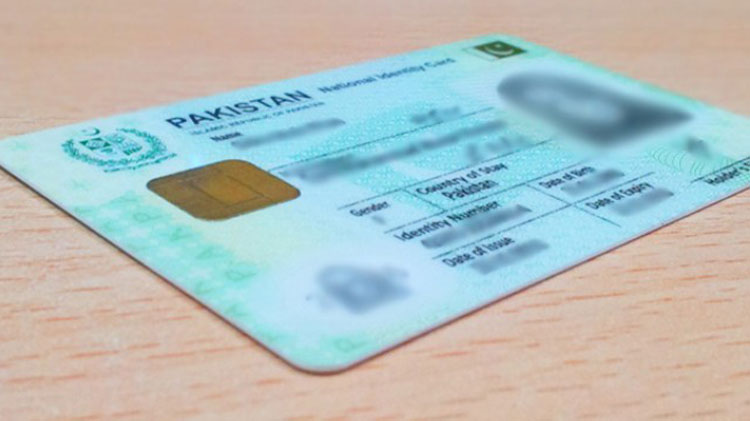
While hearing a plea relating to issuance of Computerized National Identity Card (CNIC) to a 24-year-old Fazal Haq who born in Peshawar in June 5,1998 to his Afghan national parents, the Islamabad High Court (IHC) sought explanation from National Database and Registration Authority (NADRA) in the matter.
A single-member bench of the IHC comprising Justice Miangul Hassan Aurangzeb issued notice to NADRA in response to plea that Advocate Umer Gilani filed on behalf of the petitioner. The bench also directed NADRA to depute well conversant officer appearance before the court in the matter.
The bench said in its order, “After the order of October 20,2022 was passed by this Court, the NADRA was expected to decide the applicant’s pending grievance in accordance with the law laid down by this Court in Hafiz Hamdullah case”.
In response to writ petition No. 3748 of 2019 of Hafiz Hamdullah Saboor, decided on 19th May, 2021, the then Chief Justice of the IHC Justice Athar Minallah termed the decision of the NADRA to block the CNIC of the JUI-F leader Hafiz Hamdullah as illegal and ordered the body to restore it.
On Tuesday, seeking explanation from NADRA, Justice Miangul Hassan Aurangzeb of the IHC said in a written order, “Through the instant application, the applicant (Fazal Haq) seeks a direction to NADRA to decide his pending grievance. Issue notice to NADRA with the direction to depute an officer will conversant with the subject matter of the instant petition to tender appearance before this Court and explain as to why a decision has till date not been taken,”.
It is important to mention the IHC has already noted in its verdict in Hafiz Hamdullah matter saying all matters relating to citizenship are dealt with under the Citizenship Act. “The legislature, in its wisdom, has expressly recognized and upheld birthright citizenship as a right. A plain reading of section 4 unambiguously shows that the right is not subject to any condition. Birthright citizenship automatically makes a person who is born in Pakistan a citizen and in this regard the latter does not have to fulfill any prerequisites to become a citizen unlike in the case of other categories such as ‘citizenship by naturalization’ or ‘citizenship by immigration’”. The IHC also noted that there are about thirty-five countries across the globe which have incorporated birthright citizenship in their domestic laws and Pakistan is one of them.