
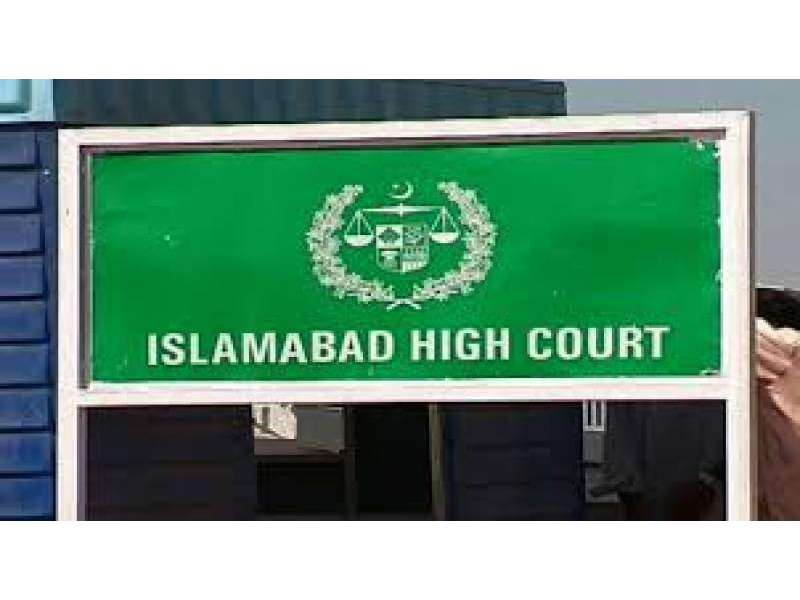
While issuing notices to the federation in response to a plea claiming provisions of Social Media Rules 2020 were curbing constitutionally guaranteed freedoms, the Islamabad High Court (IHC) has asked the Attorney General for Pakistan (AGP) and others to submit a reply by January 25, 2021, on the matter.
Challenging Social Media Rules (Removal and Blocking of Unlawful Online Content (Procedure, Oversight and Safeguards), Rules 2020 and constitutionality of Section 37(1) of the Prevention of Electronic Crimes Act, 2016 (PECA), Advocate Usama Khawar Ghumman submitted that such rules indiscriminately violated constitutionally-secured freedom of speech and expression, the right to access to information, the right to privacy, and freedom of trade, business, and profession, and right to property, of all Pakistani citizens.
Appearing on behalf of Amber Shamsi and TikToker Ashfaq Jutt before the single-member bench of the Chief Justice (CJ) Athar Minallah in the matter, Ghumman urged the court to declare the Rules ultra vires the Prevention of Electronic Crimes Act, 2016 (PECA).
Making the federal government, Ministry of Information Technology and Telecommunication, and Pakistan Telecommunication Authority (PTA) as respondents, Ghumman requested to suspend the implementation of the rules.
Talking to TLTP after the hearing, Ghumman claimed that civil society, rights watchdogs, journalists, activists, and global internet giants have opposed the new rules for regulating social media. He categorically expressed that the Human Rights Commission of Pakistan (HRCP) has shown its grave concerns that the authorities wanted to use the regulations to control the “freedom of expression and opinion in the guise of protecting “religious, cultural, ethnic, and national security sensitivities”.
“Superior Bars of the country, including Pakistan Bar Council and the Supreme Court Bar Association has also voiced concerns about the impugned Rules. Similarly, the Asia Internet Coalition (AIC), an association of leading internet and tech companies including Google, Facebook, Apple, Twitter, Amazon, Airbnb, Booking.com, Expedia Group, Yahoo, Grab, LinkedIn, and Rakuten, have expressed concern to the prime minister that the Rules would severely cripple the growth of Pakistan’s digital economy and make it extremely difficult for its members to make their services available to the country’s users and businesses,” said Usama.
It is pertinent to mention that previously, one of the petitioners, Ashfaq Jutt, had challenged PTA’s ban on TikTok, consequently, the IHC had appointed President of Pakistan Federal Union of Journalists, Pakistan Bar Council (PBC) Vice-Chairman Abid Saqi, journalist Mazhar Abbas, and former federal minister for information Javed Jabbar as amici in the matter.
While assisting the court on banning of online platforms and implications for freedom of expression and speech and right to access to information under Article 19 and 19-A of the Constitution and misuse of PECA 2016 and to consider how can freedom of expression, speech, and access to information be curtailed by PTA on vague criteria of immoral and decent content. Vice president of the PBC Abid Saqi submitted that the social media rules were prima facie unconstitutional. Besides, during previous hearings of the TikTok case, the Attorney General for Pakistan has expressed a desire to assist the court in the matter while appearing personally.
In the TikTok petition before the Court, the Petitioners had raised broader issues concerning misuse of PECA by PTA, unbridled discretion of PTA, lack of existence of proportionality test, lack of competency of PTA to determine vague terms like indecency/immorality, non-framing of rules, etc.
According to the counsel, Usama Khawar, for the petitioner, “PTA has been given broad and sweeping powers affecting the fundamental rights of citizens. PTA’s powers are dictatorial and no place in a democratic society.”