In all probabilities, India overestimated its stature in the comity of nations. A picture-taking sojourn to the Moon or hosting a routine rotatory meeting of G-20 might not have been construed as a testament to its overall ‘bigger’ position on the globe.
Attracting the voter’s attention for next year’s general elections may not be put on the altar of certain foreign policy objectives. The idea of becoming China’s serious competitor representing the Global South as its leader initiating the idea of a new trade corridor or playing its role in the China containment pursuit on behalf of the powerful could be construed as noteworthy steps. However, it seems too early to start calling the shots as Big Brother.
Evidence shows that India aka Bharat has assumed the role of a big power including the arduous responsibility of eliminating ‘terrorism’ from the face of the planet and that too, entirely on its own.
So much so that it went ahead and ‘violated’ the sovereignty of Canada. Considering that the joke had gone too far, the Five Eyes intelligence network, led by the US, decided to call a spade a spade while helping Canada in collecting ‘credible’ proofs of India’s direct involvement in the assassination of a Canadian citizen on Canadian soil. It is too soon to conclude if the West has decided to cut India to its real geopolitical size. However, indications are there that the Western powers have taken serious note of India’s intransigence and audacious actions.
If Hardeep Singh Nijjar was a threat to India, the RAW should have realised that at least Five Eyes was watching its moves somewhere. If not anyone else, India might have taken a friendly Canada on board before lifting the cat up by its tail. Imagine, if it was a joint operation undertaken jointly by the birds of the same feather, say a NATO operation in Afghanistan, would Trudeau be accusing Modi on the floor of Parliament, in such unequivocal terms, of killing one of his citizens? Would the suave PM of Canada be accusing Modi in no uncertain terms of Nijjar’s killing? Would he be openly referring to the RAW’s Pawan Kumar’s ‘diplomatic’ activities in Ottawa?
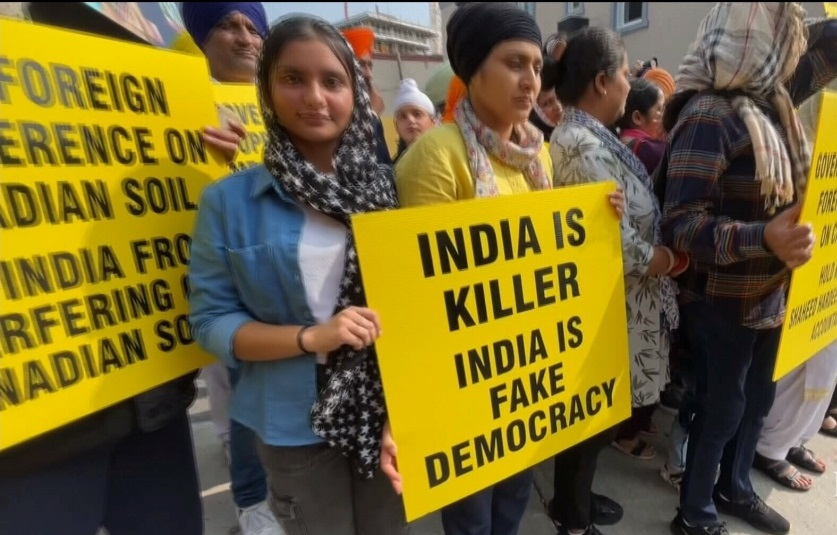
Trudeau mentioned Nijjar as a Canadian national and not as a leader of the Khalistan movement. What does this distinction signify? Canada is neither interested in the Khalistan movement nor does it officially support the separatist outfit. One important point needs clarification here. Like several other separatist movements currently taking shape in India, the Khalistan movement is India’s internal matter. The international community is concerned about India’s human rights record and brute suppression of minorities in the largest democracy in the world.
The repeated requests from the US for India’s cooperation with Canada signify three important sides of the West’s possible response. One: Washington knows the details of Ottawa’s ‘credible’ allegations.
Two: as it is always difficult to choose between two friendly countries and formulate a combined ‘appropriate’ response, some time is required to see which way the wind blows. God forbid, had it been Iran or Pakistan instead of India, by now, several economic sanctions would have been imposed on Tehran and Islamabad already.
The third aspect involves ‘high stakes’ and perhaps is the most important side of the rigmarole. Given India’s importance in the Indo-Pacific geostrategic game plan and its presumed role to contribute to China’s containment endeavours, the West could ill afford to annoy India. Therefore, eventually, at the most, a simple snub to India might be the result. However, behind closed doors, the ‘state-sponsored-terrorism’ card might continue to be used against India, just to keep it under pressure while reminding it of its ‘role’. The possibility of discussing the case at FATF in the context of India’s terror financing could not be ruled out either. The mantra of ‘do more’ might also resonate in the air.
Right now, Ottawa needs to preserve its reputation, credibility, and dignity. It desires to come out of the mess clean, particularly in view of the presence of 800,000 Sikhs presently residing in Canada. A collective snub to India by the West might also provide Trudeau a handle to pacify his voters. However, the diplomatic row that started with the expulsion of Pawan Kumar from Canada might take some time to fizzle out. Trade-related matters will also take some time to unwind the commercial tussle caused by this bolt from the blue.
To the chagrin of Doval and Jaishankar, India stands exposed. With a general election around the corner and in view of a few recent diplomatic embarrassments, India could not possibly afford an in-house rift between its Intelligence Agency and the Foreign Office. On the other hand, those who would not believe the authenticity of the dossiers presented by Islamabad or the EU-DisinfoLab or the activities of its several Consulates in Afghanistan or an Indian Naval Commander’s capture on Pakistan’s soil might now start believing that after all, everything was not right with the ‘Shining India’.
The question is: how far could the West go in pursuing its China containment policy with India as one of the main actors while the naughty boy is breaking glass windows in the neighbourhood? For Pakistan, it is a God-given opportunity to bring India under pressure diplomatically. However, thinking that India could be pressurised to revisit its plans on the status of the occupied J&K or come to the negotiating table to normalise bilateral relations is too far-fetched an idea. Embarrassing the enemy does enable you to score a point or two. But in real terms, such momentary satisfying moments do not help you in putting your own house in order.
——————————
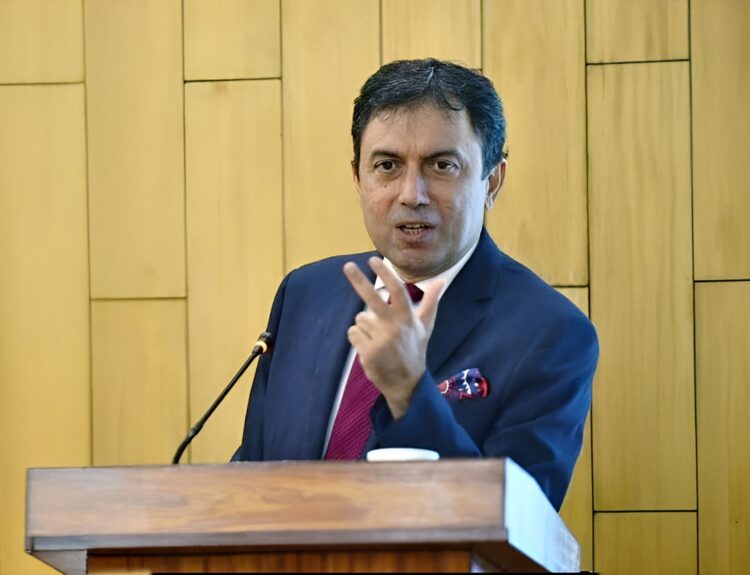
The writer is a former Ambassador of Pakistan and author of eight books in three languages. He can be reached at najmussaqib1960@msn.com.