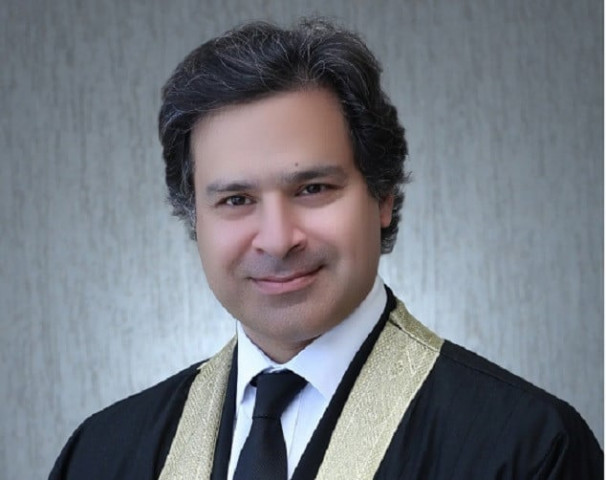
ISLAMABAD – The Judicial Commission of Pakistan (JCP), apex body responsible for appointing justices to the superior judiciary, recommended elevation of Justice Miangul Hassan Aurangzeb as a permanent judge of the Supreme Court with a majority decision.
Earlier on Feb 10, the JCP had appointed Justice Aurangzeb as an acting SC judge after elevating him from the Islamabad High Court (IHC). The majority decision to make the appointment permanent was made during the JCP’s first meeting following the passage of the 27th Amendment that led to the establishment of the Federal Constitutional Court (FCC).
However, JCP member Justice Munib Akhtar opposed Justice Aurangzeb’s nomination and instead recommended the elevation of Justice Mohsin Akhtar Kayani of the Islamabad High Court (IHC) to the apex court.
Justice Miangul Hassan Aurangzeb, born in Saidu Sharif, Swat District, Khyber Pakhtunkhwa, on September 14, 1970, where he received his primary education. He then studied in Abbottabad and Islamabad before moving to the University of Wales, College of Cardiff, the UK in 1991 for LLB (Hons). After gaining a law degree in 1994, he proceeded to Lincolns’ Inn where he was called to Bar of England and Wales in 1995. He did his LLM in corporate and commercial law from the School of Oriental and African Studies, the University of London. Justice Aurangzeb also represented Pakistan in international arbitration proceedings and was administered oath as an additional judge of IHC on Dec 23, 2015 and as a permanent judge of the IHC on Dec 20, 2016. He descends from the former royal family of the erstwhile Swat State; his grandfather was Miangul Jahan Zeb, the last Wāli (ruler) of Swat. His father, Miangul Aurangzeb, was a highly respected political figure who held the esteemed office of Governor in both Khyber Pakhtunkhwa (then NWFP) and Balochistan.
Justices Zafar Rajput, Kamran Mullahkhail elevated as SHC, BHC chief justices
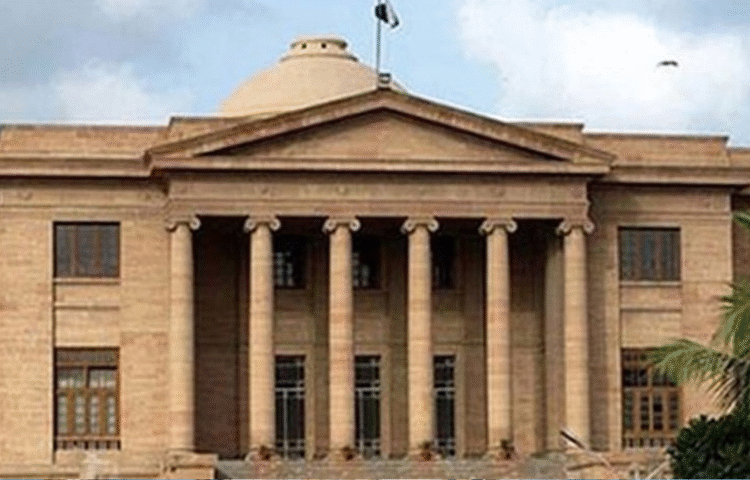
Also on Tuesday, the JCP unanimously approved the elevation of Justice Zafar Ahmed Rajput as Sindh High Court (SHC) Chief Justice and Justice Kamran Mullahkhail as Balochistan High Court (BHC) Chief Justice. During the meeting, which was presided over by Chief Justice of Pakistan (CJP) Yahya Afridi, the JCP had considered the appointment of the SHC chief justice from among the three senior-most judges of the high court.
Those considered for the office included Justice Rajput, Justice Muhammad Iqbal Kalohoro and Justice Mahmood A. Khan. Similarly, the JCP had also considered the appointment of the BHC chief justice from among the three senior-most judges of the high court. Those considered for the office included Justice Mullahkhail, Justice Iqbal Ahmed Kasi and Justice Shaukat Ali Rakhshani.
With the establishment of the FCC, where four judges from the SC – Justices Aminuddin Khan, Syed Hasan Azhar Rizvi, Aamer Farooq and Ali Baqar Najafi — have been appointed, as well as the resignation of Justices Syed Mansoor Ali Shah and Athar Minallah, the total strength of the SC has reduced to 18 judges from 24.
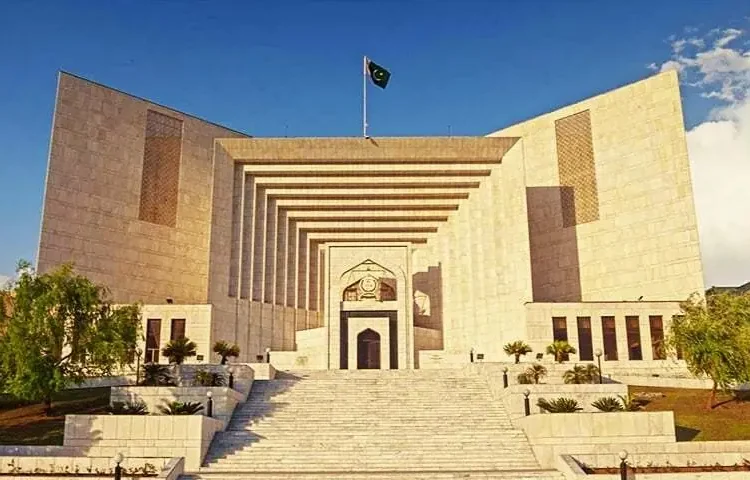
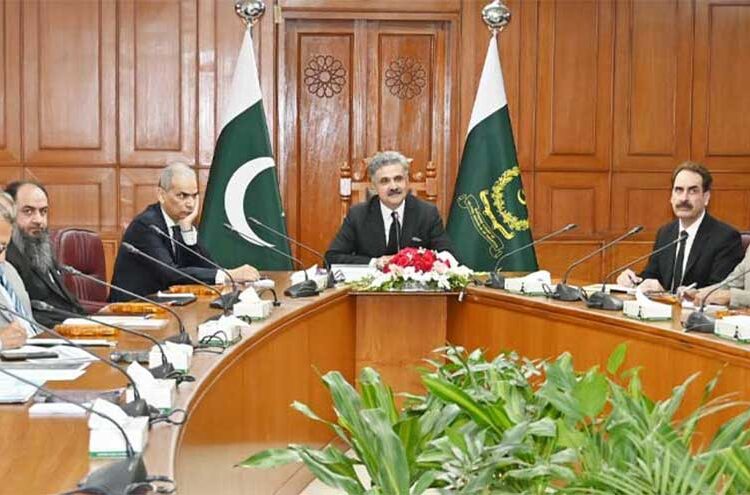
The JCP proceedings, which were conducted in the conference room of the SC building, was also attended by FCC Chief Justice Aminuddin Khan, Justice Munib Akhtar, Justice Syed Hasan Azhar Rizvi, Justice Aamer Farooq, Attorney General for Pakistan (AGP) Mansoor Usman Awan, Law Minister Azam Nazeer Tarar, Pakistan Bar Council representative Ahsan Bhoon, Senator Farooq Hamid Naek, Senator Syed Ali Zafar, and MNAs Sheikh Aftab Ahmad and Gohar Ali Khan.
JCP forms panel to draft rules:
A press release issued later said the JCP constituted a committee comprising Justice Farooq, AGP Awan, Naek, Zafar and Bhoon to make draft rules under clause 20 of Article 175A of the Constitution. The clause calls for the drafting of rules within sixty days related to the annual performance evaluation of high court judges and to the period granted to a high court judge to improve their performance if it is found to be inefficient. Earlier on Sept 26, Justice Jamal Khan Mandokhail led five-member sub-committee of JCP had postponed further proceedings with an understanding to thoroughly discuss draft suggestions on framing benchmark to assess judicial performance of sitting judges of the high courts.
Then the committee members had forwarded several suggestions but the committee had decided to consolidate and circulate all the suggestions among the members to be discussed during the next meeting. Now the committee has been reconstituted. After the passage of the 27th Amendment, changes were made to key constitutional and statutory judicial bodies. Following these changes, SC’s Justice Jamal Khan Mandokhail was included in the Supreme Judicial Council (SJC) and the Practice and Procedure Committee, while the FCC’s Justice Farooq was made a JCP member.
Among the three statutory bodies, the SJC is the top forum for judicial accountability that probes allegations of misconduct against judges, the Practice and Procedure Committee forms benches and fixes cases, and the JCP is responsible for appointing judges to the superior judiciary.
SJC sets up committee:
The SJC also held a meeting on Tuesday and constituted a committee comprising Justice Jamal Khan Mandokhail, Justice Rizvi and Justice Aalia Neelum to draft rules for regulating its procedures and conduct of business under clause 10 of Article 209 of the Constitution.“In the meanwhile, the council unanimously adopted the Supreme Judicial Council Procedure of Inquiry, 2025, provisionally,” an SJC press release issued later said.