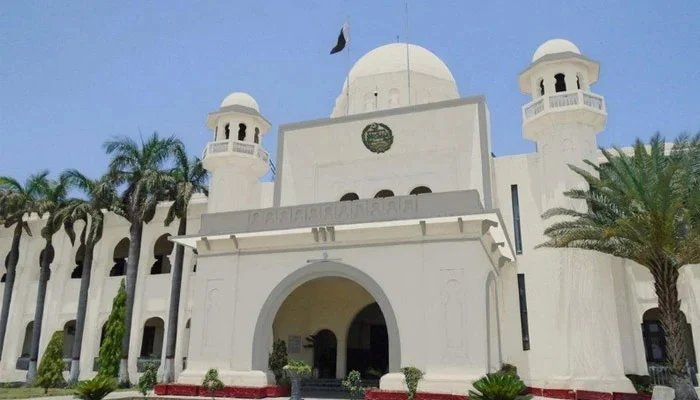
MULTAN: While safeguarding constitutional travel rights, the Lahore High Court’s Multan Bench curtailed the federal government’s executive authority to restrict citizens through administrative procedures, directing the Centre to synchronize the Passports Rules 2021 with the Passports Act, 1974.
Farhan Ali, a Pakistani citizen, has invoked jurisdiction of the Multan Bench of the Lahore High Court. He made Center as respondent, challenging dismissal of his earlier representation before the federal government amid questioning constitutional validity of the government’s power to ‘inactivate’ passports under the 2021 Rules.
Counsel for Ali argued before single-member bench comprising Justice Asim Hafeez that the executive overreached its authority by introducing inactivation as a punitive measure, noting that the parent Passports Act of 1974 only grants the state specific powers to cancel, impound, or confiscate travel documents under strict legal conditions.
After a brief hearing of the case, Justice Asim Hafeez issued a 9-page judgment, declaring that the practice of ‘inactivating’ passports and the imposition of a mandatory five-year travel ban are illegal actions that exceed the authority granted by the Passports Act of 1974.
The court observed that while Section 8 of the parent Act allows the government to cancel, impound, or confiscate a passport under specific conditions, it does not provide any legal cover for the ‘inactivation’ of travel documents, a term the court found to be an unauthorized executive invention.
The judgment specifically targeted the Passports Rules of 2021, striking down provisions that allowed for these arbitrary restrictions without proper due process.
Justice Hafeez noted that the executive had been using ‘inactivation’ as a way to bypass the procedural safeguards required for impounding a passport, often leading to the humiliation of travelers at airports who had received no prior notice of the restrictions against them.
Besides, the court expressed dismay over blanket five-year period for retaining individuals on the Passport Control List as a disproportionate ‘clog on the right to travel’ that lacked any clear guidelines or rational connection to the gravity of the alleged wrongdoing.
In his concluding remarks, Justice Hafeez emphasized that the law must distinguish between different levels of offenses, pointing out that administrative violations like an illegal overstay should not be treated with the same severity as serious crimes such as human trafficking or migrant smuggling.
It is pertinent to mention that the court has granted the Federal Government a 30-day window to revise its rules and bring them into strict conformity with the mandate of the Passports Act.
As a result of this landmark decision, the previous administrative order dismissing the petitioner’s grievances has been set aside, and the government is now legally obligated to decide the case afresh while adhering to the principles of proportionality and due process established by the court.