Whether today’s youth really becoming less intelligent than previous generations? Why do many teachers say students can’t focus deeply anymore? Why does scrolling feel easier than reading a book? And most importantly, are young minds seeing reality, or just digital shadows?
The comparison between GenZ and Millennials has sparked debates about attention span, cognitive depth and critical thinking. GenZ is often described as less intelligent than Millennials, but reality is quite astonishing. While some studies show declines in deep attention, GenZ also excels in areas such as digital literacy, rapid information processing, creative online expression and global connectivity. All those studies shift our thinking, and raise crucial question such as: Are young minds becoming weaker, or they simply shaped by a different world? Is intelligence really declining, or is attention being redirected? Are they thinking less, or just thinking differently?
During the process to truly grasp what’s happening in young minds, we must turn to an unexpected trio psychology, educational research and the lesson of ancient philosophy.Long before smartphones and social media existed, the Greek philosopher Plato described a world where people mistake shadows for reality. Currently, in an age of screens and algorithms, his metaphor feels strikingly relevant.
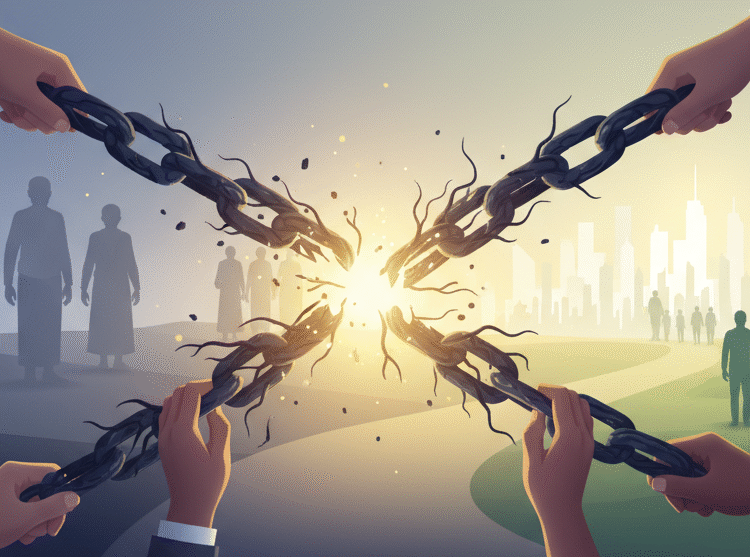
In Plato’s allegory, prisoners are chained inside a cave. They see shadows on the wall and believe those shadows are reality. Only one prisoner escapes, sees the world, and realizes that the shadows are merely limited representations of reality. This provides a powerful lens to understand the ongoing debate of comparison between Millennials and GenZ. The ‘cave wall’of the past is now a digital screen.
Our ‘shadows’ are constant scrolling, reels, shorts, viral posts and algorithm-filtered realities. The question is not whether youth are unintelligent, but whether they are overexposed to shadows. One eye-catching experiment comes from Ophir, Nass, and Wagner, who study media multitasking in young adults. Over 12 weeks, the researchers tested participant’s attention and memory. The results were striking: participants who constantly switched between apps had a harder time focusing and thinking deeply.
That’s the takeaway: GenZ isn’t less intelligent .Their minds are sharp but accustomed to speed. They scroll quickly and click rapidly, seeing digital shadows instead of looking deeper. This mirrors Plato’s cave prisoners, fast-moving shadows with little reflection of reality. Following this, fast scrolling brains encounter algorithms that show us only what we like nothing new. The study by Bakshy, Messing and Adamic examine how social media decides what we see. They found that platforms mostly show us content we already like or agree with.
This suggests that people lack critical thinking. They don’t think outside the box to consider different and innovative perspectives. They stare at the shadows on the wall (online posts and feeds), cast by fire (the immediate algorithms). But the sun (the real broad truth) outside the cave, is far beyond. The algorithms are tricking the brains of GenZ. Users are not dumb; they are trapped in a feedback loop, like prisoners in Plato’s cave believing shadows without seeing the bright, clear sun that awaits those who turn around to face it.
Now, the other question arises; If algorithms show us only what we like and weaken our thinking, or do they also reshape how GenZ learn, communicate, and understand the world? Research by Linda Kaye suggests that the impact of social media is not purely negative. She found when students use it for learning like watching educational videos, joining discussions or sharing ideas, they can improve communication ,creativity and memory. In short, social media can help GenZ become more adaptable and digitally smart compared to Millinnials.
Technology itself is not the real problem. The concern is its use. If used passively, it can trap attention in shallow content. Just like Plato’s story, the internet can trap us in watching shallow shadows, or it can help us see the bigger picture moving towards enlightenment beyond the cave. A surprising twist emerges when we look at Millennials. You might not expect it, but some experts suggest that despite the first generation to grow up with digital technology, Millennials may not be as sharp as Baby Boomers (parents of Millennials). The Flynn effect shows that IQ scores, which rose steadily for decades, have recently stalled or even slightly declined among people born since the 1980s, a group that also includes Millinnials. Logically, this suggest that if we compare GenZ to Millennials, it might appear, on paper, that GenZ is less intelligent, because Millinnials themselves may have scored lower than their parents on cognitive measures.
But it is not the full story. It is thought-provoking just as Millineals outer performed Baby Boomers in many ways, Gen Z also excelling in its own areas. Here is the catch: Intelligence is not one-to-one comparison; it is far bigger than a test score. The point is not to blame any generation. Before blaming GenZ, we should first ask ourselves: do we really understand their perspective?
Are we seeing how they learn, think and adapt to world very different from ours? In many areas they are far ahead of us – more digitally fluent, more globally connected, and often more creative and critical thinkers. Blaming or judging them won’t change reality; seeing it clearly just might. Here, the real challenge lies in understanding their world, guiding their attention and helping them rise above digital shadows toward true learning and innovation.
As Plato remind us today: “Our mission is not to chastise those who stare at mere illusions, but to lead them toward the illuminating truth beyond the cave.”