

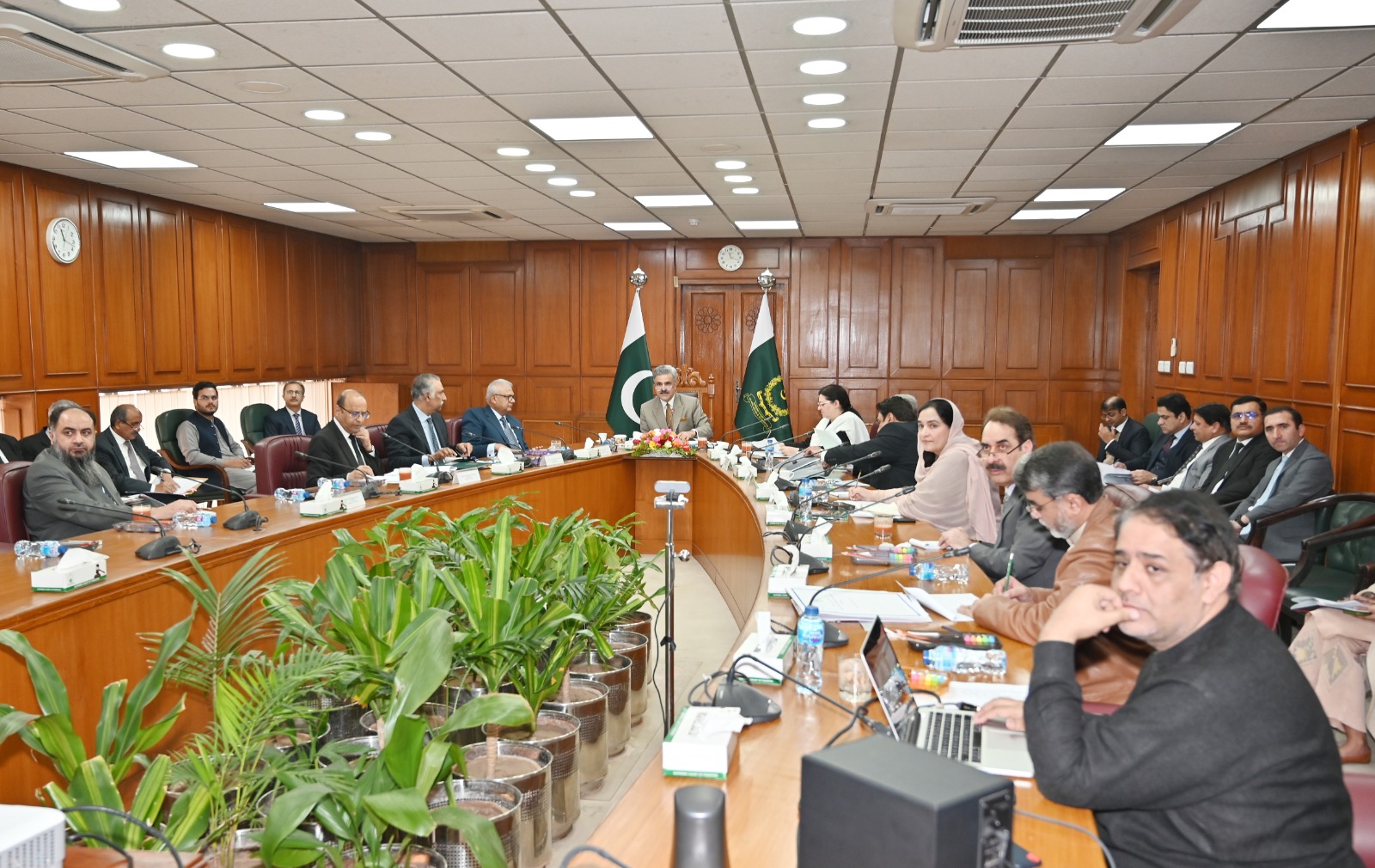
ISLAMABAD: Chairing the 56th meeting of the National Judicial Policy-Making Committee (NJPMC), Chief Justice of Pakistan Justice Yahya Afridi asked Attorney General Mansoor Usman Awan to formulate a comprehensive mechanism to address instances of non-compliance with the legal requirement of producing detainees before a magistrate within the mandatory 24-hour period.
Referring to the institutional response to emotive cases relating to enforced disappearances, the Chief Justice appreciated the government’s initiative to address the issue. At the previous NJPMC meeting held on October 17, the Attorney General had informed the forum that the matter had almost been resolved through an amendment to Section 11EEEE of the Anti-Terrorism Act 1997, which requires the production of a detained person before a magistrate within 24 hours. He also assured that a comprehensive mechanism to redress complaints of non-compliance was being considered by the government and would be presented to the committee.
On Saturday, the NJPMC deliberated on key policy issues while reviewing the implementation status of decisions taken in its 55th meeting. The committee unanimously reiterated its resolve to strengthen institutional capacity, accelerate access to justice, and ensure efficient and effective justice delivery. The meeting, convened at the Supreme Court building, was attended by the chief justices of all high courts, with the Federal Constitutional Court chief justice present on special invitation.
Commercial Litigation Corridor Reforms
The NJPMC reviewed the recommendations of the Sub-Committee constituted to address protracted litigation and injunctive orders in commercial, revenue, and fiscal cases. The Sub-Committee’s report highlighted key reforms, including the establishment of dedicated benches, curtailment of frivolous litigation, constitution of a screening committee at the FBR level, avoidance of coercive revenue targets for state-owned enterprises, and improvements in tribunal structures. The report was shared with all high courts for input, and the recommendations were unanimously endorsed.
The NJPMC appreciated the endorsement by the high courts and decided to implement the recommendations, directing the Law and Justice Commission of Pakistan (LJCP) to share them with the FBR for implementation. The LJCP was also tasked with establishing a mechanism for taxation and revenue case management at each high court on the model of the Supreme Court.
Case Disposal and Model Courts
The committee lauded the disposal of 558,474 cases out of 1,253,425 of specified categories within the notified timeframe during the preceding quarter, calling it reflective of the high courts’ strong commitment. The Lahore High Court was commended for deciding a record 465,455 cases, while the Peshawar High Court was recognised for prioritising inheritance cases and operating a double docket regime.
The NJPMC asked high courts to dispose of the oldest succession cases up to 2019 within 30 days and appreciated the establishment and performance of model trial courts for chronic civil and criminal cases. A special committee was tasked to finalise recommendations on district judiciary reforms within 30 days, with the LHC chief justice directed to convene the reform committee accordingly.
Complaint Redressal and Jail Reforms
The NJPMC lauded high courts for operationalising accessible public forums at high court and district court levels for complaint redressal. Reports of jail reform subcommittees and consolidated action plans had been shared with provincial justice committee chairpersons. Chief justices were instructed to engage with provincial chief secretaries and the Interior Division for legislative, policy, and administrative inputs, with progress to be reviewed in the next meeting.
Digital Transformation and E-Filing
Regarding national guidelines for AI in judicial institutions, the NJPMC decided that the LJCP would circulate the draft guidelines to high courts for feedback within 30 days, after which the final version will be placed before the committee for approval.
The committee also approved immediate initiation of e-filing in all district courts as the first phase of the national e-courts project. High courts were directed to review existing rules, including Schedule I of the CPC, or invoke rule-making powers to enable electronic case filing. The concept of one-window, integrated family and women facilitation centres within judicial complexes was approved in principle, subject to government funding.
Access to Justice Development Fund
High courts were commended for executing projects under the Access to Justice Development Fund, with a stress on optimum utilisation and timely completion. The Lahore and Peshawar high courts were asked to liaise with provincial governments for balance funding to ensure solarisation of courts, with all high courts directed to utilise released funds efficiently.