
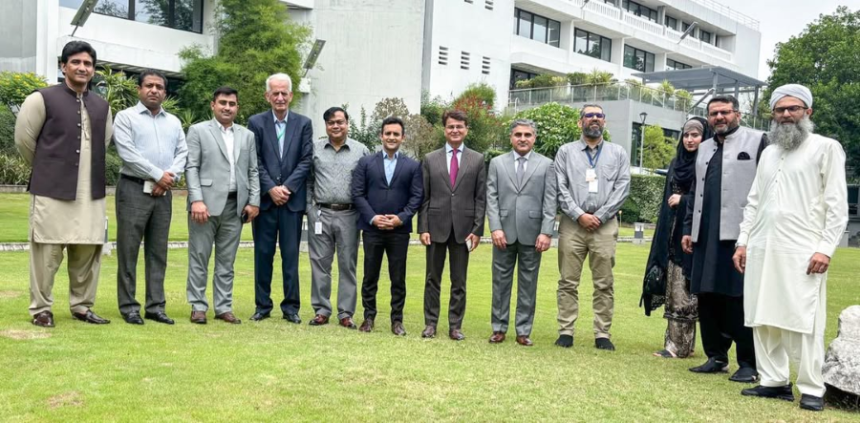
ISLAMABAD: Transparent, accountable, and efficient public procurement is not a policy preference – it is the safeguard that keeps public funds from slipping through the cracks. That mandate underpinned a Consultative Session Wednesday on the Draft National Procurement Strategy (NPS) 2026 – 2030, held by the Federal Public Procurement Regulatory Authority (FPPRA) and the World Bank at the World Bank Country Office in Islamabad.
The session brought together representatives of the Federal, Provincial and Gilgit-Baltistan Public Procurement Regulatory Authorities (PPRAs), along with senior officials of Multilateral Development Banks (MDBs) including the World Bank, the Asian Development Bank (ADB), the Asian Infrastructure Investment Bank (AIIB), and the Islamic Development Bank (IsDB). The gathering reflected the scale of institutional coordination the new strategy is expected to require, spanning both federal and subnational procurement regulators as well as Pakistan’s principal multilateral lenders.
In his welcome address, Managing Director FPPRA Hasnat Ahmed Qureshi described public procurement as a cornerstone of public financial management, one that sits squarely within the federal government’s broader reform and governance agenda.
He informed the participants saying procurement accounts for an estimated 19-20 percent of Pakistan’s GDP – a figure he cited to underscore why a coherent, nationally coordinated reform strategy is no longer optional but necessary to building a more transparent, accountable, competitive and efficient system.
Qureshi acknowledged the World Bank’s sustained technical assistance in developing the strategy and credited the Advisory Group on Public Procurement for coordinating input from federal and provincial authorities throughout the drafting process, describing it as a genuinely collaborative undertaking rather than a top-down federal exercise.
The National Procurement Strategy builds on the foundation laid by Pakistan’s first such strategy, implemented from 2013 to 2016, while responding to a newer set of priorities that have emerged since: digitization of procurement systems, sustainable public procurement, performance monitoring and analytics, contract management, interoperability with public financial management systems, and the professionalization of the procurement workforce.
During the session, World Bank Consultant Fayeq Deek presented findings from a current-state analysis of Pakistan’s procurement landscape, alongside the strategy’s proposed strategic objectives, reform priorities, implementation arrangements, and results framework. Participants engaged in detailed technical discussions, reviewing the proposed reforms and offering recommendations aimed at strengthening implementation arrangements and sharpening expected reform outcomes.
The Draft Strategy is structured around four strategic objectives: modernizing the legal and regulatory framework governing procurement; strengthening institutional governance and professionalizing the procurement function; advancing digital procurement and improving operational efficiency; and enhancing accountability, transparency, integrity, and performance monitoring across the system.
Participants welcomed what they described as the strategy’s comprehensive and forward-looking scope, while emphasizing that its success will depend on coordinated implementation, sustained institutional strengthening, and continued collaboration among federal and provincial governments, development partners, and other stakeholders.
The session concluded with a shared commitment among participants to advancing a modern, integrated, transparent, and strategically managed public procurement system – one intended to improve public service delivery, promote value for money in public spending, and contribute to Pakistan’s sustainable national development over the 2026 – 2030 period.