
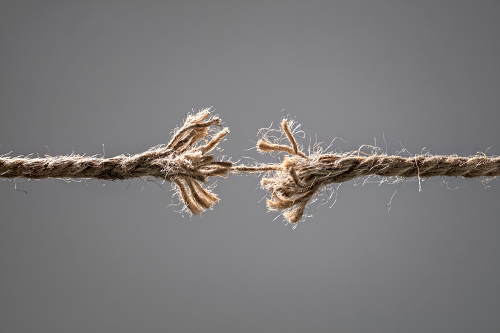

In Pakistan, it usually takes 20 to 30 years to eventually resolve any moderately complex civil suit through the litigation system after exhausting numerous rounds of appeals, revisions and remands. Whereas, criminal cases may take marginally less time to finally resolve.
Individuals can peacefully co-exist in civilised societies through the mutual observance of certain agreed-upon rules. They are motivated to observe and internalise those rules when the punishment for transgressions is swift and certain. When this assurance is lost, when punishments are uncertain and long-delayed, or when the innocent are punished frequently, the entire fabric underpinning civilisation and the rule of law unravels. The failure to provide such assurance explains the unrest and anarchy prevailing in every segment of society.
Delays in the judicial system are not due to any ‘external factors’ but are endemic. The most glaring causes include outmoded court procedures and the inherited laws from the colonial era. For instance, the criminal procedure code is 118 years’ old while the civil procedure code is 108 years’ old.
Also, our court/case management rules vary from province to province, they are about 70 to 80 years’ old, which is a product of the British Raj. In that era, the nature of criminal disputes was altogether different and the resources and technologies available to courts, lawyers and the litigant public were incomparable. As a result of inheriting centuries-old criminal law, the country continues to rely on retributive punishments and doesn’t focus on switching to restorative justice. Presently, Pakistan’s prisons are overcrowded, contributing to the emerging issues of poor health and hygiene; high-risk behaviour such as suicide, unprotected and forced sexual contact, drug misuse; and poor prison management leading to torture, riots and corruption.
According to data from the Justice Project Pakistan, prisons are overcrowded at a rate of 152.2%, with some facilities operating at more than 200% of their capacity, and 127 jails across the country house a total of 100,366 prisoners. In Pakistan’s existing criminal justice system, alternatives to imprisonment have their legal basis at the pre-trial stage in the form of bail; at the sentencing stage with fines and probation; and at the post-sentencing stage with parole. The public is comparatively more familiar with the term bail, the most exercised non-custodial measure in court settings.
In contrast, probation and parole services are the least practised alternative, depriving people in conflict with the law of their inherent right to freedom, of family life and of becoming productive citizens of society. Probation and parole are governed by the Probation of Offender Ordinance, 1960; the Good Conduct Prisoners Probational Relea¬¬se Act, 1926; and the Good Conduct Priso¬n¬ers’ Probational Rules, 1927 — yet again based on colonial-era practices. However, K-P and Punjab have made some major amendments to the laws to make them more rehabilitative in nature.
In recent decades, the retributive model of punishment has been losing ground to the more humane models of community rehabilitation and restorative justice, which are often more effective at reducing reoffending and enhancing the importance of non-custodial sanctions that serve the best interest of the offender and the victim. Also, the lack of proper rehabilitation services puts prisoners at a high risk of reoffending, particularly criminalising first-time offenders or those who have committed minor offences.
Evidence suggests successful community reintegration of an offender also benefits the community in terms of safeguarding them from the negative impacts of crimes, and giving better value for taxpayers’ money as compared to public expenditure on an offender in prison.
Therefore, the judiciary must ensure an effective and efficient probation and parole system which can play a vital role in community rehabilitation of offenders and reducing the prison population, which in turn contributes to better prison management and the overall improvement of prison conditions.
–
The writer holds an LLM from UC Berkeley and is a practising lawyer and columnist. He can be reached at mohsin.saleemullah@berkeley.edu or Twitter: @MohsinSaleemu