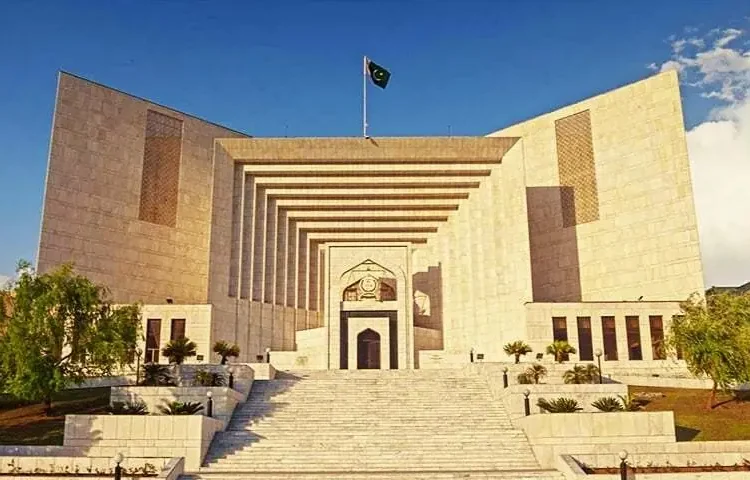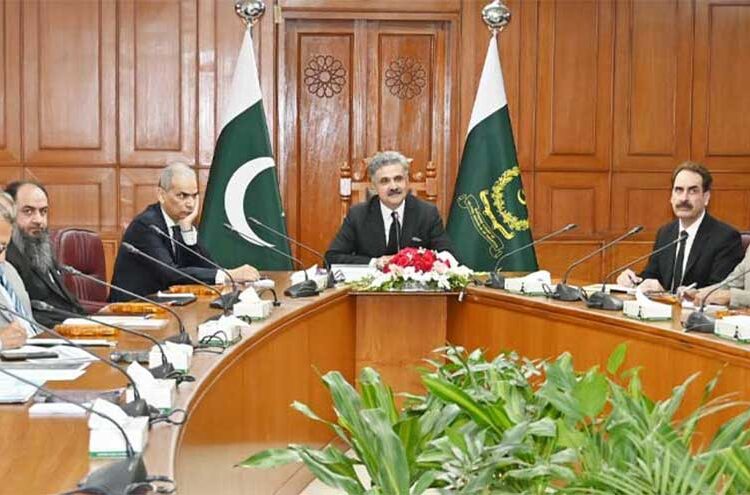
During adjudication of the presidential reference on new Reko Diq project deal validation amicus curae Zahid Ibrahim apprised the top court on Monday claiming Reko Diq settlement will restore Pakistan’s economic credentials on the world stage and will also resonate much beyond the mineral rich hills of Chaghai.
In October this year, President Arif Alvi, on the advice of Prime Minister Shehbaz Sharif, filed a reference in the Supreme Court to get validation for the new Reko Diq project deal under Article 186 of the Constitution. The government has sought an opinion from the apex court regarding the contract with Barrick Gold Corporation, a Canada-based mining group, in the Reko Diq reference.
A five- member larger bench of the Supreme Court led by the Chief Justice Umar Ata Bandial and comprising Justice Ijazul Ahsan, Justice Muneeb Akhtar, Justice Yahya Afridi and Justice Jamal Khan Mandokhail hearing the presidential reference in the matter.
It is pertinent to mention that earlier, Barrick Gold Corporation had asked the government to get the Reko Diq gold and copper deal stamped by parliament and the Supreme Court for the long-term sustainability of the company’s investment in the project. Reko Diq is one of the world’s largest undeveloped copper-gold mines. The project is being restarted after remaining on hold since 2011.
Responding to the court query, Zahid Ibrahim summitted; “Yes, the foreign mining companies Tethyan Copper Company-Australia (TCCA) will stand to recover their investments, but Pakistan too stands to gain.”
He said that the Balochistan government vigorously defended Chagai Hills Joint Venture Agreement (CHEJVA) before the Balochistan High Court (BHC) as legal and transparent. However, its representatives made a drastic and unexplained reversal during pendency of the proceedings in the Supreme Court where it resiled from its stated position and instead targeted the CHEJVA as illegal and contrary to the interests of the Balochistan.
Balochistan Advocate General, while supporting the arguments of counsel for respondents, stated that Government of Baluchistan has rightly entered into the CHEJVA and it is in the best interest of the people of Balochistan that the Project should continue and in case, it is stopped, it would not be interest of the people of Baluchistan and further stated that business of exploring and mining is risky business involving huge amounts and modern technology and the Government of Balochistan has no resources to explore the minerals, thus CHEJVA was rightly arrived at with The Broken Hill Proprietary Company Limited (BHP) and thereafter the area was assigned to respondent No.4 who as spent a huge amount in exploration.”
The BHP known by the nickname “the Big Australian”, was incorporated on 13 August 1885, operating the silver and lead mine at Broken Hill, in western New South Wales, Australia. The Broken Hill group floated on 10 August 1885.
In appeal against the BHC in the Supreme Court the counsel of the Balochistan government made shocking disclosures of extensive irregularities and corruption. Such change in position was critical in the denial of the mining lease application and the ultimate conclusion reached in the Maulvi Abdul Haq Baloch Judgment.
The proceedings in the BHC were instituted on the basis of allegations made in a newspaper article dated 26.5.2004, which were ironically withdrawn by the same newspaper a week later. However, the petition took a life of its own during the hearings in the Apex Court.
Reko Diq is one of the world’s largest undeveloped copper-gold deposits.
He stated that the settlement agreements, arrived at after seven years of negotiations, which have been annexed with the President’s Reference, would have recorded broad assurances and warranties from the parties that no commissions, fees, payments, by any name whatsoever were procured, paid or promised in arriving at such settlements.
He further said that the Reconstituted Reko Diq Mineral Agreement draft Clause 14.18 (at pg. 212) includes provision of anti-bribery compliance. Similar provision is also provided in the Reko Diq Project Joint Venture Agreement Clause 18.13 (at page 858). However, such provisions could be more emphatic in also covering the negotiations leading to the procurement of the Implementation and the Definitive Agreements.
Salman Akram Raja, another amicus curae, submitted that a federal statute can only confer powers and impose duties upon a province or officers and authorities thereof in terms of Article 146(2) of the Constitution of 1973. Such conferral of powers and imposition of duties may only be made with respect to matter that are not otherwise in the provincial domain.
No immunity from judicial review is available through laws that are continued as existing laws. While courts are required to apply existing laws with necessary adaptation no such adaptation can cure or overlook a law that is in violation of a fundamental structural feature of the constitution.
He asked the court an appropriate advisory opinion may kindly be furnished with respect to the legality of the Act 1948 and also the Balochistan Regulation of Mines Oilfields and Mineral Development (Government Control) Act, 1948 through which a provincial statute has purported to amend a federal statute.