

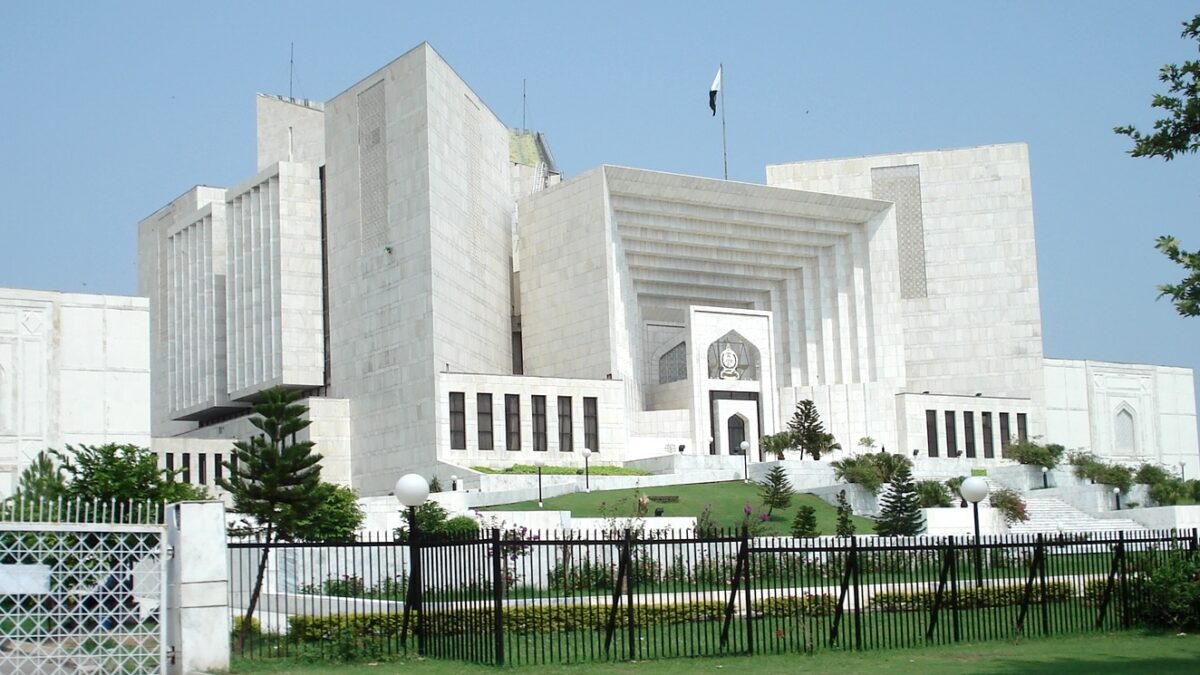
ISLAMABAD – In a landmark decision, the top court has ruled that the eldest unmarried daughter of a deceased government officer is entitled to a share of the family pension.
Law Today has learnt the ruling was delivered in the case of Mst. Anita Anam v. General Public, clarifies the legal standing of such heirs and the procedural nature of succession law. Mst. Anita Anam, a petitioner has invoked jurisdiction of the Supreme Court submitting she is the unmarried eldest daughter of a deceased government officer and had been denied her share of the family pension by lower courts while deciding her plea.
- mostbet kz
- mostbet az
- pinap
- 1win
- pin up azerbaycan
- 4rabet mirror
- pinup
- mostbet online
- pinap
- mostbet online
- pinap
- mostbet
- 1 win az
- pinup casino
- mostbet casino
- pinap
- 1win
- snai casino
- pinko
- pinco casino
- pinap
- mostbet aviator
- pin up casino
- pinup uz
- 1 win
- mosbet
- 1win aviator login
- pin up
- lucy jet
- pinup
- mostbet casino
- 1win az
- 1 win aviator
Her appeal was based on the amended Balochistan Civil Services Pension Rules, 1999, which grant this right. A two-member bench of the Supreme Court comprising Justice Amin-ud-Din Khan and Justice Jamal Khan Mandokhail adjudicated the matter. Author judge of the verdict Justice Jamal Khan Mandokhail, in his analysis, addressed several key legal issues saying succession certificates are not Final, adding a succession certificate issued under the Succession Act, 1925, is a summary procedure intended for the swift distribution of a deceased person’s property. It is not a final and conclusive determination of rights, and the court may refuse to grant it if complex questions of title are involved. The court can also issue more than one certificates and successive applications are permissible. The Justice Mandokhail also stated provisions of the Code of Civil Procedure (CPC) generally do not apply to matters under the Succession Act, as the latter is a special law with its own specific procedure. However, the CPC can be referenced on procedural points where the Succession Act is silent.
While giving finding about entitlement to pension the court’s definitive finding was that an eldest unmarried daughter is entitled to draw her share of a family pension until her marriage, as per the amended Balochistan civil services pension rules, 1999. The judgment further noted that if the eldest daughter marries or dies, the next eldest unmarried daughter will become entitled to the pension.
The ruling has been hailed as a significant step in protecting the inheritance rights of unmarried daughters and providing clarity on the procedural aspects of succession laws in Pakistan.