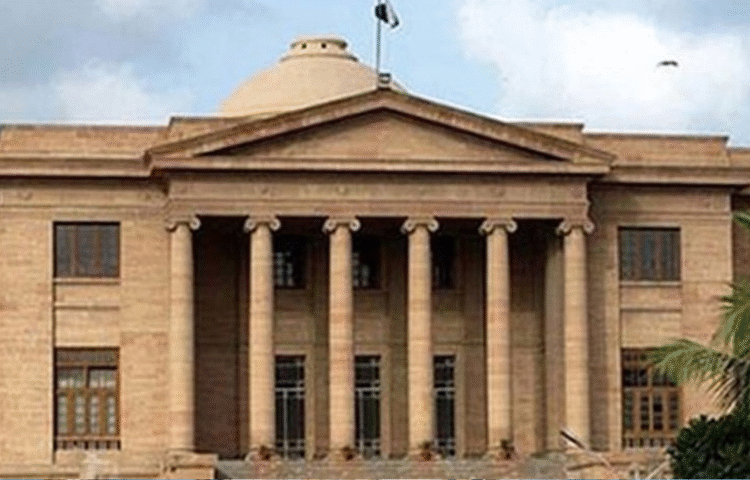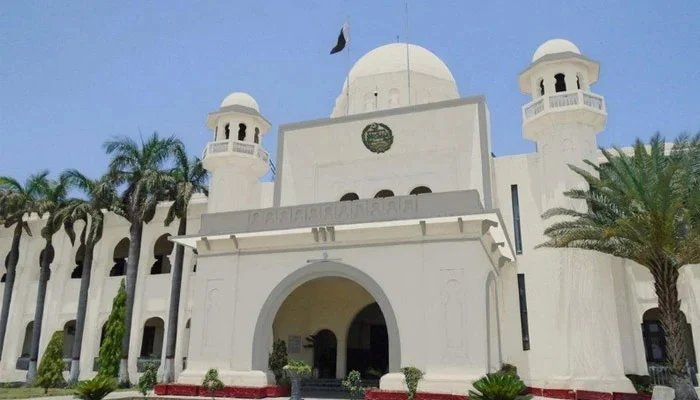
After addressing concerns of religious scholars on Thursday top court sets a new precedent as a bench of Chief Justice Qazi Faiz Isa decided to amend Supreme Court’ February 6, 2024 order and July 24 verdict in Mubarak Sani case while expunging all controversial paragraphs from the decision in the matter.
The apex court accepted the federal government’s miscellaneous application for amendments in the case’s review decision. The court ruled that the expunged paragraphs cannot be used as judicial precedent in the future.
Religious scholars, including JUI-F chief Maulana Fazlur Rehman, Mufti Taqi Usmani and others urged the court to remove paragraphs 7, 42, and 49-C from the verdict, citing concerns over the interpretation of proselytisation. The Mubarak Sani case pertains to an Ahmadi man who was granted bail on February 6, 2024 by a three-member bench of the apex court led by Chief Justice Qazi Faez Isa. Sani had been accused of an offence in 2019 and subsequently convicted under the Punjab Holy Quran (Printing and Recording) (Amendment) Act, 2021.
The bench noted that the offence with which the defendant was charged had not been criminalised until 2021. As a result, Sani was granted bail, and his immediate release was ordered. Following this decision, a campaign was launched against Chief Justice Isa, despite the Supreme Court issuing a clarification regarding the order.
The Punjab government quickly filed a review petition against the February 6 order, arguing that paragraph 9 of the order, which pertained to Article 20 of the Constitution, needed modification to clarify that the rights of citizens, as envisaged in the Constitution, are not absolute but are subject to law, public order, and morality.
On July 24, the Supreme Court accepted the Punjab government’s review petition and declared that the right to profess religion and religious freedom, as guaranteed by the Constitution, was subject to laws, morality, and public order.
However, some religious and political parties remain unsatisfied and initiated protests against the order. The Council of Islamic Ideology also raised concerns, urging the court to reconsider its decision. In August 18, federal government approached the Supreme Court, seeking removal of certain portions from its July 24 order in the case.
In its application, the federal government argued that some observations and findings in the judgment appear to be accidental errors, contrary to the precedents set by the court in its judgment in the titled criminal review petition. “Therefore, these portions of the judgment in the titled criminal review petition merit correction by this court,” the application stated.
The court had sought the assistance of religious scholars, including Mufti Taqi Usmani and Maulana Fazlur Rehman, on the matter. The chief justice asked the scholars to identify errors in the decision. The scholars requested either a revision of the ruling or its annulment.
On Thursday, a three-member bench led by chief justice, and comprising Justice Aminud Din Khan and Justice Naeem Akhtar Afghan heard the federal government’s appeal. Mufti Taqi Usmani forwarded his recommendations via video link from Turkiye while Maulana Fazl and other religious scholars were present in the court.
At the outset of the hearing, Attorney General for Pakistan (AGP) Mansoor Usman Awan informed the court that the federal government had filed the miscellaneous application on the directives of the prime minister.
Fazl requested the court to limit its role to granting bail. On one occasion, when one of the respondents, Jawad Ali Naqvi, who appeared via video link from Lahore, said that judges should not take decision under pressure, the top judge responded that the “day I feel I pressured I will go home”.
Senior lawyer Latif Khosa then appeared before the court and requested that his and Sunni Ittehad Council chief Sahibzada Hamid Raza’s names be added to the list of respondents as well. “We are representing the parliamentary committee and the Parliament,” Khosa said.
“Khosa sahib, parliament has a great authority. Parliament can even strike down court orders. You can even get the decision struck down by the parliament,” the top judge said. Another respondent, Hafiz Ahsaan Khokhar, who appeared before the court on behalf of Prof Sajid Mir, said that instead of expunging the paragraphs, the court should issue a new order.
He noted that further confusion would be created if any of the paragraphs were not expunged, adding that the court should begin correcting the Mubarak Sani case from its initial decision. Supporting Hafiz Ahsaan’s point of view, Fazl took the rostrum and stated that it would be appropriate for the court to annul both verdicts in the case.
The JUI-F chief stated that he did not want anyone to exploit the ambiguity in the court’s decision, adding that all the ulema would agree on this point. In his arguments, Fazl noted that the court was now having a second review of its decision. The top judge replied that it was not a second review to which the JUI-F chief replied that then it would be a “review”.
“Now at the age of 72, I am standing before a court for the first time,” Fazl said, noting that God had kept him “safe from courts”. “We are not that bad,” the chief justice quipped in response. “Your father, Mufti Mahmood, visited our house to offer condolences on the death of my father.”
Fazl then lamented that despite parliament establishing a committee in 1974 to declare Ahmadis non-Muslims, the committee’s decision has yet to be published on parliament’s website. The chief justice replied that it would be an “interference” if he said anything to the Parliament.
Later, the apex court issued a short written order in the case. It has been stated in the order that the federal government had filed a miscellaneous application for amending the court’s July 24 verdict, noting that a unanimous resolution had also been passed for this purpose in parliament. The ulema expressed reservations on several paragraphs of the impugned judgment.
The short order said that the court, amending the February 6 order and July 24 verdict, expunged the impugned paragraphs. The court ordered that the expunged paragraphs not be used as judicial precedent in the future.
It further said that the trial court should decide this case in accordance with the law without being affected by these paragraphs. The apex court stated that it would issue a detailed verdict in the case later.