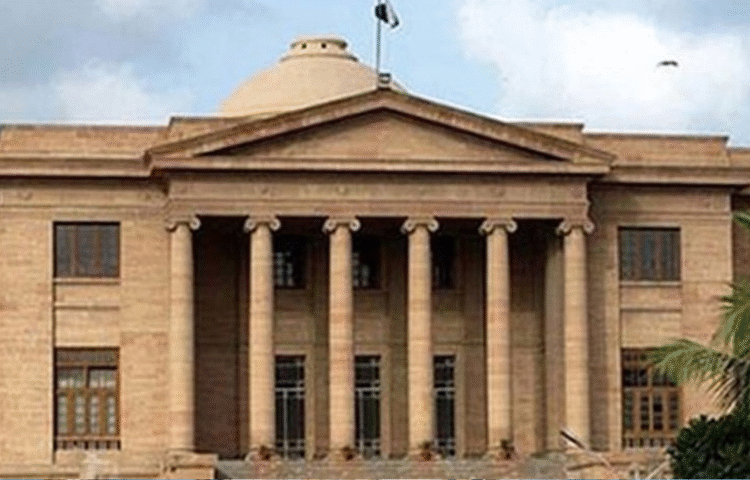
A three-member committee of sitting justices of top court has been formed to make arrangements for its internal working. The committee is constituted under Section 2 of the Supreme Court (Practice and Procedure) Act, 2023 for the formation of benches and scheduling of the cases filed under Article 184(3) of the Constitution.
Chief Justice of Pakistan (CJP) Justice Qazi Faez Isa is chairman of the committee while Justice Sardar Tariq Masood and Justice Ijazul Ahsan are its other members whereas top court Registrar Jazeela Aslam will perform duties as secretary of the committee.
According to minutes of an earlier meeting on October 25, the Supreme Court (SC) Registrar would have to draft procedure of the committee in order to furnish before the Chairman. The CJP may amend it and then share it with the other members for their consideration. “Till the approval of the procedure by the committee and subject to the chairman’s availability, [the] meetings of the committee will be held on Thursdays at 4pm in the chamber of the Chief Justice,” the minutes read.
Two regular benches, comprising three judges each, shall hear pending civil and criminal cases in chronological order (that is, those filed first shall be taken up first). Criminal appeals and jail petitions will be assigned before a Justice Masood-led bench that would also include Justice Yahya Afridi and Justice Ayesha Malik.
Civil appeals will be listed before the regular bench led by Justice Munib Akhtar. This bench will also include Justice Shahid Waheed and Justice Musarrat Hilali. These benches will continue till this year’s winter vacations. The larger and special benches will be listed at 11:30am.
On the days these cases are scheduled, a fewer number of trials will be assigned before the benches which include judges on these larger and special benches. The reason for this is because they will be hearing cases in regular benches till 11am.
It has been decided the SC Registrar will determine maintainability of the pleas which have nothing to do with interpretation of Constitution and filed under Article 184(3) of the Constitution. Whereas the pleas filed under Article 184(3) that did involve interpretation of the Constitution will be placed before the committee.
If chamber appeals are filed in the cases that are determined by the Registrar to be not maintainable, they will assigned for a chamber hearing as per the directions of the CJP. It was also decided that appeals filed under Section 5(1) of the Supreme Court (Practice and Procedure) Act, 2023 were required to be fixed in a court within 14 days before a larger bench.
“Such larger bench will be proposed by the Registrar/secretary for the Chief Justice’s order, which will be sent to the other Hon’ble members of the committee for their approval or alternative suggestion,” the minutes read.
“The 14 days with regard to two appeals arising out of a decision under Article 184(3) of the Constitution, relating to National Accountability Bureau (NAB) amendments, expires on 31 October 2023, therefore, these [should] be fixed in [a] court before [a] bench headed by [the] Chief Justice and other judges as determined by Chief Justice,” the document added.
As for the affirmation of facts on oath in civil cases, advocates-on-record (AORs) are required to verify petitions and appeals. “Some AORs state that they are required to verify the facts of civil petitions and civil appeals even though they do not know the facts of the case,” the document read.
It continued that the committee considered the matter and was of the opinion that since AORs did not have personal knowledge of the facts of such cases, it might not be appropriate to hold them responsible for any misstatement.
“Order VI, Rule 15 of the Code of Civil Procedure, 1908 provides the mode and manner of verification, which all advocates know of, therefore, all civil petitions, constitutional petitions and appeals be verified in like manner by the petitioner/appellant or by such party’s duly constituted attorney. If a false statement or misstatement is made in the said pleadings those making it will be held responsible,” it added.