ISLAMABAD – Top court has given a new chance to a government worker who was fired after a dispute over his attendance. In a major decision, the court ruled that employees accused of wrongdoing have an absolute right to question the witnesses against them. The two-judge bench, consisting of Justice Muhammad Ali Mazhar and Justice Musarrat Hilali, emphasized that this is a fundamental principle of a fair process. The court set aside the worker’s firing and ordered a fresh inquiry, stating that the previous one was flawed because the worker was not allowed to properly defend himself.
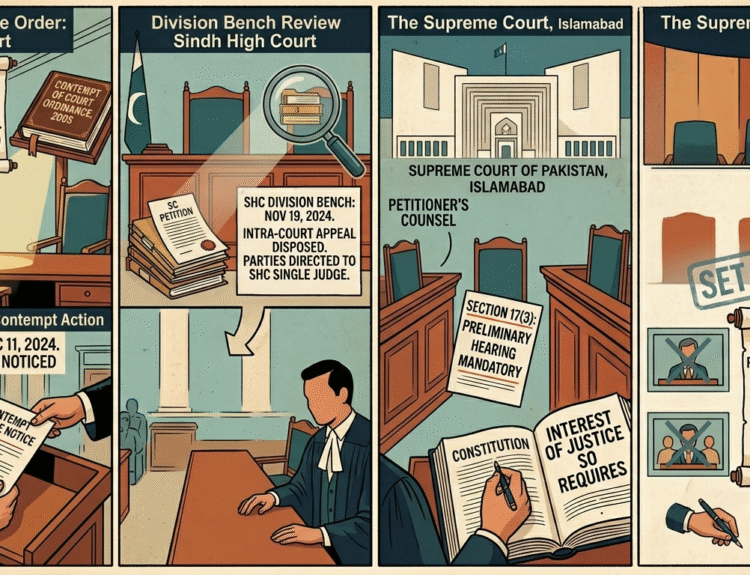
The case began with Muhammad Abid, a Naib Qasid in the Excise & Taxation Department. In 2011, an anonymous complaint was filed against him, leading to a five-month-long inquiry. Although he was cleared of the charges, his salary was withheld. This forced him to go to the Peshawar High Court, which ordered his salary to be released on November 28, 2017.
- mostbet casino
- mostbet online
- pin up casino
- 1win online
- mostbet casino
- pinup casino
- pin up
- mostbet online
- mostbet az
- 1win aviator
- mostbet aviator
- пинап
- 1win slot
- 1win casino
- pinup
- mostbet
- pinup
- 1 win casino
- mostbet online
- mosbet
- pinup casino
- lucy jet
- 1win
- 1 win
- pinap
- aviator casino
- 1win turkey
- aviator game
- mostbet
- mostbet
- mosbet
- 1win
- pinup
Abid claimed that in retaliation, an officer in the department seized his attendance register to create a false record of his absence. The department then sent him a letter on October 10, 2017, demanding an explanation for his alleged absence since October 3, 2017, even though he insists he was at work. A new inquiry was conducted, which Abid considered biased, and he was fired on November 8, 2018. His appeals to the departmental and service tribunals were unsuccessful, leading him to the Supreme Court.
According to verdict in the matter, the top court focused on two main legal points: the purpose of a show-cause notice and the right to cross-examine witnesses. A show-cause notice is a formal letter giving a person a chance to explain their side of the story before any action is taken against them. The court called this a “sine qua non” (a necessary condition) for a fair process.
The core of the judgment, however, was about cross-examination. The judges declared that an employee’s right to question the witnesses against them is an “inalienable and undeniable” right, meaning it cannot be taken away. The court said that without this right, the accused is deprived of a proper defense. The judges explained that cross-examination is the most important tool to find the truth and check if a witness’s testimony is trustworthy. They warned that without it, a witness might be making false claims due to personal grudges, and the entire inquiry would be legally flawed.
As a result, the court not only canceled Abid’s termination but also ordered a “de novo” (new) inquiry to be completed within three months. The payment of his back benefits will depend on the outcome of this new inquiry, in which he is required to participate.