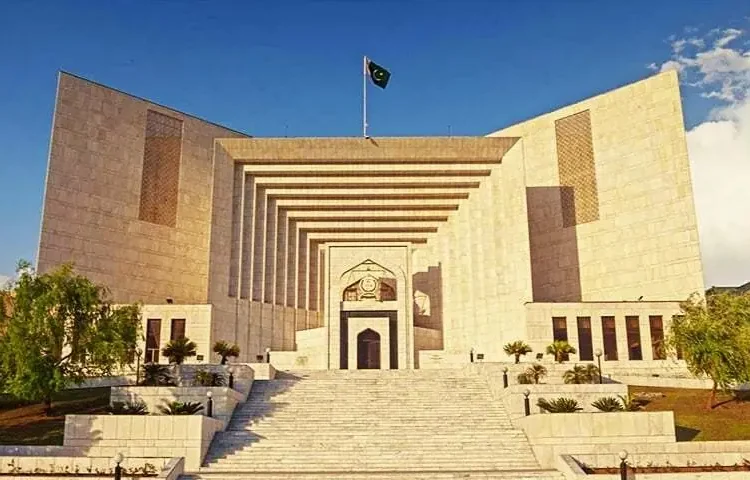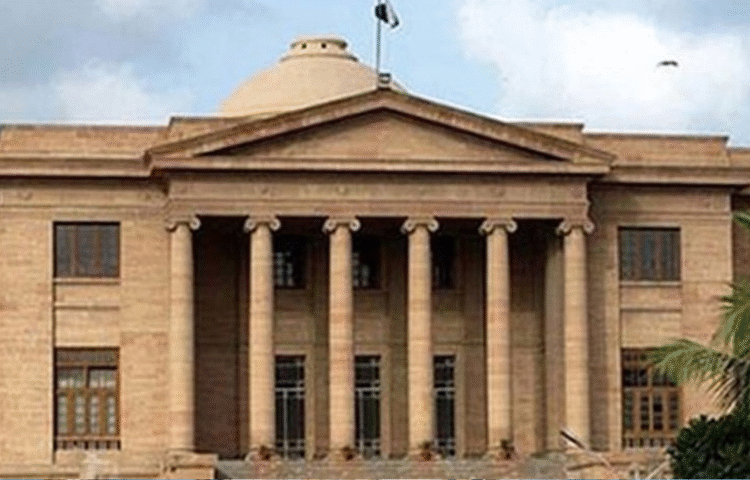
While performing its constitutional function on Friday Supreme Judicial Council issued show-cause notice to sitting judge of the top court Justice Sayyed Mazhar Ali Akbar Naqvi as ten complainants have invoked the Council’s jurisdiction against him. The Council has supplied copies of the complaints to Justice Naqvi to defend him in the matter within fourteen days.
The SJC also deliberated to establish the SJC secretariat with a full-time secretary and staff. It resolved that Registrar of the Supreme Court, currently serving as the Council’s Secretary, would present a working paper on the matter to the Chief Justice of Pakistan.
A press release disclosed on Friday the SJC remained dormant for two years and three months as its last meeting was held during tenure of the then Chief Justice Gulzar Ahmed in July 2021. Resultantly more complaints were pending for decision. Justice Qazi Faez Isa, Chief Justice of Pakistan, convened a meeting of the Council on 27th October, 2023 at 11.30 am, with the following agenda: (1) To consider complaints which are ripe. (2) Any other matter with the permission of the Chair.
The Council comprising of Justice Qazi Faez Isa, Chief Justice, next two senior Judges of the Supreme Court, Justice Sardar Tariq Masood and Justice Ijaz Ul Ahsan and two senior most Chief Justices of the High Courts, Justice Muhammad Ameer Bhatti and Justice Naeem Akhtar Afghan considered twenty-nine complaints, out of which nineteen were dismissed, and it was decided to inform the Judges who were complained against, and the legal heirs of those who had passed.
The Council noted that frivolous complaints were filed by some lawyers who the Council decided to caution. Ten complaints were filed against Justice Sayyed Mazahar Ali Akbar Naqvi. The Council, by majority of three to two, decided to issue him show-cause notices, together with copies of the complaints, and to seek his reply within fourteen days of the receipt thereof, whereas the members in minority stated that they needed more time to consider the complaints against him. One complaint was filed against a Judge of the Supreme Court who is a member of the Council.
Accordingly, the Council was reconstituted by requesting Justice Syed Mansoor Ali Shah, the next Judge in seniority in the Supreme Court, to take his seat on the Council on the recusal of Justice Ijaz UI Ahsan. This complaint was dismissed. One complaint was filed by Ms. Amna Malik against Justice Sardar Tariq Masood, who requested that since she had made the complaint public, the Council should take it up and determine its veracity. Therefore, the Council was reconstituted by requesting Justice Syed Mansoor Ali Shah, the next Judge in seniority in the Supreme Court, to take his seat on the Council on the recusal of Justice Sardar Tariq Masood.
The Council considered the complaint but found that requisite material was not attached with it, therefore, the Council directed Ms. Amna Malik to produce material in support of her complaint, and upon its receipt the Secretary to provide it to Justice Sardar Tariq Masood, who may respond thereto. The Council also summoned Ms. Amna Malik to be present in the next meeting of the Council, when Justice Sardar Tariq Masood may also be present to give his point of view.
Since the Council is a separate constitutional body it discussed whether it would be appropriate to constitute a separate secretariat for it, with a full-time secretary and requisite staff. It was decided that the Registrar of the Supreme Court, who is acting as the Secretary of the Council, submit a working paper in this regard to the Chief Justice of Pakistan, who may amend or substitute it, which will then be circulated for consideration of the other members. To stem speculation and in the interest of transparency, the Council directed the Secretary to issue a Press Release of the above.