Categories Courts

Study Urges Stronger High Court Role in Enforcing International Arbitration to Safeguard Pakistan’s Global Commitments

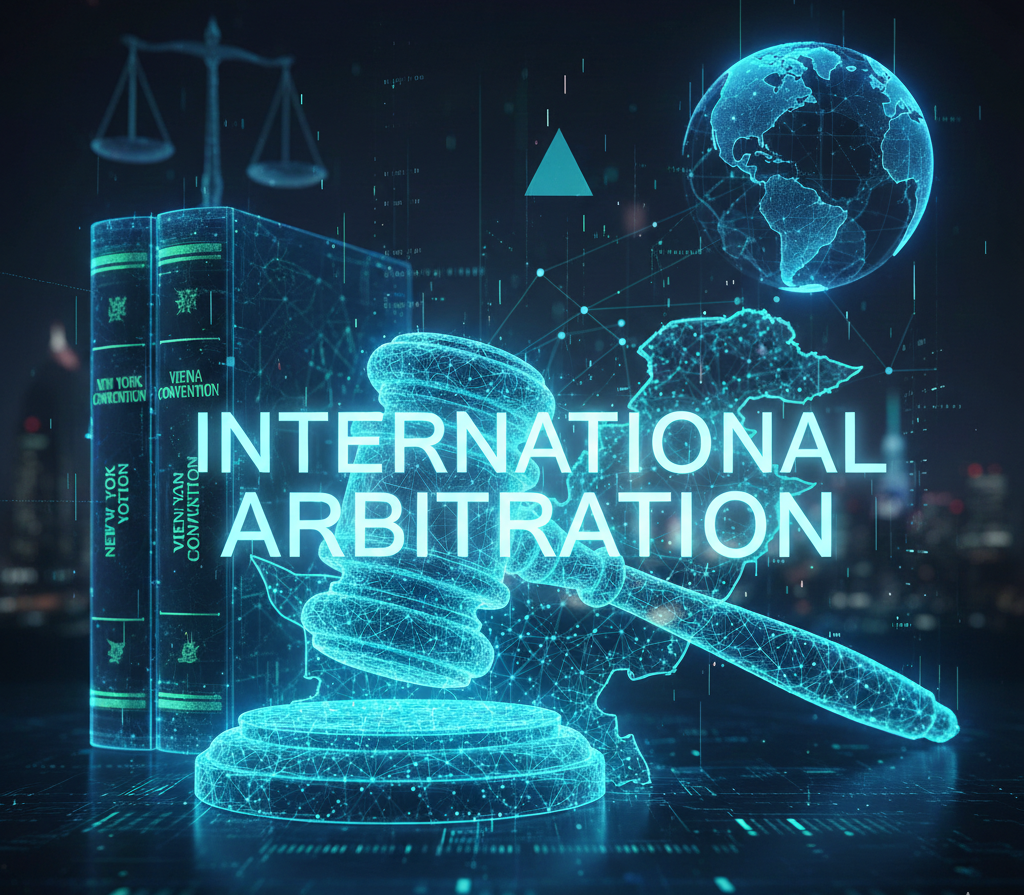
ISLAMABAD: The quest for judicial predictability in the enforcement of international arbitration agreements has emerged as a key factor in maintaining Pakistan’s standing within the global legal community. Building on this premise, a recently published study urges the superior judiciary to assume its role as the primary guardian of the state’s international commitments.

Lahore-based legal scholar Rana Rizwan Hussain, author of the study published in the prestigious Dispute Resolution Journal (Vol. 79, No. 5), contends that the High Courts are the most appropriate forums equipped to handle the complexities of global treaties.

He categorically warns that the current reliance on civil courts for such matters risks triggering international consequences for the state. The analysis identifies a significant legislative oversight in the Recognition and Enforcement (Arbitration Agreements and Foreign Arbitral Awards) Act, 2011. While Section 4 of the Act technically allows any court to stay proceedings in favor of arbitration, the study points out that Civil Courts – whose mandate is primarily confined to domestic matters under Section 9 of the Code of Civil Procedure (CPC) – are often ill-equipped to interpret international law. Because these lower forums may lack specialized training in the Vienna Convention on the Law of Treaties, any misinterpretation of an international agreement is not merely a local error; it can potentially trigger state liability under the Articles on Responsibility of States for Internationally Wrongful Acts (ARSIWA).

The research underscores that the New York Convention requires Contracting States to honor and execute international arbitration agreements, but it gives state legislatures the autonomy to devise their own mechanisms to achieve this. In Pakistan, this has resulted in a fragmented approach where international disputes are often brought before Civil Courts at the pre-arbitral stage. Hussain argues that this practice is fundamentally flawed because the obligations entailed in the Convention are beyond the mandate of a Civil Court to discharge.

The jurisdiction of these courts is inherently domestic, whereas the 2011 Act deals specifically with the enforcement of international obligations, the scholar states in the study. A second critical vulnerability identified in the study is the specialized nature of judicial training. Judges presiding over Civil Courts are typically focused on the intricacies of the CPC and local property or contract laws. They are rarely abreast of the rules of interpretation of international law under the Vienna Convention, which requires a holistic and harmonious interpretation of treaty provisions. When a lower court fails to correctly apply these international standards, it is not just a private legal error; it is a failure of the State to meet its global commitments.

International Arbitration Pakistan, New York Convention Pakistan, Rana Rizwan Hussain, Dispute Resolution Journal, High Court Jurisdiction Pakistan, Recognition and Enforcement Act 2011, Foreign Arbitral Awards, Section 4 of 2011 Act, Civil Court Jurisdiction CPC, Vienna Convention on the Law of Treaties, ARSIWA State Responsibility, Legal Certainty for Foreign Investment, Pakistan Legal News, Constitutional Law Pakistan, Judicial Predictability, Commercial Dispute Resolution, Lahore High Court Arbitration, Islamabad High Court Jurisprudence, International Law Interpretation, Sovereign Legal Commitments, Khudayar Mohla
Rana Rizwan Hussain -Photo Linkedin

The study further explores the apparent clash between Section 3 and Section 4 of the 2011 Act. Section 3 stipulates that the High Court shall have exclusive jurisdiction over matters arising out of the Act, yet Section 4’s use of the word court has led some to believe that parallel jurisdiction exists. The study disclosed this ambiguity allowed for inconsistent rulings between the Lahore and Islamabad High Courts, creating a landscape of fragmented jurisprudence that confuses international investors and litigants.

To rectify this, Hussain identifies a point of consistency in existing case law: the High Courts already maintain exclusive authority when a party files an independent challenge to the validity of an arbitration agreement. The study suggests that this principle should be expanded to all stages of international arbitration. The conclusion is clear: once a Civil Court encounters a matter covered by an international arbitration agreement, it must surrender the jurisdiction in favor of the High Court, the researcher recommends. By centralizing these high-stakes disputes within the specialized purview of the High Courts, Pakistan can provide the legal certainty required by global investors. This shift is not merely a matter of procedural efficiency but a vital safeguard for national sovereignty.

It ensures that the State’s voice in international law remains consistent, sophisticated, and immune to the risks of misapplication that could lead to costly international litigation against the State itself. Ultimately, the study presents this reform as a necessary step for Pakistan to remain a reliable and respected partner in the global commercial arena.

Author

Khudayar Mohla, Managing Partner Mohla & Mohla, Founder of the Law Today Pakistan,

Managing Partner at Mohla & Mohla - Advocates and Legal Consultants, Islamabad, Founder of The Law Today Pakistan (TLTP) Newswire Service. Former President Press Association of Supreme Court of Pakistan with over two decades of coverage of defining judicial moments - including the dissolution and restoration of Chief Justice Iftikhar Muhammad Chaudhry, Asif Ali Zardari NAB cases, Syed Yousaf Raza Gillani contempt proceedings, Panama Papers case against Mian Nawaz Sharif, matters involving Imran Khan, and the high treason trial of former Army Chief and President Pervez Musharraf. He now practises law and teaches Jurisprudence, International Law, Civil and Criminal Law. Can be reached at: mohla@lawtoday.com.pk

More From Author

Leave a Reply

Your email address will not be published. Required fields are marked *

You May Also Like

Khudayar Mohla, Supreme Court Pakistan, Sindh High Court contempt case, contempt of court Pakistan, preliminary hearing requirement, Article 204 Constitution Pakistan, Contempt of Court Ordinance 2003, Supreme Court verdict 2026, SHC orders set aside, Justice Muhammad Ali Mazhar, Justice Hasan Azhar Rizvi, Justice Aqeel Ahmed Abbasi, Hira Rauf case, Mushtaq Ahmed case Pakistan, procedural law Pakistan, prima facie case law, contempt proceedings Pakistan, judicial procedure Pakistan, intra court appeal Pakistan, legal lapses in court orders, due process in contempt cases, Pakistan judiciary news, Supreme Court rulings Pakistan, constitutional law Pakistan, legal rights of accused contemnor

SC Sets Aside SHC Verdict, Rules Preliminary Hearing Mandatory Before Framing Charge in Contempt Proceedings

ISLAMABAD: The Supreme Court has set aside Sindh High Court orders in a contempt matter,…

khudayar Mohla, Justice Jawad Hassan,Sheikh Rasheed Ahmed, Sheikh Rasheed Umrah travel ban, Lahore High Court Rawalpindi Bench, LHC Rawalpindi verdict, Anti-Terrorism Court Pakistan, Section 28-A Anti-Terrorism Act 1997, ATA passport impoundment, Justice Jawad Hassan, Justice Tariq Mahmood Bajwa, Intra Court Appeal Pakistan, ICA No 76 2025, Division Bench LHC, passport impounded by operation of law, freedom of movement Article 15 Constitution Pakistan, reasonable restriction fundamental rights Pakistan, Provincial National Identification List, PNIL Pakistan, Exit Control List Pakistan, ECL Pakistan, no estoppel against law Pakistan, judicial estoppel Pakistan, writ petition LHC, constitutional jurisdiction High Court Pakistan, Additional Attorney General Pakistan, Federal Investigation Agency Pakistan, FIA passport impounding, anti-terrorism law Pakistan, charge-sheeted accused travel ban Pakistan, ATC permission travel abroad, Umrah travel permission Pakistan court, legislative intent Section 28-A, mandatory legal presumption ATA, appellate jurisdiction LHC, Law Reforms Ordinance 1972, Pakistan terrorism trial travel restrictions, criminal justice Pakistan, passport impounding terrorism accused, Sheikh Rasheed Ahmed court case, Sheikh Rasheed Ahmed 2025 2026, LHC sets aside Umrah permission, Pakistan court ruling travel ban, Pakistan High Court anti-terrorism verdict

LHC Rawalpindi Bench Sets Aside Sheikh Rasheed’s Umrah Travel Order, Rules ATC is Sole Authority for Passport Impoundment Under Anti-Terrorism Law

RAWALPINDI: While interpreting the legislative intent behind Section 28-A of the Anti-Terrorism Act, 1997, read…

Khudayar Mohla,Voice of America, Judge Royce Lamberth, USAGM, Kari Lake, federal court ruling, Donald Trump administration, VOA staff reinstatement, Michael Abramowitz, journalism vs propaganda, press freedom, federal administrative law, Sarah B. Rogers, Michael Rigas, DOJ judicial overreach, Article II authority, Elon Musk DOGE, Voice of America layoffs, US Agency for Global Media.

Federal Judge Overturns Trump Administration’s Staff Reductions at Voice of America

WASHINGTON: A federal judge on Tuesday ordered that the near shutdown of Voice of America…