
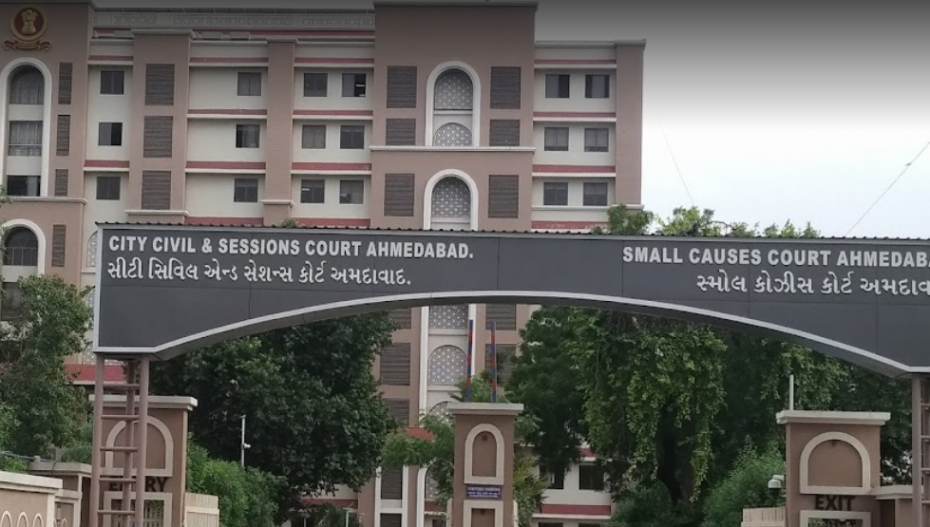
A local court of Ahmedabad in Indian Gujrat has dismissed a lawsuit of three daughters who were Hindus and sought their mother’s posthumous retirement benefits on the grounds that she had converted to Islam.
TIMES NOW reported that during 1979, husband of a woman, named Ranjan Tripathi passed away. The husband was serving for Bharat Sanchar Nigam Limited (BSNL).Ranjan was pregnant at the time of her husband’s death and she already had two daughters. Ranjan got the job of a clerk in BSNL on compassionate grounds. However, Ranjan did not stay with her family for long and her three daughters were looked after by her paternal family.
Later Ranjan Tripathi left his family and got married with a Muslim man. The three daughters filed a case against Ranjan for maintenance in 1990 on the basis of abandonment. In the petition filed by the daughters, they claimed that their mother Ranjan was given a job by the department to take care of the children. The daughters won this case. This dispute was also settled later, but the daughters claimed that she (Ranjan) had not given up her rights in her retirement benefits.
It is pertinent to mention that after embracing Islam, Ranjan married a Muslim man in 1995 and changed her name to Rehana Malik in her service records the next year. The couple had a son. Before her death in 2009, Rehana named her son as his successor in her service book. After the death of Rehana, her three Hindu daughters filed a plea in the city civil court claiming their mother’s provident fund, gratuity, insurance, leave encashment, and other benefits. They contended that being the biological daughters they have titled to receive their mother’s posthumous retirement benefits.
The daughters’ counsel also challenged their mother’s relationship with a Muslim man, her conversion to Islam, and the legitimacy of their son to be her heir, but the court rejected the arguments. On the aspect of the law, the court ruled if the deceased was a Muslim, his first-class heirs cannot be Hindus. The direct heirs of a deceased Muslim can only be Muslims.
The court further noted that the daughters’ mother had converted to Islam before her death and married a Muslim man, giving birth to a son. Since the mother converted to Islam and the daughters are Hindus, the Hindu plaintiffs are not entitled to the inheritance even after being the heirs of the deceased Rehana.’ The court also said that according to Hindu inheritance laws, Hindu daughters are also not entitled to inherit any rights from their Muslim mothers.
BBC has cited counsel for the deceased’s daughters, Advocate BP Gupta saying the court has ruled that plaintiffs cannot be legal heirs but they are daughters of the deceased. BP Gupta further said that the court ruled while addressing the daughters (plaintiffs), “Since your mother is a Muslim and her son is also a Muslim, only the son has the right to heirship because the property after retirement belonged to the mother. It will go in favor of the son”.