
Categories Courts

SC Directs Establishment Division for Fresh CSB Hearing in Promotion Case of Retired CSS Officer

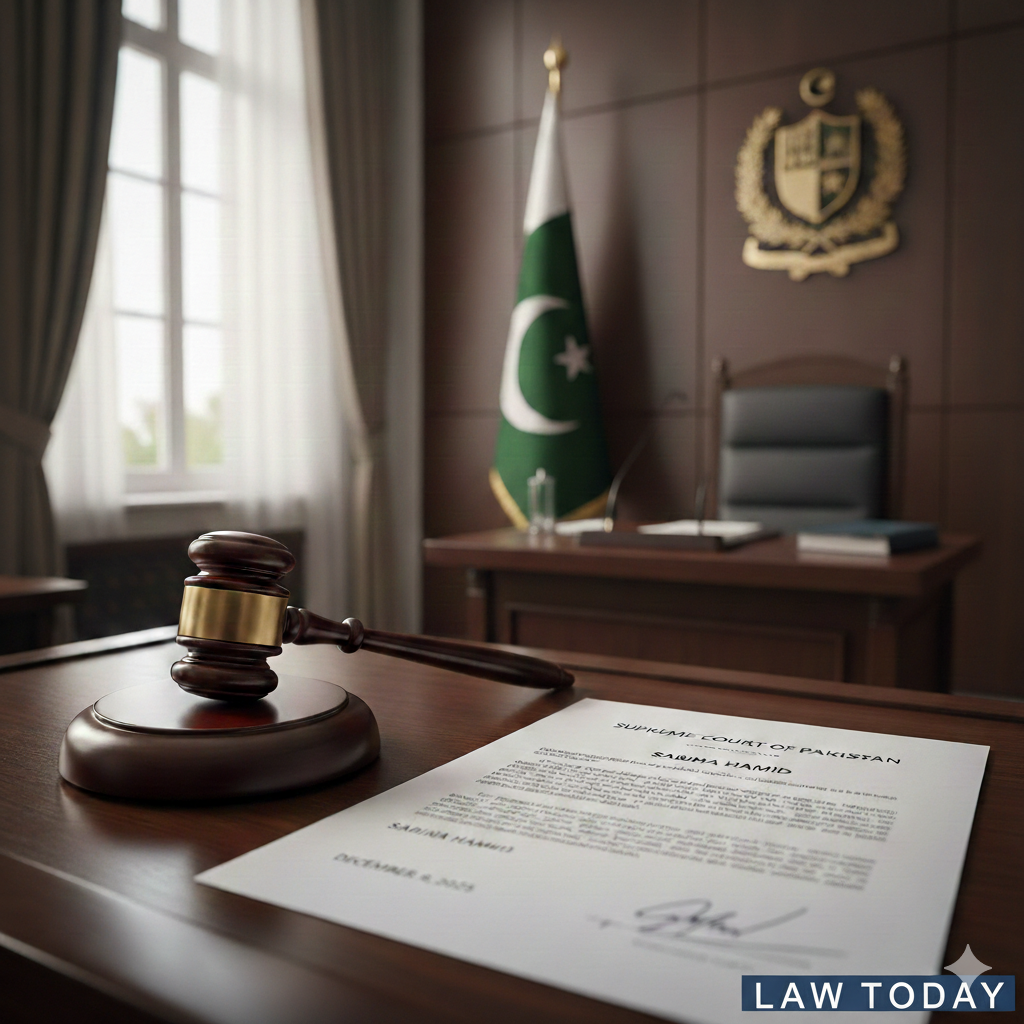
ISLAMABAD: While hearing the plea of retired CSS officer Ms Sabiha Hameed regarding promotion discrimination, Supreme Court found a clear violation of the principle of natural justice, “Audi Alteram Partem,” and directed the Establishment Division to substantively reconsider her promotion case.

In general, the principles of natural justice ensure that no one is condemned unheard, no one acts as a judge in their own case, and all decisions follow fair and due process.  A two-member bench of the Justices Munib Akhtar and Irfan Saadat Khan rule in a six-page verdict that the Central Selection Board (CSB) failed to provide a meaningful reconsideration of Ms Hameed case as previously ordered by the Federal Service Tribunal (FST), specifically noting the lack of a fair hearing before she was awarded marks below the promotion threshold.

The primary legal question was whether the CSB and the FST erred in dismissing the petitioner’s claim for promotion after the FST had previously declared her prima facie eligible. Specifically, the Court examined if the CSB’s reliance on old data and its failure to provide a hearing before awarding low marks (63.30% against a 70% threshold) constituted a violation of the petitioner’s rights and the FST’s earlier directions.

Under civil service law and the principles of natural justice, while promotion is not a vested right , an officer has a right to be considered for promotion in a serious and meaningful manner. Besides, judicial and quasi-judicial findings (like those of the FST) regarding eligibility must be displaced only by substantial, cogent, and unequivocal grounds. An ‘opportunity of hearing’ is a fundamental procedural requirement before drawing adverse inferences that affect a candidate’s career.

The Supreme Court observed that the CSB, in its August 2023 meeting, simply endorsed its previous findings from 2013 and 2014 recommendations the FST had already found to be not in accordance with the law.

The bench pointed out the Additional Attorney General could provide no record showing the petitioner was ever informed of or heard regarding the lesser marks assigned to her. By ignoring the FST’s finding of ‘prima facie eligibility’ and failing to provide a fresh, independent evaluation, the  department failed to implement the judicial directions in spirit.

Setting aside the FST’s 2023 order in response to the appeal, the bench remanded the matter back to the department, directing the CSB to hold a meeting within two months to reconsider Ms Hamid’s case substantively, explicitly mandating that she be provided an opportunity of hearing before any final decision is made.

Author

Khudayar Mohla, Managing Partner Mohla & Mohla, Founder of the Law Today Pakistan,

Managing Partner at Mohla & Mohla - Advocates and Legal Consultants, Islamabad, Founder of The Law Today Pakistan (TLTP) Newswire Service. Former President Press Association of Supreme Court of Pakistan with over two decades of coverage of defining judicial moments - including the dissolution and restoration of Chief Justice Iftikhar Muhammad Chaudhry, Asif Ali Zardari NAB cases, Syed Yousaf Raza Gillani contempt proceedings, Panama Papers case against Mian Nawaz Sharif, matters involving Imran Khan, and the high treason trial of former Army Chief and President Pervez Musharraf. He now practises law and teaches Jurisprudence, International Law, Civil and Criminal Law. Can be reached at: mohla@lawtoday.com.pk

More From Author

Leave a Reply

Your email address will not be published. Required fields are marked *

You May Also Like

LHC Rawalpindi Bench Sets Aside Sheikh Rasheed’s Umrah Travel Order, Rules ATC is Sole Authority for Passport Impoundment Under Anti-Terrorism Law

RAWALPINDI: While interpreting the legislative intent behind Section 28-A of the Anti-Terrorism Act, 1997, read…

Khudayar Mohla, FAO, First Appeal, Lahore High Court, Bahawalpur Bench, LHC Bahawalpur, Ad Interim Injunction, Temporary Injunction, Stay Application, Order XLIII Rule 1(r) CPC, Order XXXIX Rules 1 and 2 CPC, Maintainability, Specific Performance, Balance of Convenience, Balance of Inconvenience, Interlocutory Order, Solar Energy Dispute, On-Grid Solar System, Solar Installation Agreement, Commercial Litigation, Energy Contract Dispute, SS Paper Board Mills, Swift Solar Energy, Civil Judge Rahim Yar Khan, Justice Malik Waqar Haider Awan, Sardar Abdul Basit Khan Advocate, Rs 87868000, Daily Loss Rs 250000, Installment Default, Security Cheques, Payment Dispute, Commercial Loss, Shariq Builders 2024 MLD 32, Muhammad Rasab 1998 MLD 2045, Abdullah Sugar Mills 2003 SCMR 1026, Indus Motor Company 2025 CLC 1951, Mst Shazia Mehmood 2025 MLD 1976, Approved for Reporting, FAO No 09 2026 BWP, March 12 2026, Snake Bitten Antidote, Judicial Empathy, 15 Days Directive, Pakistan Court News, Lahore High Court Order 2026, Solar Energy Pakistan, Civil Court Rahim Yar Khan, Pakistan Solar Dispute, LHC Order 2026, Pakistan Judiciary News, Court Reporting Pakistan, Legal News Pakistan, High Court Pakistan 2026

“Snake-Bitten May Die Waiting for Antidote” – LHC Disposes Solar Appeal, Orders Trial Court to Decide Stay Application in 15 Days

BAHAWALPUR : A Rahim Yar Khan-based paper and board mill, bleeding Rs. 250,000 daily, invoked…

Khudayar Mohla,Peshawar High Court, PHC ruling, civil courts jurisdiction, load shedding disputes, PESCO load shedding, Kohat load shedding, NEPRA jurisdiction, electricity load shedding Pakistan, PHC verdict, Justice Waqar Ahmad, NEPRA Act 1997, Section 45 NEPRA Act, civil revision petition, Jangal Khel Kohat, prolonged load shedding, 18 hour load shedding, discriminatory load shedding, fundamental rights violation, electricity consumers Pakistan, PESCO administrative policies, Barrister Asadul Mulk, power outages Pakistan, electricity distribution Pakistan, NEPRA regulatory body, special jurisdiction principle, Section 9 CPC, Code of Civil Procedure, Supreme Court precedents Pakistan, electricity complaints Pakistan, power sector regulation, load shedding KPK, Khyber Pakhtunkhwa electricity, consumer rights Pakistan, electricity grievances, NEPRA complaint forum, civil court dismissed, district court Kohat, electricity generation transmission, power distribution policy, judicial intervention electricity, legal jurisdiction electricity, Pakistan power sector, electricity law Pakistan, regulatory authority Pakistan, load shedding schedule, electricity supply company, high court KPK, Pakistan judiciary, electricity policy Pakistan, power outages fundamental rights

PHC Rules Civil Courts Lack Jurisdiction Over Load Shedding Disputes

PESHAWAR: While hearing a civil revision petition in a matter relating to prolonged daily load…